Advertisement
Why Sifuna’s rise threatens Mudavadi and Wetang’ula more than Ruto
Thursday 09th July, 2026 07:10 AM|

The battle for Western Kenya’s political future has entered a new phase, and the biggest threat emerging from the region may not be directed at President William Ruto.
Instead, Nairobi Senator Edwin Sifuna’s growing political profile is increasingly challenging the influence of Prime Cabinet Secretary Musalia Mudavadi and National Assembly Speaker Moses Wetang’ula, two leaders who have dominated Luhya politics for years.
As preparations for the 2027 General Election gather momentum, a new alliance led by Sifuna and Trans Nzoia Governor George Natembeya is seeking to reshape Western Kenya politics by uniting the region behind a single political vehicle and a common presidential candidate. If successful, the movement could fundamentally alter the balance of power in one of Kenya’s most important voting blocs.
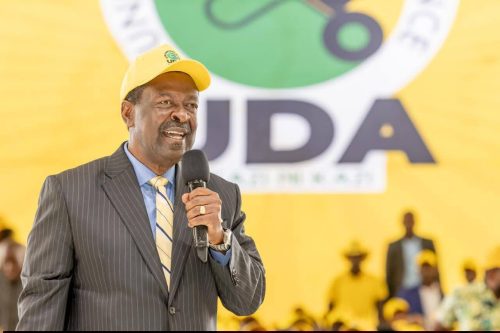
For years, Mudavadi and Wetang’ula have been regarded as the region’s principal political power brokers. Their influence grew further after Ruto’s victory in the 2022 election, with Mudavadi securing the position of Prime Cabinet Secretary while Wetang’ula became Speaker of the National Assembly.
You Might Also Like


The two leaders have since spearheaded Kenya Kwanza’s efforts to consolidate support across Western Kenya, a region that commands more than two million votes and remains central to Ruto’s re-election strategy.
However, the emergence of the Sifuna-Natembeya alliance suggests the contest is no longer simply about whether Western Kenya supports Ruto or the opposition. The more immediate battle is over who will speak for the region and inherit its political leadership.
Sifuna’s political vet
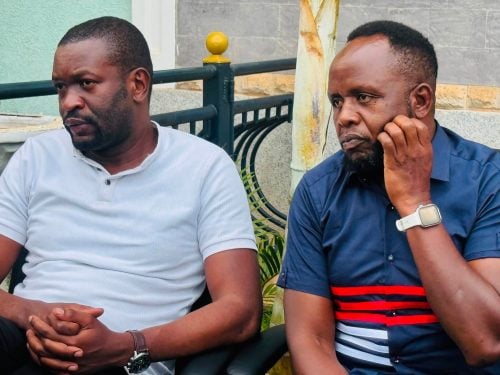
That reality became evident after a 10-hour strategy meeting attended by leaders associated with the Linda Mwananchi and Tawe movements. The gathering ended with a decision to back Sifuna as the region’s preferred presidential candidate and accelerate plans for a new political party.
“The resolutions reached following a meeting at the home of Natembeya are that Luhya leaders allied to Linda Mwananchi will rally behind Sifuna ahead of the 2027 General Election,” Vihiga Senator Godfrey Osotsi said.
The endorsement represents one of the strongest political declarations in Sifuna’s favour since talk of his presidential ambitions began. More importantly, it signals the emergence of an alternative leadership centre in a region traditionally dominated by Mudavadi and Wetang’ula.
The alliance is not merely seeking to influence national politics; it is attempting to redefine the political identity of Western Kenya. Rather than acting as a support base for national candidates from other regions, Sifuna’s allies want Western Kenya to rally behind one of its own.
“White smoke is beginning to billow from Western Kenya,” Governor Natembeya declared.
He went further, announcing that the movement had agreed to establish a new political vehicle capable of carrying its agenda into the next election.
“We have agreed to establish a political party that will carry the Linda Mwananchi agenda into the 2027 elections. Our goal is to unite Western Kenya politically while building a national movement capable of competing for power,” Natembeya said.
The remarks explain why the alliance poses a unique challenge to the existing political order. Unlike previous regional formations that focused on bargaining for positions within government, the new movement is openly talking about capturing power at the national level.
The strategy includes extensive grassroots mobilisation across all 38 constituencies in Western Kenya. Leaders plan to combine voter registration drives with political rallies aimed at building support for the movement and expanding its influence ahead of 2027.
Western game of numbers
A major rally is expected in Trans Nzoia before supporters converge in Bungoma for what organisers have described as the “mother of all rallies.”
According to Natembeya, the Bungoma gathering will be a defining political moment for the region.
“The Bungoma meeting will crown Sifuna as the political leader of the Luhya nation before releasing him to embark on a nationwide presidential campaign,” he said.

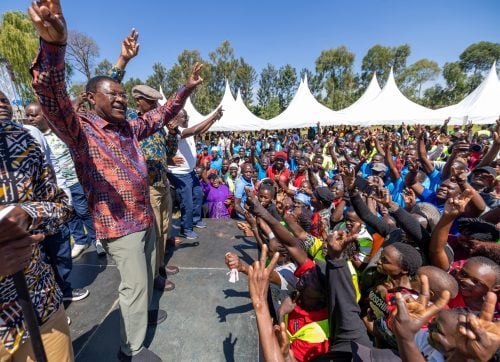
at Lukume village in West Kabras, Malava Constituency on Sunday, November 9, 2025. PHOTO/@DrBKhalwale/X
If that objective is achieved, it would directly challenge Mudavadi and Wetang’ula’s long-standing claim to regional leadership. The two leaders have traditionally derived political strength from their ability to mobilise support across Western Kenya and negotiate from a position of influence at the national level.
Kakamega Senator Boni Khalwale believes Sifuna’s appeal extends beyond the region itself.
“Over the years, the country’s politics has been along ethnic and regional lines. Sifuna finds himself in a very unique position. He enjoys both regional and ethnic support,” Khalwale said.
He added: “Sifuna also enjoys massive youth support across the country. Coupled with regional and ethnic support, he will be the person to beat.”
The emphasis on youth support is particularly significant at a time when younger voters are increasingly questioning traditional political hierarchies and demanding new leadership.
Yet not everyone is convinced that Sifuna’s rise will translate into electoral success.

Ruto’s presidential campaign deputy coordinator in the region, Ayub Savula, dismissed the growing excitement around the Nairobi Senator and argued that Kenya Kwanza still enjoys overwhelming support in Western Kenya.
“In 2013, Mudavadi ran for President. What impact did he have? Zero. That is what will befall Sifuna,” Savula said.
He pointed to Kenya Kwanza’s network of elected leaders, including governors, deputy governors and Members of Parliament, as evidence that the coalition remains firmly in control of the region.
Despite such criticism, the emergence of the Sifuna-Natembeya alliance has already transformed political calculations in Western Kenya. For the first time in years, Mudavadi and Wetang’ula are facing a coordinated challenge to their influence from leaders seeking to establish a new political order.
The central question heading into 2027 is no longer whether Western Kenya will support Ruto or the opposition. It is whether Mudavadi and Wetang’ula can maintain their grip on Luhya political leadership as Sifuna and Natembeya mobilise support for a movement designed to reshape the region’s future.
That succession battle may ultimately determine not only who controls Western Kenya’s more than two million votes, but also who emerges as the region’s most influential political voice in the years ahead.
Author
Latest News




Advertisement
More on Inside Politics