Why Ruto’s free university education promise faces funding test as 2027 election nears
By Aloys Michael, July 21, 2026President William Ruto’s pledge to fully fund higher education for every student admitted to a university or college has triggered fresh debate over whether Kenya can afford one of its most ambitious education reforms, with analysts saying the announcement is likely to shape political and economic discussions ahead of the 2027 General Election.
The proposal, unveiled at State House on Tuesday, July 21, 2026, comes just over a year before Kenyans head to the polls and shortly after the Kenya Kwanza administration suffered a setback in the Ol Kalou parliamentary by-election, circumstances that have intensified scrutiny of the timing and sustainability of the President’s latest flagship promise.
Speaking during the launch of the National Multi-Sectoral Working Group on Education Reforms, Ruto said every student who qualifies for placement in a university or Technical and Vocational Education and Training (TVET) institution would receive full government funding once Parliament amends the Higher Education Loans Board (HELB) Act.
“Going forward, any student, so long as they have passed their examinations and they have been placed in a college or university, will get full funding for their higher education. It will be the choice for parents if they want to pay,” Ruto said.
The President said education remains the greatest equaliser and argued that no qualified student should miss an opportunity to pursue medicine, engineering or any other course because of financial hardship.
“I want to implore Parliament to expedite amendments to the Higher Education Loans Board so that beginning September we can make sure that any child who qualifies for medicine does not fail to study medicine because their parents cannot afford to pay the household contribution,” he added.
Higher education funding model shift
If Parliament approves the proposed legal amendments, Kenya will effectively abandon the Variable Scholarship and Loan Funding (VSLF) model introduced by the Kenya Kwanza administration in 2023.
The VSLF model replaced the previous Differentiated Unit Cost (DUC) framework by allocating scholarships and HELB loans according to students’ household income. Government officials argued the approach would target limited resources to the most vulnerable learners while ensuring sustainable financing for universities.
However, implementation has been marked by legal challenges, delayed disbursements, confusion over household categorisation and persistent complaints from universities that government allocations have fallen short of actual costs.
The latest proposal signals another significant policy shift, with the government now seeking to guarantee full funding for every student admitted to a public university or college regardless of financial background.
Universities face a growing funding crisis
The announcement comes as Kenya’s higher education sector grapples with severe financial strain. The State Department for Higher Education recently informed Parliament that public universities have accumulated Ksh100.3 billion in pending bills, while the current student-centred funding model faces an estimated Ksh28 billion financing deficit.
The pressure has intensified after 270,715 students qualified for university admission in the latest KCSE examinations, far exceeding Treasury projections and stretching available resources.
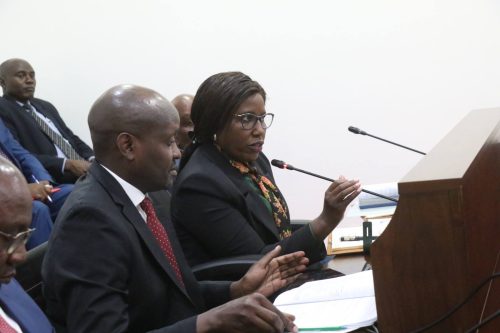
Appearing before the National Assembly Departmental Committee on Education, Higher Education Principal Secretary Beatrice Inyangala acknowledged that financing remains the biggest obstacle.
“The funding model is functional. However, the main challenge lies in budget alignment,” Dr Inyangala told Members of Parliament.
The Education Committee subsequently called for urgent consultations involving Parliament, the National Treasury and the Ministry of Education to align policy ambitions with available budgetary resources.
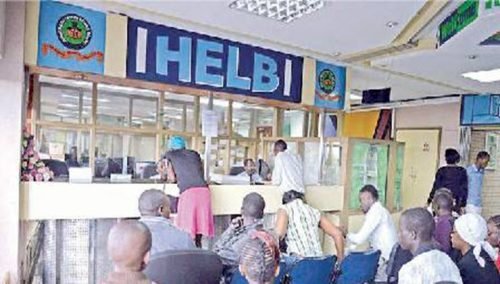
Members also questioned HELB officials over loan shortages, while the ministry disclosed that universities have suspended development projects, delayed payments and explored alternative revenue sources to manage rising debt.
Political timing draws attention
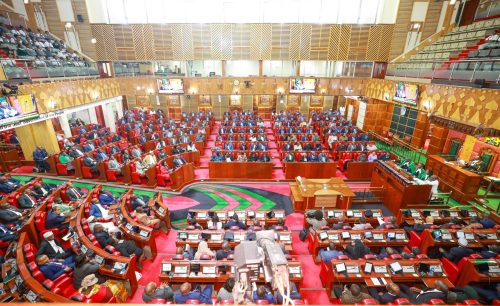
The announcement has also sparked debate over its political significance. With the 2027 General Election approaching, higher education has emerged as one of the most politically sensitive issues affecting young voters, parents and households grappling with the rising cost of living.
The major policy announcements unveiled close to elections often attract heightened scrutiny over whether they represent long-term reforms, campaign positioning or a combination of both. The President’s latest proposal is therefore likely to be assessed not only on its social impact but also on its fiscal credibility.
The discussion has been amplified by the recent Ol Kalou parliamentary by-election, where UDA failed to clinch the seat, adding to broader political debate over the government’s standing ahead of the next national vote.
The central question now confronting policymakers is whether the Treasury can finance universal scholarships while existing obligations remain unpaid.
Parliament has already heard that universities continue to grapple with inherited debts, increasing operational costs, delayed government disbursements and growing student enrolment.
Those financial pressures have raised questions over how much additional funding will be required to implement universal scholarships without widening the deficit or undermining the financial stability of public universities.
The government has yet to publish detailed cost estimates or identify how the expanded programme will be financed. President Ruto said the proposal will undergo further consultations before implementation.
“As government, we shall now study this proposal carefully. We shall engage with its recommendations, consult widely and once that process is done, I will communicate the way forward as we shape Kenya’s next long-term vision,” he said.
If Parliament approves the proposed amendments to the HELB Act before the September 2026 intake, the policy would mark one of the most significant expansions of government support for higher education since the introduction of subsidised university education.
Whether the proposal becomes a transformative education reform or encounters the same fiscal challenges that have affected previous funding models will depend on parliamentary approval, Treasury allocations and the government’s ability to sustainably finance Kenya’s growing university population.