Advertisement
Why IEBC is grappling with cases seeking to recall MPs
Saturday 19th July, 2025 01:20 AM|
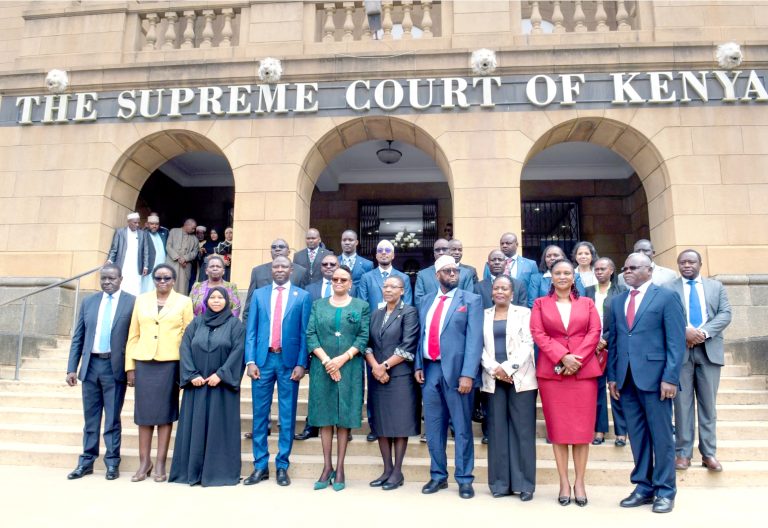
The newly appointed commissioners of Kenya’s electoral body have been thrust into a storm of political discontent, barely a week into office, as they grapple with an avalanche of petitions demanding the recall of dozens of MPs.
Sources within the Independent Electoral and Boundaries Commission (IEBC) confirmed that as of Thursday, close to 60 recall petitions had been received from citizens accusing their MPs of failing to represent their interests.
A dedicated team within the Commission has been tasked with scrutinising the petitions, which continue to arrive at a high rate due to the prevailing general discontent among Kenyans with their leaders.
“The numbers are high, and the registry is still processing many petitions. Once that is complete, the commissioners will issue a formal update, most likely before the end of next week,” a source familiar with the process said.
You Might Also Like


Efforts to get comments from IEBC chairman Erastus Ethekon were fruitless as he was said to be holed up in a meeting in Mombasa, where the new commissioners have been on a retreat since Monday, as they strategise for the 2027 General Election.
However, sources confirmed that Ekethon and his team are expected to address a press conference on Sunday or early next week to give an update on the commission’s plans on the petitions.
Gen Z protests
But a senior IEBC official who declined to be named due to the sensitivity of the matter said the petitions began being filed at the onset of Gen Z protests last year.
A majority of the petitions are reportedly from the Mt Kenya region, which overwhelmingly backed President William Ruto in the 2022 elections but has since shown growing loyalty to his embattled former deputy, Rigathi Gachagua.
Other petitions have come from Ukambani, a region aligned with Wiper Party leader Kalonzo Musyoka.
Notably absent are any petitions from Nyanza, a region that strongly supports ODM leader Raila Odinga, who has since warmed up to President Ruto’s administration.
Political analyst Javas Bigambo noted that although recalling an MP is not a straightforward process, the sheer volume of petitions suggests serious public dissatisfaction.
“Recalling an MP is procedurally difficult—it involves verification of voters and signatures—but when such petitions are filed, it reflects a significant lack of confidence in the affected members,” said Bigambo.
He added that the new IEBC commissioners face tough choices in terms of prioritising their workload, especially in light of limited funding.
In addition to managing the recall petitions, the Commission is also expected to oversee at least 22 by-elections and initiate a long-overdue boundary delimitation exercise.
The law requires boundary reviews to be conducted at intervals of not less than eight and not more than 12 years.
The Commission’s current mandate includes organising by-elections following the deaths of a number of MPs and Members of the County Assembly (MCAs), adding to the congested to-do list.
Bigambo noted: “If a community feels their MP is not representing their interests, they have the legal right to initiate a recall. The IEBC has a duty to respond in accordance with the law.”
Finance Bill
The latest wave of petitions gained momentum following last year’s youth-led protests by Generation Z, who strongly opposed the Finance Bill that proposed controversial tax hikes. Although Parliament passed the bill, President Ruto later declined to assent to it amid public uproar.
Among the notable MPs facing recall efforts are Mathira MP Erick Wamumbi, Kimani Ichung’wa (Kikuyu), Nairobi Woman Representative Esther Passaris, Caleb Mule (Machakos Town), Beatrice Elachi (Dagoretti North), Mwengi Mutuse (Kibwezi), Tharaka Nithi Senator Mwenda Gataya and Wajir Woman representative Fatuma Jehow.
On July 18, 2025, some Imenti North residents were also collecting signatures for the recall of MP Rahim Dawood, whom they accused of letting them down.
According to Machakos Deputy Governor Francis Mwangangi, the problem boils down to misplaced loyalty.
He says MPs are seen as prioritising allegiance to political parties and the President over the needs of their constituents.
The use of party machinery to whip members into voting a certain way, even on sensitive legislation, has made public participation appear meaningless.
“When you call your MP to ask them to vote against a bad bill, they ignore you. But when the President calls, they rush to State House like schoolchildren,” says Mwangangi. “That’s betrayal.”
He says some lawmakers have even bragged about being “Team Ruto,” reinforcing perceptions that loyalty to the President is more valuable than policy reasoning.
This attitude has deepened public cynicism toward the institution of Parliament.
“These MPs are dancing while we’re suffering. They’ve forgotten we are the ones who put them there,” the deputy governor says. “If they can’t stand up to the Executive, then they don’t deserve our votes.”
Herculean task
Experts warn that IEBC faces a herculean task over the issue, as if the petitioners’ appeal is granted, it would have to face the logistical and financial challenge of holding more than 50 parliamentary by-elections almost a year before the general election.
In Tharaka Nithi, voters from Maara, Chuka, and Tharaka constituencies sent a petition to the IEBC seeking guidance on recalling Senator Gataya, accusing him of gross constitutional violations.
The petition, signed by seven voters, cites failure to ensure public participation, discrimination, abuse of office, and violations of the leadership and integrity code.
The petitioners wrote: “We seek urgent clarification on the procedural requirements for recalling a Senator. We have waited the requisite 24 months since the election, as required by law, but existing legal ambiguities make it unclear how to proceed.”
In response, IEBC acknowledged the legal hurdles in a letter dated September 9, 2024.
The Commission cited a court ruling that declared parts of the Elections Act unconstitutional, particularly sections that provided grounds for recalling MPs.
“The Court found sections 45(1)(b)(ii) and 45(6) of the Elections Act discriminatory and, therefore, unconstitutional. This leaves legal gaps, making the recall process difficult to enforce in its current form,” the Commission’s letter read.
It further noted that the previous absence of commissioners and a chairperson made it impossible to authorise the collection of recall signatures.
Until Parliament revises the law, IEBC said it lacks a solid legal basis to act on many recall petitions.
Under the law, an MP can be recalled on grounds of gross violation of the constitution or other laws; commission of an offence under the Elections Act, misconduct likely to bring the office into disrepute and mismanagement of public funds.
However, a recall can only be initiated two years after a general election and not within 12 months of the next scheduled poll.
The process begins with a registered voter collecting signatures from at least 30 per cent of registered voters in the constituency.
Additionally, the petitioner must secure support from at least 15 per cent of voters in half of the constituency’s wards.
The collected signatures must be accompanied by a petition that outlines the grounds for recall, supported by evidence and a statutory declaration confirming the authenticity of the signatures.
IEBC is mandated to verify both the petition and the signatures. If the petition is valid, the MP is given an opportunity to respond.
IEBC must then notify the Speaker of Parliament within 15 days of verification and proceed to organise a recall vote.
If a simple majority of voters in the recall election supports the petition, the MP loses the seat. IEBC must then conduct a by-election to fill the vacancy within 90 days.
Legal framework
Last month, senators initiated the push for a legal framework that could give voters the power to remove legislators from office before the end of their terms.
The Senate Standing Committee on Justice, Legal Affairs and Human Rights directed the Attorney General to prepare a policy framework outlining the grounds and procedures for recalling both elected and specially nominated legislators.
Reports indicate that the AG’s office has been given a six-month deadline to present a status report to the Senate, incorporating draft bills and outcomes of public participation.
The committee, chaired by Bomet Senator Hillary Sigei, stated that the framework will be developed in consultation with several state agencies and stakeholders, including the Independent Electoral and Boundaries Commission (IEBC), the Kenya Law Reform Commission, the National Gender and Equality Commission, the Registrar of Political Parties, the Political Parties Liaison Committee, and other relevant bodies.
To operationalise this framework, the Senate has begun the process of amending Cap 7 of the Elections Act and Cap 265 of the County Governments Act.
According to the report, “The said legislation is to be introduced in Parliament not later than 26th February 2026, whether the policy framework will have been submitted to Parliament or not.”
The committee has also tasked the Attorney-General with leading the development of the framework and supporting legislative proposals for enactment in Parliament.
“If the said policy framework is not submitted to Parliament on time, the committee undertakes to draft and introduce before the Senate the requisite amendments to the Elections Act (Cap 7) and the County Governments Act (Cap 265) to enable the Kenyan people to exercise the right to recall their leaders in Parliament and the County Assemblies,” the report added.
“This will be done not later than February 2026, at the commencement of the Fifth Session, to ensure that the legislation navigates both Houses of Parliament and is in place ahead of the 2027 General Election.”
The Senate’s action follows a petition submitted to Speaker Amason Kingi on October 8, 2024, by one Laban Omusundi, who called for the creation of a legal structure allowing for the recall of nominated MCAs.
In Mathira, voter Samuel Ngari is spearheading efforts to collect the required 31,000 signatures (30 per cent of 104,000 registered voters) to recall MP Wamumbi.
He accuses the MP of supporting motions against Gachagua, misusing CDF funds, engaging in bribery during public consultations on Gachagua’s impeachment, and dismissing staff without due process.
In Kikuyu, constituents want Ichung’wa removed, accusing him of arrogance and being out of touch with the people.
Despite being a close ally of President Ruto, critics say his leadership style has alienated voters.
In Nairobi, Woman Rep Passaris has come under fire for sponsoring the controversial Public Order (Amendment) Bill 2025.
The bill sought to ban protests near Parliament and designate specific zones for public assemblies.
Following intense public backlash, Passaris withdrew the bill to allow for broader national dialogue.
Machakos Town MP Mule and Kibwezi’s Mutuse are being targeted for their support of Gachagua’s impeachment motion, a move constituents claim was made without public input.
Despite the political firestorm, IEBC’s ability to act on many of these petitions remains in question due to unresolved legal loopholes.
The Commission has called for urgent legislative amendments to clarify the recall process and make it legally enforceable.
With Parliament yet to revise the Elections Act in response to the court’s judgment, the current recall framework remains partially in limbo.
Until the legal ambiguities are resolved, most of the petitions may not proceed beyond the preliminary stages.
Even so, the growing number of petitions highlights increasing public scrutiny of elected leaders and a readiness by citizens to demand accountability.
Whether these recall efforts succeed or stall in legal quicksand, they underscore a new era of political consciousness and voter assertiveness—one that Kenya’s lawmakers and electoral body can no longer afford to ignore.
Kenyans have in the recent past been angry with members of the 13th Parliament, whom they accuse of allegedly singing to the tune of the Executive.
From the streets of Nairobi to remote villages in Turkana and Lamu, the cry is the same: Parliament has become a rubber stamp for the Executive.
Executive capture
The anger boiled over during recent anti-government protests sparked by the now-withdrawn Finance Bill 2024. While the demonstrations were largely directed at the punitive tax proposals in the bill, MPs were not spared.
Citizens expressed outrage that many legislators, including those elected under opposition parties, voted in favour of the bill at the committee stage before a public outcry forced a rethink.
“They don’t represent us anymore. They represent the State House,” said one protester outside Parliament during the nationwide youth-led demonstrations.
“We elected them to be our voice, but they’ve become the mouthpiece of the President,” says Mwangangi.
Indeed, what started as an economic grievance over high taxation has morphed into a deeper political reckoning about the role of MPs in Kenya’s democracy.
Analysts argue that Kenya is witnessing a dangerous erosion of checks and balances, with Parliament being absorbed into the orbit of the Executive.
Despite the constitutional requirement for separation of powers, many MPs have aligned themselves with the President›s agenda—even when it contradicts public interest.
Prof Macharia Munene, a political analyst and lecturer at USIU, says the country is now dealing with Executive capture of Parliament.
“What we’re seeing is a deliberate strategy by the Executive to neutralise Parliament through co-optation—using political appointments, committee chairmanships, development funds, and threats of party discipline to keep MPs in line,” he said.
“It’s why even unpopular policies sail through easily.”
“The Executive’s growing influence is also evident in how parliamentary leadership is structured. Most key committees, including Finance, Budget, and Justice, are chaired by MPs allied to the ruling coalition. This has made it difficult for genuine oversight or resistance to take root.”
Author
Mercy Mwai
View all posts by Mercy MwaiLatest News



Advertisement
More on Inside Politics