Where was everyone else? Willis Otieno questions MPs’ whereabouts during Finance Bill 2026 vote
By Ndiritu Wanjiru, June 19, 2026Safina Party Deputy Party Leader Willis Otieno has questioned accountability in Kenya’s Parliament after only 162 out of 349 Members of Parliament participated in the final vote on the Finance Bill 2026.
Taking it to his social media handles on Friday, June 19, 2026, Otieno has noted that the bill, which contains measures affecting taxation, public revenue, and the broader economy, passed with 122 MPs voting in favour and 40 voting against. However, the absence of 187 legislators has become a major point of public concern, with the lawyer questioning the role of elected representatives when critical national decisions are being made.
According to Otieno, Parliament exists precisely for moments when difficult choices about taxation, public debt, and the cost of living must be confronted openly.
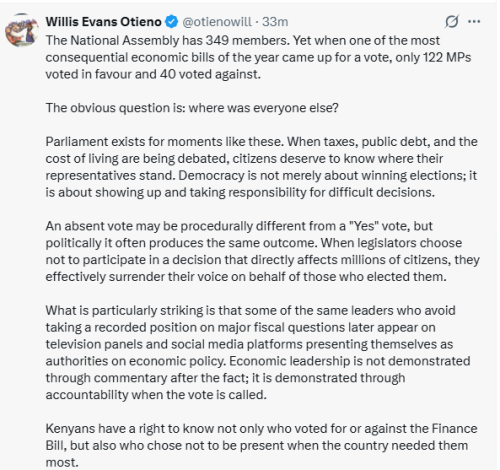
“The National Assembly has 349 members. Yet when one of the most consequential economic bills of the year came up for a vote, only 122 MPs voted in favour and 40 voted against. The obvious question is: where was everyone else?” Willis said.
Democracy over election victories
Otieno has argued that democracy cannot be reduced to electoral victories alone. Instead, he said, elected leaders must be willing to publicly take positions on controversial issues and be accountable for those decisions.
He contends that voters deserve clarity on where their representatives stand, particularly on legislation that directly affects household incomes, business operations, and government spending.
“Democracy is not merely about winning elections; it is about showing up and taking responsibility for difficult decisions,” he stated.
The politics of absence
While parliamentary rules distinguish between voting for a bill and being absent from the chamber, critics argue that politically the outcome can be similar.
By failing to participate in the vote, Otieno has noted that the absent legislators avoid leaving a public record of their position while allowing the legislative process to proceed without their input. This raises fundamental questions about representation and accountability.
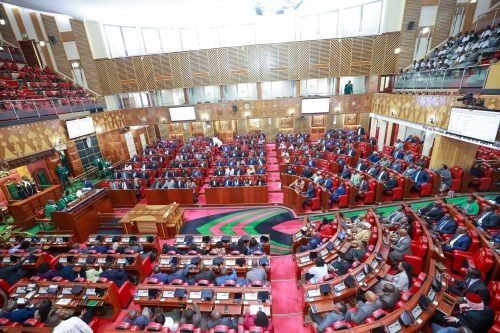
“An absent vote may be procedurally different from a ‘Yes’ vote, but politically it often produces the same outcome. When legislators choose not to participate in a decision that directly affects millions of citizens, they effectively surrender their voice on behalf of those who elected them,” Otieno said.
The large number of absentees has fuelled speculation about whether some lawmakers sought to avoid political consequences associated with supporting or opposing the Finance Bill.