Advertisement
Uhuru to Kenyans: You are crying now because you didn’t listen to my 2022 warning
Monday 25th May, 2026 01:54 PM|

Retired President Uhuru Kenyatta has reminded Kenyans of his earlier 2022 warning against electing the current administration, saying the challenges the country is facing were issues he had cautioned against during the campaign period.
Speaking on Monday, May 25, 2026, during a Jubilee Party delegates meeting held at Kiambu Golf Club, Uhuru said Kenyans, particularly residents of Kiambu and the wider Mt Kenya region, must reflect carefully on their political choices and prioritise leaders who focus on development and service delivery rather than political rhetoric.
He urged residents to remain united ahead of the 2027 General Election, warning against divisions that could weaken communities and affect long-term development in the region.
“I warned you in 2022, but you didn’t listen. Now you are crying,” he said.
You Might Also Like

Uhuru encouraged voters to actively listen to all political leaders during campaigns but insists that decisions at the ballot should be guided by facts, performance, and long-term impact rather than short-term political influence.
“When they come to your areas, kindly take the money, but when the election comes, vote wisely,” he said.
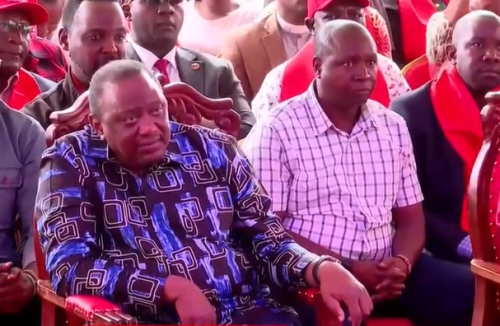
At the same time, he stressed the importance of national unity, saying leaders must avoid divisive language and instead focus on building cohesion among different communities across the country.
Uhuru added that the Jubilee Party remains strong, stable, and focused on rebuilding its grassroots structures, noting that the party continues to engage with supporters across various regions as it strengthens its political presence ahead of the next election cycle.
He also emphasised that ongoing political engagements are part of efforts to reorganise the party and ensure it remains active and competitive in the country’s evolving political landscape.
Ruto under fire
This comes as President William Ruto’s persistent defence of his administration’s economic record is facing renewed scrutiny after the latest Economic Survey revealed inconsistencies between official data and some of the figures he has publicly cited.
The 2026 report from the Kenya National Bureau of Statistics (KNBS), released on Wednesday, April 29, 2026, offers a mixed assessment of the country’s economic trajectory, validating a handful of the president’s claims while sharply contradicting others.
The findings arrive at a politically sensitive moment, as the administration quietly recalibrates its fiscal strategy ahead of the 2027 general election.
For months, President Ruto has leaned heavily on statistics to counter criticism over the high cost of living and rising tax pressure. His messaging has centred on recovery, productivity gains, and long-term economic stability.
But the KNBS data now complicates that narrative, exposing gaps that could erode public trust in official communication.

Lies or reality?
The new strategy reflects growing political and social pressure as Kenyan households grapple with elevated living costs and stagnant wages.
“As part of the finalisation process, the Cabinet Secretary invites views, proposals, and innovative ideas from the public on economic policy, expenditure priorities, and tax measures for the FY2026/27 budget,” the Treasury said in a notice, signalling an attempt to broaden participation and rebuild confidence.
“To bring down the cost-of-living, ensure food security, create jobs, expand the tax base, improve foreign exchange balances and foster inclusive growth.”
Yet beneath this policy pivot lies a difficult balancing act: how to ease tax burdens without undermining revenue targets in an already constrained fiscal environment.
Treasury projections show that revenue demands will remain high even as the government aims to narrow the fiscal deficit from 5.3 per cent of GDP in 2026/27 to 3.3 per cent by 2028/29. The Treasury insists that discipline will be maintained through efficiency measures and improved revenue collection.
“The fiscal consolidation will rely on enhanced domestic revenue mobilisation, rigorous expenditure optimisation and reprioritisation, and protection of essential government programmes and social interventions,” the BPS reads.
However, it is the divergence between rhetoric and data that is likely to dominate public discourse.
In his State of the Nation Address on November 20, 2025, President Ruto painted a picture of strong agricultural recovery, particularly in maize production.
“National maize harvests have risen from 44 million bags in 2022 to 67 million in 2024, setting the stage for a historic harvest of 70 million bags this year,” he said.
But the KNBS survey presents a more modest reality even as the government insists that the economy is booming.
“Maize production improved by 2.4 per cent to 45.8 million bags,” the report states, suggesting that the gains may not be as dramatic as portrayed.
Ruto’s economic handball?
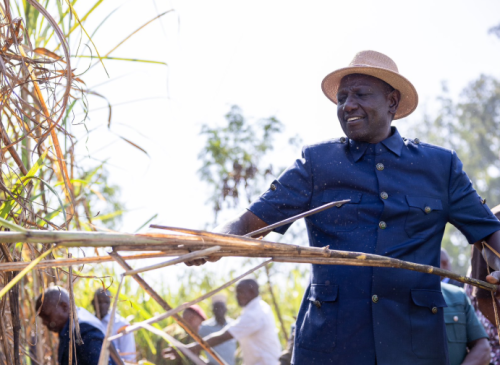
A similar discrepancy emerges in the sugar sector amid calls from the stakeholders for cogent reforms to maximise benefits.
“The sugar sector, long troubled, is stabilising. Area under cane is up by 200,000 acres; production has surged 76 per cent to over 815,000 metric tonnes.”
Contrary to this, the KNBS data indicate a contraction.
“Sugar cane production dropped by 24.7 per cent to 7,051.9 thousand tonnes,” the report notes, raising questions about the accuracy of official claims regarding sector recovery.
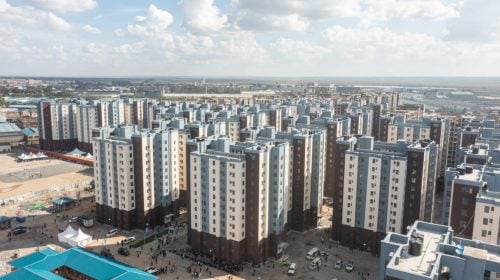
The affordable housing programme, one of the administration’s flagship initiatives, also reflects this pattern of partial alignment.
“Across the country, we are delivering the most extensive housing rollout in our history: 230,000 affordable homes,” Ruto said.
KNBS figures show that by December 31, 2025, 205,311 units were under construction, a substantial number but still below the figure cited by the President.
Job creation data linked to the housing programme further complicates the picture. On December 12, 2025.
“Through this programme, more than 480,000 Kenyans have secured jobs and enterprise opportunities across over 300 active sites,” Ruto stated.
Author
Latest News



Advertisement
More on Inside Politics