Advertisement
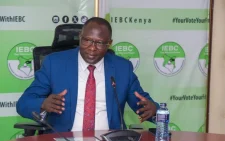
Transition: New IEBC team holds key to Kenya’s political future
Saturday 12th July, 2025 12:20 AM|
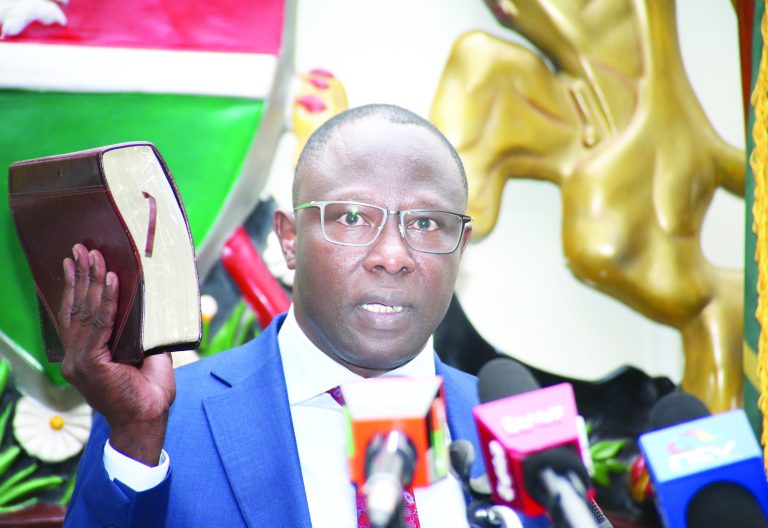
The newly sworn-in commissioners of the Independent Electoral and Boundaries Commission (IEBC) face the daunting task of rebuilding public trust—particularly among Kenya’s youth, popularly known as Gen Z—amid widespread scepticism about public institutions.
The seven-member commission, chaired by Erastus Ethekon Edung and comprising Ann Njeri Nderitu, Moses Alutalala Mukhwana, Mary Karen Sorobit, Hassan Noor Hassan, Francis Odhiambo Aduol, and Fahima Arafat Abdallah, officially took office following the dismissal of a petition that had challenged their selection.
A three-judge Bench consisting of Justices Roselyne Aburili, John Chigiti, and Bahati Mwamuye ruled that the petition, filed by Kelvin Roy Omondi and activist Boniface Mwangi, lacked merit and was improperly grounded under Article 22 of the Constitution.
The commissioners assume office amid accusations of political bias and a wave of protests led by Generation Z against bad governance, which have resulted in widespread unrest.
You Might Also Like
The opposition has rejected the new commission, claiming its formation was orchestrated by State House to manipulate the 2027 General Election.
They also assume office at a time the country is going through an unprecedented political turmoil, with President William Ruto and his allies accusing members of the opposition and civil society activists of scheming to unconstitutionally overthrow his government.
Speaking at the swearing-in ceremony, Chief Justice Martha Koome acknowledged the growing distrust in public institutions, stating that this erosion of confidence threatens democracy, national cohesion, and constitutional stability.
“IEBC must rise above this crisis of confidence. More than perhaps any other institution at this moment, it must earn the people’s trust through conduct, decisions, and personal integrity,” she said.
Koome reminded the commissioners that they were stepping into office at a time when Kenyans, particularly the youth, are demanding transparency, integrity, accountability, and justice from public offices.
She urged the team to uphold Article 38 of the Constitution, which guarantees every Kenyan the right to participate in free, fair, and credible elections.
“You now carry the weight of Kenya’s democratic future on your shoulders,” she told them, adding that the commission must urgently resolve stalled constitutional and administrative processes.
Koome lamented the two-year delay in recruiting new commissioners, which she said had paralysed key electoral processes and posed a risk to Kenya’s democratic health.
“IEBC is not just an election management body. It is one of the cornerstones of our democratic governance. Its work directly impacts the legitimacy of government, peace and stability of the nation, and public confidence in the rule of law,” she emphasised.
Disputed elections
Koome further warned that Kenya’s history of disputed elections, cycles of violence, and loss of life and property serves as a stark reminder that elections are not mere political rituals, but matters of national security and human rights.
“Let the first word in your name—Independent—be your constant guide, especially when faced with pressure or interference,” she said.
Speaking after taking the oath of office, Chairperson Erastus Ethekon pledged to rebuild the trust Kenyans have lost in the commission and to deliver a free and fair election in 2027.
“To every Kenyan preparing to vote in 2027: trust is not demanded—it is earned. We understand this and are ready to earn your trust every step of the way,” he said.
He added that cooperation with institutional partners, civil society, the media, and election observers will be critical. He welcomed scrutiny, saying accountability would strengthen democracy.
Ethekon also announced plans to undertake a comprehensive review of the electoral process, including data verification, transmission, voter training, and public engagement.
“While the 2027 General Election is in sight, our focus must be on every step that leads us there. Elections are not an end—they are the means through which democracy lives and breathes,” he added.
The commissioners’ swearing-in concludes a long and controversial recruitment process marked by political tensions, lawsuits, and allegations of state interference.
Opposition leaders—including Kalonzo Musyoka, Martha Karua, Eugene Wamalwa, Justin Muturi, and Fred Matiang’i—accused President William Ruto of conducting a partisan process and co-opting opposition leader Raila Odinga in a broader plan to influence the 2027 election.
They alleged that the nine-member selection panel, comprising Kiome Lindah Gakii, Adams Oloo, James Evans Misati, Nicodemus Kipchirchir Bore, Koki Muli Grignon, Carolene Kituku, Tanui Andrew Kipkoech, Nelson Makanda and Fatuma Saman, was influenced by State House operatives.
“What we feared has now come to pass. Ruto has handpicked a commission tailored to secure his re-election. This is not an IEBC for the people—it’s a rigging machine,” read their statement.
Ruto loyalist
They further claimed that Ethekon was a known Ruto loyalist and that Dr. Adams Oloo’s dual role as a panel member and presidential advisor constituted a conflict of interest.
The IEBC had remained without a full commission since January 2023, following the end of the term of former Chairperson Wafula Chebukati and commissioners Boya Molu and Abdi Guliye.
The remaining commissioners—Juliana Cherera, Justus Nyang’aya, and Francis Wanderi—resigned after the contested 2022 election, while Irene Masit was removed following the recommendation of the Aggrey Muchelule Tribunal.
The new commissioners face an urgent and expansive workload. Key tasks include overseeing 22 pending by-elections in wards and constituencies where MPs and MCAs have died since the last elections.
These polls have been delayed due to the absence of a commission.
They are also tasked with conducting boundary delimitation, last done in 2012. The Constitution mandates a review every 8 to 12 years.
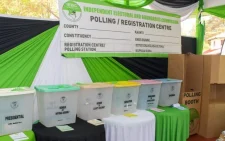
Other urgent priorities include voter registration, procurement of election materials, and modernisation of the electoral infrastructure.
According to IEBC Deputy CEO Obadia Keitan, the commission will require Ksh61.7 billion to conduct the 2027 General Election, with Ksh5 billion earmarked for voter registration and acquisition of election technology.
Author
Mercy Mwai
View all posts by Mercy MwaiLatest News





Advertisement
More on Inside Politics