Advertisement
Sifuna exposes shadowy deals and legal manoeuvres behind UDA-ODM pact
Tuesday 24th February, 2026 10:06 AM|

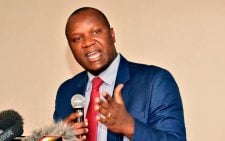
As the clock ticks down to a crucial review of the disputed 10-point agenda crafted under the Orange Democratic Movement (ODM)-United Democratic Alliance (UDA) Memorandum of Understanding (MOU), Nairobi Senator Edwin Sifuna has pulled back the curtain on what he claims were shadowy negotiations and rushed legal processes that defined the pact.
In an interview on a local TV station on Tuesday, February 24, 2026, the embattled ODM Secretary General Sifuna revealed the account of how the agreement was prepared, not through robust consultation or document reviews, but through backroom collusion and questionable procedural shortcuts.
Sifuna has said the original draft agreement was presented to him, without prior review or consultation.
“I was sidestepped. When Raila flew from Addis Ababa. Baba goes straight to the State House in Mombasa. He arrives there and finds a coalition agreement prepared, and he says no, you know me. I do not do things like that. I have to speak to my people, and he embarks on consultations,” Sifuna said.
You Might Also Like

According to Sifuna, the ODM Central Committee meeting in Kisumu was rife with confusion. Despite calls from party members for broader participation, decisions were being fast-tracked in ways that sidelined key stakeholders.
He recalled a moment of palpable frustration in that critical meeting.
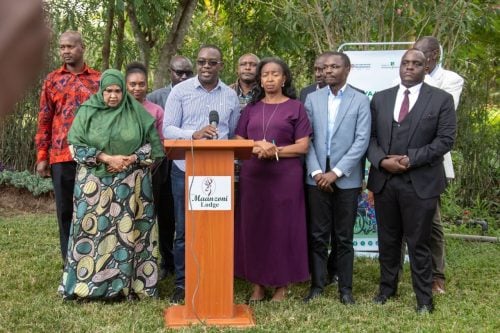
“Some of these broad-based characters saying, ‘Oh, by Baba, can we form a committee? Why just one person?’ And he banged the table; the meeting was over,” Sifuna revealed.
Sifuna said the events captured a party grappling with internal tension and raised serious questions about intra-party transparency amid negotiations with UDA.
Adding that it formed the basis of internal frictions in the outfit, accusing a section of leaders for advocating the partnership with President William Ruto heavily despite the volatile environment at the time.
KICC pact without review
The most startling part of Sifuna’s account came on the day of the signing, in the Kenya International Conference Centre (KICC). Rather than the arrival of finalised papers, what unfolded was sheer bewilderment.
“We are sitting there, and then these guys shuffle in with a laptop bag. They start projecting the agreement. We did not even get to the third paragraph,” he narrated.
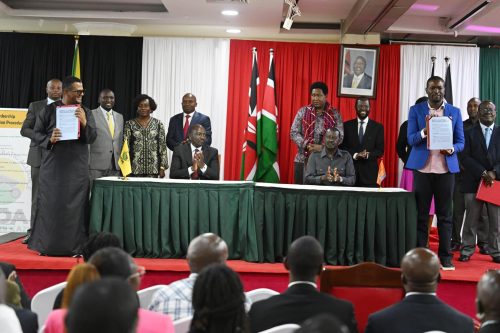
According to Sifuna, neither he nor the ODM leadership had seen the final text before that moment, and the projected document was different from what had been discussed.
“I have been asking this gentleman to show me this document. This is the first time I am seeing it with you,” Sifuna recalled telling the late ODM leader Raila Odinga.
Confronted with a surprising draft, Sifuna says he and a small team retreated to his office and wrote a new version from scratch.
“In my office, we wrote this thing from scratch, because Mzee used to say, you must put the people first,” he said.
The March 10-point review
With 11 days to the review of the pact, the committee tasked with overseeing the implementation of the 10-point agenda is under mounting pressure to submit a comprehensive progress report as the deadline approaches.
This comes after Nairobi senator Edwin Sifuna had accused the committee of inaction since August 2025, warning it has 30 days to meet its March 7, 2026, deadline without extension.
“A deadline of March 7 was given to the committee for it to submit its final report. I am here to sound the alarm that the committee has 30 days to give us a final report on the memorandum of understanding. It’s been six months, and so far they have done absolutely nothing,” Sifuna said during a recent interview.
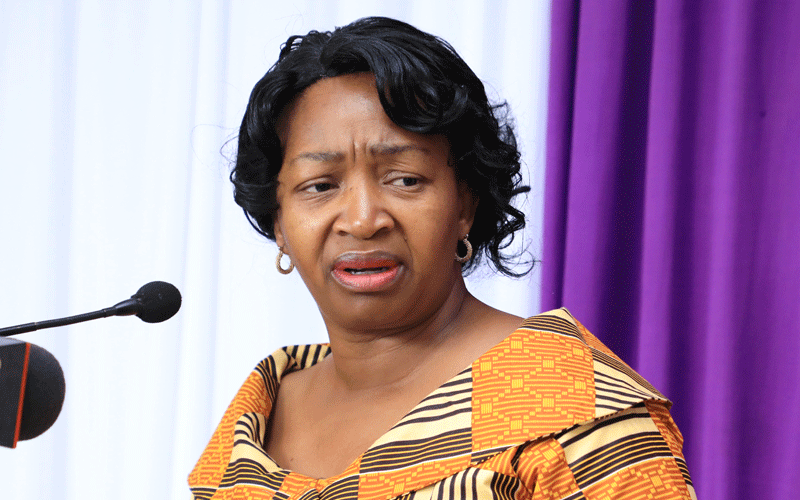
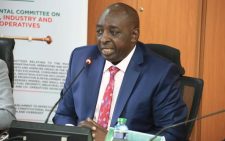
However, despite the blots, the committee’s chairperson, Agnes Zani, said the team is still consolidating feedback from government offices, political parties, and public forums, and is not yet ready to provide a full update on all recommendations.
“We are reviewing the NADCO report and its wide range of recommendations, including electoral justice, boundary matters, the IEBC and its selection committee, and the audit of the 2022 general elections. We are also examining key issues in the MOU, the NADCO report itself, and the 10-point agenda, particularly Article 43 concerns such as housing, education, and the cost of living,” Zani explained in an interview on a local TV station on Tuesday, February 10, 2026.
The committee is also assessing broader governance and political matters that emerged from violent protests between March and July 2023, led by the Azimio coalition
“We are looking at political party fidelity, management of national government funds, and issues related to the offices of the Leader of the Official Opposition and the Prime Minister,” she said.
Author
Latest News

Advertisement
More on Inside Politics