Advertisement
Shadow masters: Hidden hands steering political power
Monday 04th August, 2025 01:00 AM|

It is a network of ruthless insiders—powerful, calculating, and brutal. Riding on the warmth and security of proximity to the seat of power, this covert cabal of state operatives exerts quiet but immense control, even over top-ranking public officers.
Often referred to as “the system,” “the deep state,” and at times “the dark state” or “the invisible government,” this shadowy formation is widely believed to possess more authority than formal state institutions themselves.
Some simply call them “handlers”.
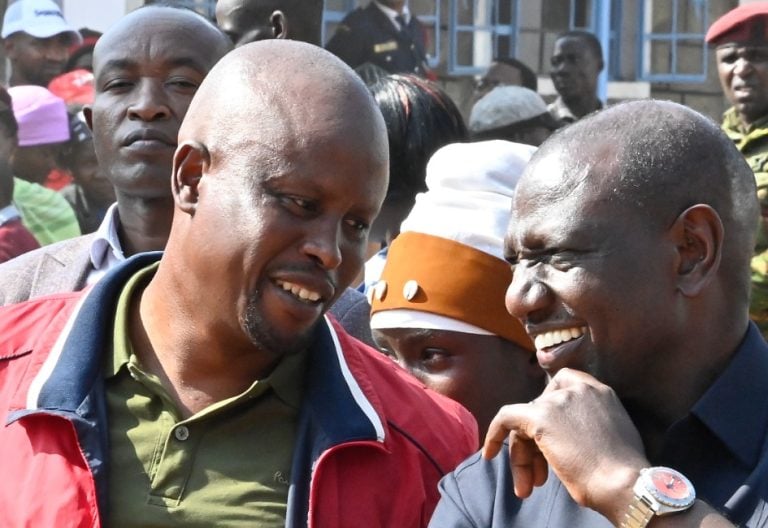
In today’s political landscape, no figure personifies this murky power structure quite like Farouk Kibet – the President’s personal assistant, often seen just a step behind President William Ruto, yet discussed as though he walks beside, or even ahead of, the Head of State.
Man behind the power
You Might Also Like
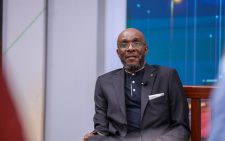
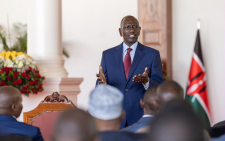
Farouk holds no cabinet portfolio. He is not an elected official. Until recently, he avoided public statements or press appearances.
Yet within the corridors of power at State House, his word reportedly carries more weight than many official titles.
As Ruto’s long-serving aide, Farouk is widely regarded as the de facto second-in-command – an enforcer whose influence shapes the administration from behind the scenes.
With a reputation for strict discipline and strategic manoeuvring, Farouk has quietly emerged as one of the most dominant – and divisive – figures in government.
He is considered the President’s most trusted fixer, coordinating political operations, managing allies, and ensuring loyalty is enforced.
Since Ruto’s ascension to power in 2022, Farouk’s presence has become more pronounced. Though his role remains unofficial, many now draw parallels between him and Nicholas Biwott – the late KANU-era power broker dubbed “Total Man” for his behind-the-scenes control.
Like Biwott, Farouk operates largely in the shadows, but his influence spans ministries, agencies, and political party structures.
Gatekeeper’s grip
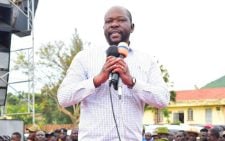
He no longer shies away from public command. During a women’s empowerment event in Kamagut, Turbo constituency, Farouk publicly reprimanded Nairobi Governor Johnson Sakaja, directing him to guard the capital against protest-related chaos.
“Nairobi is our capital city; we will not allow it to go down the drain. There is no way destructive protests will be allowed to leave businesspersons with losses,” Farouk said.
“We ask you, Governor Johnson Sakaja, to stand firm and resist attempts to cause chaos in Nairobi City.”
Insiders say that from the Deputy President down to MPs and Cabinet Secretaries, no directive reaches the President without passing through Farouk.
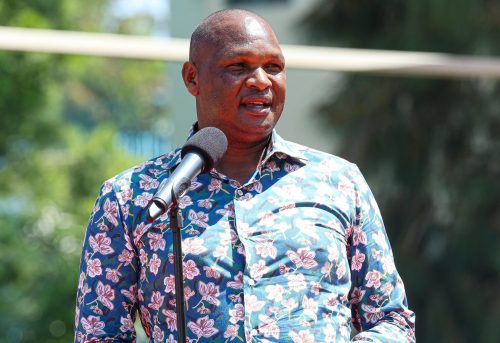
He is credited with rallying political support, ensuring discipline within Ruto’s camp, and tightly managing the President’s agenda.
At public functions, he is often seen pacing swiftly, correcting protocol lapses, issuing instructions, and orchestrating the President’s engagements.
Videos showing him directing Cabinet members or clearing paths for the President frequently circulate online – deepening public intrigue around a man who rarely addresses the nation.
In a recent televised interview, former Deputy President Rigathi Gachagua openly accused Farouk of overstepping, claiming he attempted to usurp the functions of his office.
“He’s not a minor player,” Gachagua said. “He tried to take over my office and dictate how things are run. That’s when we fell out. He behaves like a co-president – Cabinet Secretaries report to him.”
True power brokers
Gachagua named Farouk and digital strategist Dennis Itumbi as the true power brokers within the administration, alleging that they bypass official channels to manage state affairs from the inner sanctum of Ruto’s circle.
“They are the ones running the government with the President,” Gachagua charged. “Instructions come from them, not from formal government structures.”
Farouk remains most comfortable behind the curtain, pulling strings and commanding influence out of the public eye.
National Assembly Majority Leader Kimani Ichung’wah once offered a telling remark on Farouk’s stature:
“You might think he’s just a simple man from the village,” Ichung’wah said. “But go to the State House and you’ll understand. If Farouk decides you’re not getting in, not even a minister can pass.”
Indeed, whether revered, resented, or feared, Farouk stands at the epicentre of Ruto’s presidency – his grip on power poised to shape the country’s political direction throughout the current regime.
Voices from system
Former Head of Public Service and Nyandarua Governor Francis Kimemia affirmed the deep state’s undeniable influence.
“The state exists. I can assure you it is deeper than deep. If you have two candidates running neck-and-neck and the deep state backs one, you can be sure who will win,” Kimemia said. “The international community also plays a big role in determining outcomes.”
Dennis Itumbi, now an outspoken ally of President Ruto, once recounted how he outmanoeuvred the same “deep state” after being denied formal State House appointments.
Narrating events from President Mwai Kibaki’s time, Itumbi recalled being issued an appointment letter in 2002 to join the Presidential Press Service.
But upon presenting the letter at State House, security dismissed it as invalid, forcing him and his colleague back to school.
Appointing oneself
Fast-forward to 2013, following President Uhuru Kenyatta’s election, Itumbi revealed how he unilaterally crafted and released a press statement appointing himself and others as part of the Presidential Strategic Communications Unit (PSCU) – a term he coined to replace the Presidential Press Service.
“On the previous day, we had agreed with then Presidential Press Secretary and the other guy who was now announced as PSCU head that they will put our names on the appointment list. But on the actual day, it was only one name that was revealed. Somebody had intentionally removed our names – I don’t know who,” Itumbi disclosed.
“As the President and the team went to be interviewed by the many cameras outside, I quickly went to a computer and wrote about our appointment and even changed the presidential press service to ‘Presidential Strategic Communications Unit’ and put out our nominations.”
Bureaucratic system
When he took the printout to the head of the unit for signing, “They refused. So I quickly noticed the President was moving from one TV station’s OB van to another, I quickly took the document to him and he signed.”
He said immediately after the President signed the statement, he released it to the media, and it went viral.
“Long before Manoah and Isaiya could react, the breaking news was on their phone. So in essence, there was also a bit of strategy in our appointments, and by the way, we stayed in State House for a whole one year, without any pay, because we had appointed ourselves via a press release and we had changed PPS to PSCU via a press release,” Itumbi noted.
“So before that became formalised… why am I saying this? Once you become President, there is a bureaucracy that comes to hold you. I think this bureaucracy is what some people believe is the deep state and the system.”
President’s dilemma
Long-serving Presidential Press Service boss Lee Njiru supports this view. According to him, the presidency is not always in control of the government.
“The President doesn’t run the country… he pretends to run. It’s run by others. There exists a deep state at a very large scale, and it operates as it wishes,” Njiru said.
He likened the President’s role to a farm owner removed from daily operations – while loyal handlers, or “farm managers”, make decisions, often to the detriment of the actual owner.
“The President might not know who the agricultural officer in Wundanyi is, or the principal of a school in Elgeyo Marakwet,” he said. “He’s too busy to write even his own speech. People feed him curated information, sometimes lies.”
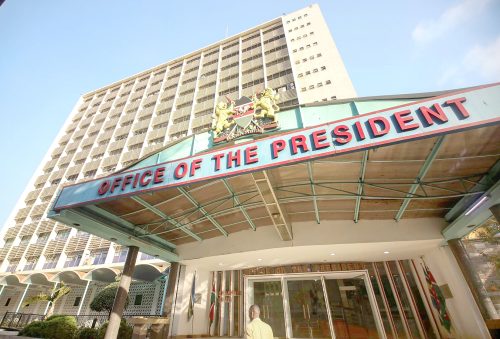
In his memoir The Presidents’ Pressman, Njiru offers an unflinching view of the deep state’s darker side:
“As Mzee Kenyatta’s handlers got deeply engrossed in merry-making, the old man was left alone to contend with the vicissitudes of age, such as arthritis, poor eyesight, a weak heart, and incapacity to govern. There was no resident physician, nor was there a cardiologist to respond to any medical emergency… Mzee was, to a large extent, surrounded by people with selfish agendas. These handlers used Mzee Kenyatta’s name as a meal card. His welfare to them was of no consequence. What a terrible irony…”
“These thugs went out, entered their security car with the inscription ‘Presidential Escort’ and drove off. Even the other patrons were cowed into silence and inaction…”
“The helpless waitress here was a beautiful and amiable Taita girl called Purity Wakesho. Kombe, Muyeshi and I volunteered to pay the bill. It was Ksh900. She thanked us profusely, feeling relieved. She told us that whenever such cases of ‘customer default’ happened in that hotel, the money was deducted from the waiter’s salary. But the thugs didn’t care; they were, after all, revelling in the trappings of power.”
“Indeed, it is true that ‘presidents are good people; it is their handlers who spoil their names.’ You see, Mzee Kenyatta was not aware of these crimes committed by his security men in his name. He could not approve of such behaviour. This notwithstanding, the criminals were referred to as ‘Kenyatta’s dogs.’
“Sometimes in 1977, Mzee was invited to lunch at the Eden Rock Hotel in Malindi. The host was the owner of the facility, a German lady that Mzee had nicknamed ‘Mama Maridadi’, meaning the gorgeous lady. After the sumptuous luncheon, a section of the presidential security team did the unthinkable. They ransacked the cloakrooms, the lounges, and the unoccupied rooms. They stole towels, bedsheets, and pillowcases. One of them tried unsuccessfully to force a coffee table into the boot of a security Mercedes that was already full of guns. He called the table, as if it were human, a few unprintables and threw it away.”
“It was unfortunate that the onlookers believed the loot was a gift to Mzee Kenyatta from Mama Maridadi. The irony was that while Mzee Kenyatta was thanking Mama Maridadi for her generosity, these scoundrels were busy inflicting heavy economic damage on her. They were taking advantage of Mzee’s physical and mental slowdown that comes with old age.”
“On arrival at State House Mombasa, these shameless thugs were boasting about their loot.”
In a recent interview with People Daily, he said such behaviour was part of what the deep state does behind the scenes.
Global phenomenon
Seasoned lecturer, researcher and media analyst Mwangi Ayub argues that this phenomenon is not uniquely Kenyan.
“The deep state exists everywhere,” Ayub said. “Governments operate on influence, not just institutions. Sometimes the person in office doesn’t even control the levers of power.”
He likens these hidden forces to shadow governments – more powerful than elected leaders, more discreet than official bureaucracies.
“They’re not always politicians,” Ayub noted. “Some are proxies, hangers-on, or deal brokers. They dictate appointments, policy shifts, and even military or police operations.”
Ayub illustrated this with an anecdote from Pakistan, where a civilian prime minister was blocked from accessing sensitive nuclear information by unelected insiders.
“We’ve seen the same in Kenya. Look at the Farouk example. In the Uhuru-Matiang’i era, we had others. The faces change, but the system remains.”
He cited extrajudicial killings and abductions as possible evidence of deep-state actors operating beyond the President’s reach – an “alternative centre of power”, in his words.
“These people aren’t accountable, yet they command state officers to commit crimes. Meanwhile, the official government disowns it.”
According to Ayub, when a new President takes office, they construct their own deep state – comprising long-time loyalists and trusted aides.
“While Ruto was Deputy President, he denied the existence of a deep state. But once in office, reality struck. The instinct to consolidate power gave rise to a new inner circle.”
Arms scandal
Referencing the Rashid Echesa arms scandal, Ayub described the deep state’s informal power: “All someone needs is a connection to a handler. You can get appointments, tenders, or protection. The process is opaque but effective.”
He added that these actors rarely serve only one side, noting: “They often fund both the government and opposition. When the dust settles, they align with whoever wins.”
Ayub compared the Kenyan model to formal lobbying structures in Western countries, citing fictional portrayals like “House of Cards” to illustrate how unseen actors grease the wheels of power.
“Politics is more layered than the public sees,” he observed. “There’s an invisible scaffolding shaping decisions—dark, informal, and deeply entrenched.”
Author
Reuben Mwambingu
View all posts by Reuben MwambinguLatest News

Advertisement
More on Inside Politics