Advertisement
Scramble for Kalonzo: How 2027 polls could hinge on ex-VP’s move
Saturday 16th August, 2025 01:00 AM|
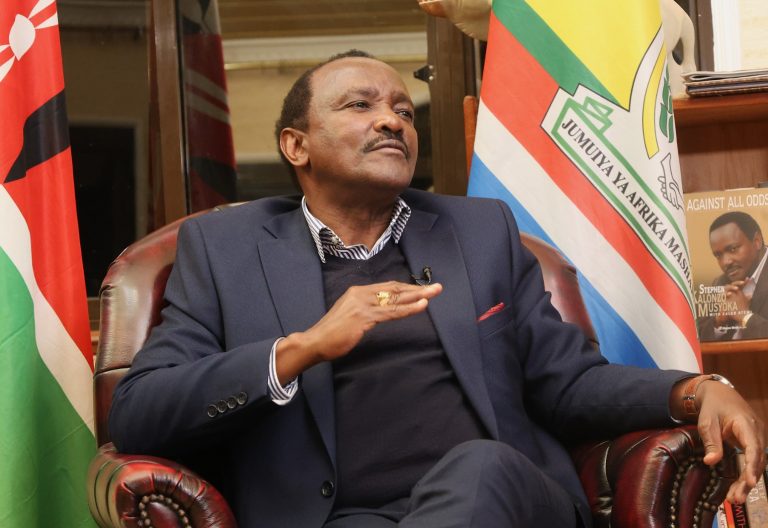
The fight for Wiper leader Kalonzo Musyoka’s political allegiance is fast emerging as one of the most decisive battles ahead of the 2027 General Election.
Both President Ruto and key opposition figures have drawn their political swords, each determined to woo the seasoned former vice president into their fold.
Kalonzo is far more than just another political figure —he is a potential kingmaker whose choice could tilt the scales in what is expected to be a fiercely contested presidential race.
Pundits argue that successfully pulling Kalonzo from the opposition would be a strategic coup, prising open Azimio’s Eastern stronghold and giving Kenya Kwanza a crucial inroad into Ukambani. It would also signal an ability to bridge old political divides — a narrative Ruto is keen to sell to other swing regions.
You Might Also Like

Kalonzo has, however, played hard-to-get, openly declaring no interest in working with Ruto. Recently, he dismissed claims he was warming up to the government, branding them “rogue and criminal.”
At a function in Kamuuani, Machakos County, he accused pro-government bloggers of spreading propaganda and vowed never to align with the current administration.
“That could never be me! Working with Ruto? Maybe another Kalonzo,” he told the crowd.
Energy Cabinet Secretary Opiyo Wandayi has publicly expressed confidence that Kalonzo would “soon” join Raila Odinga in Ruto’s camp to “steer the country forward.”
Formidable front
Kalonzo has been adamant, citing the regime’s “blood on its hands” over the killings of youthful protesters in the past two years.
“The fundamental rights of every Kenyan must be respected. People have the right to express themselves provided they are not harming anyone else,” he said.
The contest for Kalonzo’s loyalty is unfolding amid shifting political currents, especially in Mt Kenya.
The region, which overwhelmingly backed him in 2022, is now the epicentre of growing discontent over unfulfilled promises and perceptions of being politically sidelined. Opposition strategists believe that if they can ride this wave of dissatisfaction while locking in Eastern votes through Kalonzo, they could forge a formidable anti-Ruto front stretching from Mt Kenya to the Coast.
The Gen Z factor adds another twist. Youth-led protests in 2024 revealed a restless generation less bound by traditional political loyalties and more driven by economic grievances. Their unpredictability and online mobilisation mean Kalonzo’s capability to resonate with them could significantly affect his value to whichever camp wins him.
True to form, the Wiper leader has kept his cards close to his chest.
Known for his cautious political style, he has previously pulled off dramatic moves — most notably in 2007, when a surprise pact with Mwai Kibaki earned him the vice presidency.
Today, emissaries from both sides are quietly making overtures, dangling promises of high-profile appointments and targeted regional development.
For Raila Odinga’s Azimio, keeping Kalonzo is a survival imperative. The Eastern bloc has been a dependable anchor, delivering solid margins in 2013, 2017, and 2022.
Losing him could not only weaken Azimio’s numbers but also embolden smaller allies to defect to the ruling camp.
Political commentator Ayub Mwangi warns that the opposition faces a “trust deficit” in dealing with Kalonzo, given his history of shifting alliances.
“These coalitions form, collapse, and re-emerge, sometimes overnight. It’s politics, but it’s also a structural liability,” he says.
Mwangi also points to campaign financing as a critical battleground.
“Ruto’s side is well-resourced. The opposition is largely running on fumes. Unless Kalonzo can leverage state capitation through his MPs, they’ll need serious donor backing or risk financial burnout,” he observes.
Veteran political scientist Mutahi Ngunyi believes the numbers tilt in Ruto’s favour if he consolidates support among the Luo, Kalenjin, Maasai, Somali, Coastal, and Indian communities — a bloc he projects at 14.1 million votes.
By contrast, Ngunyi pegs the emerging opposition alliance — comprising Deputy President Rigathi Gachagua, Kalonzo, Eugene Wamalwa, Fred Matiang’i, Mithika Linturi, and Martha Karua — at about 9.4 million votes based on 2022 IEBC records.
Central Kenya counties — Kirinyaga, Murang’a, Kiambu, Nyandarua, and Nyeri — form the Gachagua-Karua base with 3.1 million registered voters. Tharaka Nithi, Embu, and Meru add 1.3 million; Kisii and Nyamira, Matiang’i’s turf, contribute 960,293; Western Kenya offers Wamalwa 2.6 million; and Ukambani, under Kalonzo, adds 1.7 million.
IEBC projections show 5.6 million new voters by 2027, mostly young Kenyans, pushing the total electorate to an estimated 27.8 million.
Whoever wins Kalonzo’s hand will not just secure Eastern Kenya but potentially gain the edge in a contest where every decimal point in the 50%+1 threshold could decide the presidency.
Author
Reuben Mwambingu
View all posts by Reuben MwambinguLatest News






Advertisement
More on Inside Politics