Sabina Chege slams ODM zoning push as 2027 political battles harden
By Aloys Michael, April 8, 2026A fierce political storm is brewing ahead of the 2027 General Election, with Nominated Member of Parliament (MP) Sabina Chege scoffing at zoning, a strategy increasingly embraced by the Orange Democratic Movement (ODM) to safeguard its traditional strongholds.
In an interview on a local TV station on Wednesday, April 8, 2026, Chege branded zoning as a self-serving tactic driven by political elites seeking control rather than democracy.
“Zoning is a selfish move, especially by party leaders and those who want to control political parties. We should allow democracy, candidates should compete in nominations, and if there is unfairness, they can face off at the ballot,” she said.
Her remarks cut to the heart of an intensifying dispute that now threatens to define coalition talks between ODM and the United Democratic Alliance (UDA). At stake is not just political strategy, but the very nature of democratic competition within Kenya’s party system.
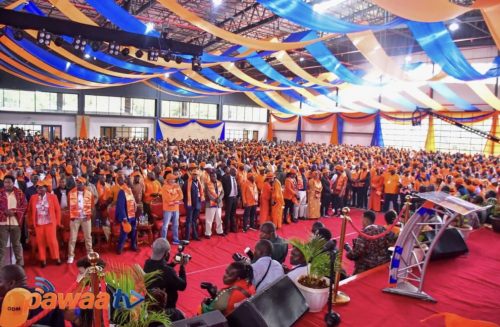
The debate reached a boiling point during ODM’s Special Delegates Convention (SDC), held at Jamhuri Grounds on March 27, 2026. Party leaders used the forum to signal a firm, uncompromising stance on zoning, even as they ratified continued engagement with UDA in potential coalition talks.
National Assembly Minority Leader Junet Mohamed delivered a blunt message: ODM’s parliamentary strength is non-negotiable.
“We want to increase our numbers in the next General Election from what we have today. We want to tell any party that we are associating with that our parliamentary numbers are not negotiable. We can negotiate on anything but not our parliamentary strength,” Junet declared.
The party views zoning as a critical tool to prevent internal vote-splitting in its strongholds, particularly in Nyanza.
Junet also called for strict party discipline, urging members to respect decisions made by party organs to maintain unity and constitutional order.

Zoning rift
However, Chege’s criticism exposes growing unease, even beyond ODM ranks, about the implications of zoning. She argues that the party should trust its popularity instead of shielding itself from competition.
“ODM is strong in Nyanza; it should be confident that even if other parties emerge, voters will still believe in it,” she added.
Her stance aligns with a broader push for open democratic contests, challenging the idea that political dominance should be preserved through negotiated arrangements rather than voter choice.
Within ODM, some leaders strongly disagree.
Homa Bay Town MP Peter Kaluma has emerged as a vocal defender of zoning, insisting it is essential for protecting the party’s influence.
“We must ensure that our bases and strongholds are ring-fenced and left for the ODM party, and zoning is going to occur. Without that, we will have no arrangement,” Kaluma asserted.
This internal divide underscores a deeper ideological clash between political pragmatism and democratic purity.
UDA pushes back
Across the political aisle, UDA has outright rejected zoning, framing it as undemocratic and unnecessary.
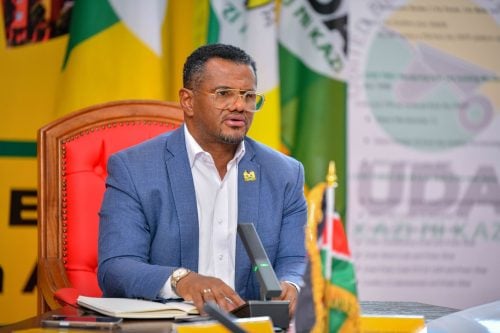
UDA Secretary General Hassan Omar challenged ODM’s position, calling for open competition in all constituencies.
“There is no zoning, and everyone will have to fight for themselves to win the seats. Let those with three votes bring them; those with 300 votes, let them bring them. You do not need to panic. Why should you be scared if this is your forte?” he posed.
UDA’s stance adds another layer of complexity to ongoing negotiations, as both parties attempt to reconcile fundamentally different approaches to political competition.
As coalition talks continue, the zoning debate is shaping up to be a defining fault line. For ODM, it is a shield to protect its dominance.
With the 2027 elections on the horizon, the question remains: will Kenya’s political future be determined in negotiated boardrooms, or at the ballot box?