Ruto defends CBE amid uproar over teachers’ hiring
By Aloys Michael, May 16, 2026President William Ruto has defended the Competency-Based Education (CBE) system amid growing uproar in the education sector over the hiring and confirmation of intern teachers.
Speaking on Friday, May 15, 2026, when he joined students, alumni, and staff of Thika High School to mark the institution’s 70th Platinum Anniversary, the President said the school’s founding in 1956 was driven by a belief that education has the power to change lives, shape nations, and transform the future.
“Today, 70 years later, we gather not just to celebrate the anniversary of a great institution, but to honour the vision of a generation of builders who understood that strong nations are built by empowered citizens,” he said
Ruto used the platform to strongly defend ongoing education reforms, insisting they align with national development goals. He said the CBE model is designed to recognise individual learner talents rather than rely on a rigid system.
He added that the previous education structure produced many failures due to its one-size-fits-all approach, arguing that CBE ensures learners progress through different pathways, including Science, Technology, Engineering and Mathematics (STEM), arts, and humanities.

The President also acknowledged pressure on school infrastructure caused by rising enrolment, citing overcrowded classrooms, overstretched dormitories, and strained laboratories, and called for increased investment in learning facilities.
“Our children deserve safe, dignified, and supportive learning environments,” he said, emphasising the importance of making substantial investments in education, particularly school infrastructure.
He further noted that education funding has significantly increased, with the budget rising from Ksh500 billion to Ksh702 billion currently, and plans to reach Ksh765 billion.
“We treat funds put into education not as an expenditure but as an investment in the future workforce,” Ruto remarked.
Intern teachers quagmire
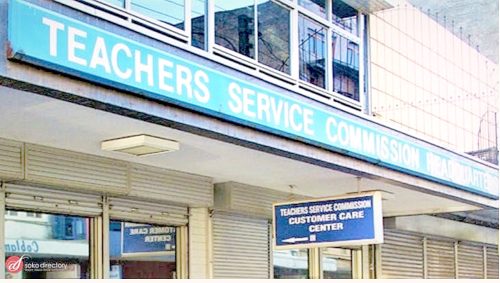
However, his defence of education reforms came against a backdrop of mounting tension over teacher recruitment, after the Teachers Service Commission (TSC) confirmed that only 20,000 out of 44,000 intern teachers will be absorbed into permanent and pensionable terms in the 2026/27 financial year.
The announcement was made during a parliamentary session involving the National Assembly Departmental Committee on Education, chaired by Tinderet MP Julius Melly, where TSC officials led by Acting CEO Eveleen Mitei defended the budget estimates.
According to the Commission, the 20,000 interns set for confirmation are expected to complete their two-year internship by January 2027 before transitioning into permanent employment.
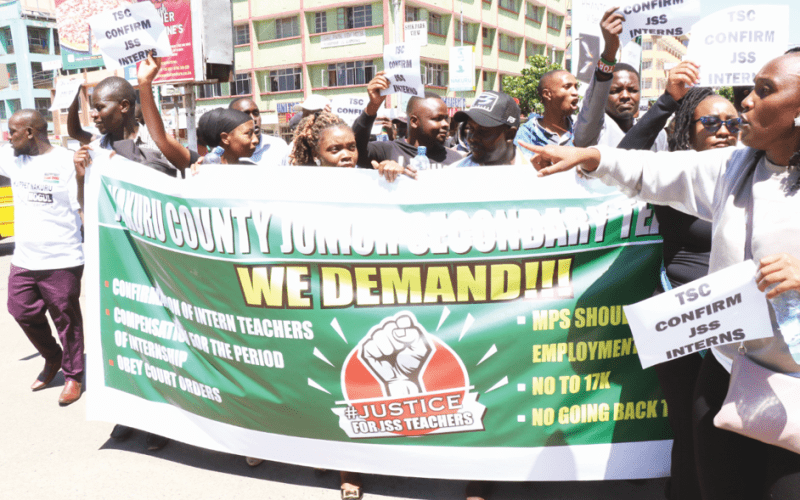
The decision has sparked criticism from unions, lawmakers, and education stakeholders who argue that leaving nearly half of intern teachers in limbo could worsen staffing shortages in public schools.
Lawmakers questioned TSC on promotion delays, teacher compensation, and allegations that some school principals were withholding teachers’ academic certificates.
“Among the key issues raised during the session were the confirmation of the 20,000 intern teachers who are scheduled for confirmation, promotion of teachers, and concerns over principals reportedly holding on to teachers’ certificates,” the committee noted.
TSC officials further told the committee that the Commission could not proceed with fresh permanent recruitment while thousands of interns remain unconfirmed.
The Commission also revealed that although funds for Work Injury Benefits Act (WIBA) compensation had been requested, the allocation was not funded, raising further concerns over teacher welfare.
Employment of intern teachers
The debate has been intensified by Emuhaya MP and Kenya Union of Post-Primary Education Teachers (KUPPET) National Chairman Omboko Milemba, who has called for the immediate absorption of all 44,000 intern teachers into permanent and pensionable terms.
Milemba has cited a Court of Appeal ruling delivered on February 27, 2026, which declared the Teachers Internship Programme unconstitutional, discriminatory, and illegal.
“The internship programme is declared illegal by the courts. The Teachers Service Commission must now quickly change and move to Parliament. Once they must have apologised to the teachers whom they employed wrongly, because it was illegal,” Milemba said.
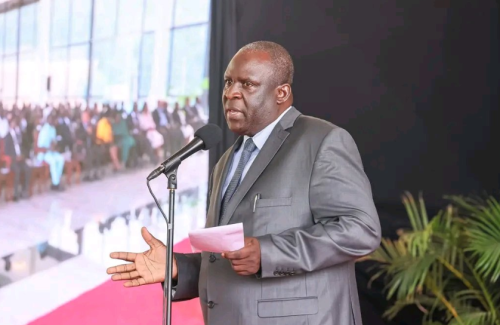
He further insisted the programme should be scrapped.
“They must cease from employing any other teacher as interns. I have done several petitions in Parliament to have teachers employed on a permanent and pensionable basis. Come to Parliament, get the budget. These teachers are suffering,” he added.
Despite pressure from stakeholders, TSC maintains that absorbing all 44,000 interns at once would significantly increase the government’s wage bill.
The Commission is currently grappling with a Ksh2.5 billion monthly budget deficit, translating to about Ksh30 billion annually, with education stakeholders warning of strain on implementation of the court ruling and broader education financing.
The government is also finalising the supplementary budget process, with no specific allocation yet made for the mass absorption of intern teachers.