Protest victims’ compensation: Twist of fate as govt insists on Ksh2B amid jittery
By Aloys Michael, June 18, 2026A fresh debate has emerged over the government’s Ksh2 billion compensation programme for victims of protest-related human rights violations, with authorities maintaining that only a select category of victims will benefit despite growing pressure from affected families, activists, and political leaders.
The controversy follows clarification by the Kenya National Commission on Human Rights (KNCHR) that not every individual affected during demonstrations between 2017 and 2025 will qualify for compensation under the proposed reparations framework.
The government has already committed Ksh2 billion towards compensating victims of serious human rights violations linked to election-related unrest, anti-government demonstrations, and recent Gen Z-led protests.
However, questions continue to mount over the criteria used to identify beneficiaries, with critics warning that many victims could be left out.
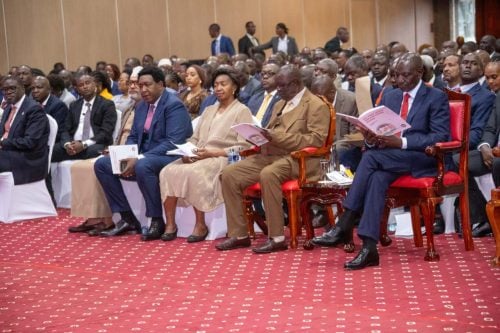
Speaking during the presentation of the Report on the Framework for Reparations for Victims of Human Rights Violations at State House, Nairobi, KNCHR Chairperson Claris Ogangah said the compensation programme was deliberately designed to address gross human rights violations rather than all incidents reported during demonstrations.
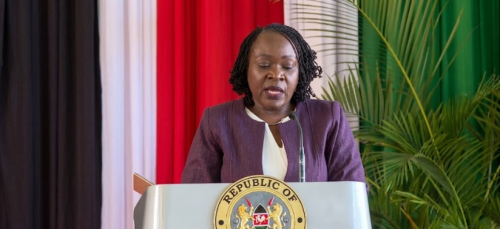
According to Ogangah, the framework focuses on violations linked to actions by state actors and excludes incidents considered ordinary criminal offences.
She explained that while the commission received numerous complaints arising from protests over the years, not every case met the threshold for reparations.
“The commission acknowledges that not all reported cases qualify as gross human rights violations for reparations because some incidents involved isolated criminal acts that should be addressed through the criminal justice system,” she said.
The commission noted that compensation will primarily target victims of extrajudicial killings, enforced disappearances, torture, serious injuries resulting from excessive force, and sexual and gender-based violence associated with demonstrations.
The report covers violations documented during the disputed 2017 and 2022 General Elections, the 2023 and 2024 anti-government protests, including demonstrations against the Finance Bill, as well as the 2025 Saba Saba protests.
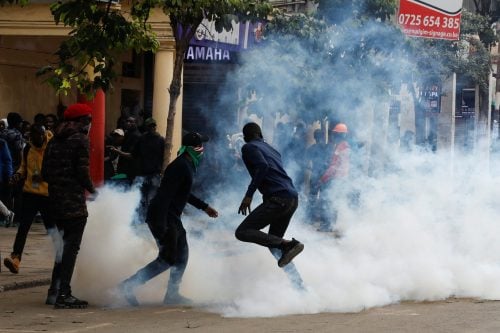
PHOTO/@channelafrica1/X
KNCHR maintains that incidents such as looting, vandalism, theft, assaults, and other criminal acts committed by civilians or rogue officers acting outside official duties will not fall under the compensation scheme.
The position has sparked concern among some victims who argue that the distinction could exclude people who suffered significant losses during periods of unrest.
Adding to the debate, Ogangah revealed that additional victims have been identified since the completion of the report. She appealed for consideration of these cases in future compensation phases, subject to the availability of funds.
Protest victims demands
The latest clarification comes at a time when victims and families affected by the deadly Gen Z protests are demanding a review of the proposed compensation rates.
Under the current framework, families of those who lost their lives would receive Ksh3 million, while victims of enforced disappearances would be eligible for Ksh2 million.
However, survivors and affected families say the amounts do not adequately reflect the magnitude of the suffering endured.
Some families are now pushing for a minimum compensation package of Ksh5 million for deaths and disappearances, Ksh4 million for survivors of sexual violence, Ksh3 million for victims who suffered permanent disabilities, and additional compensation for those subjected to unlawful arrests and detention.
They also want assurances that the compensation process will remain transparent and inclusive.
Victims’ representatives have raised fears that the verification process could leave out deserving claimants, particularly those whose cases may not have been captured during earlier documentation exercises.
Activists have similarly questioned the speed at which the framework is being implemented, arguing that more time should be provided for public participation and verification of claims.
Some lobby groups have called for an extension of the public submission period to allow more victims to register and submit evidence supporting their cases.
Beyond financial compensation, affected families are demanding accountability for alleged abuses committed during demonstrations and broader reforms within the security sector.
Calls have also intensified for political leaders to publicly acknowledge the suffering experienced by victims during the 2024 and 2025 protests and to commit to preventing similar violations in future.
The compensation initiative forms part of broader commitments under the political cooperation framework agreed between the United Democratic Alliance (UDA) and the Orange Democratic Movement (ODM).
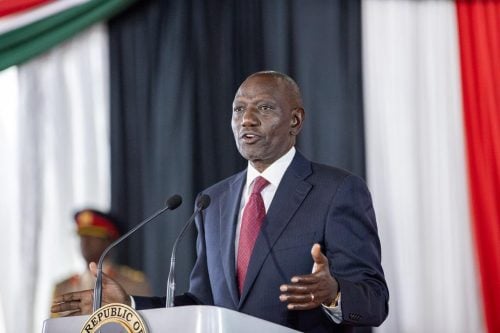
President William Ruto previously announced that the government would mobilise both public and private resources to support compensation efforts, arguing that while no amount of money can replace a lost life, reparations can provide some measure of justice and relief to affected families.
Despite the government’s commitment, the compensation programme now faces a critical test as scrutiny over eligibility criteria, compensation rates, and transparency continues to grow.