Peter Mbae criticises Oburu over benevolent dictatorship advice to Ruto’s remarks
By Aloys Michael, July 9, 2026Democracy for the Citizens Party (DCP) Secretary for Planning and Economic Affairs Peter Mbae has criticised the Orange Democratic Movement (ODM) leader Oburu Odinga over his controversial suggestion that President William Ruto may need a little benevolent dictatorship to successfully implement key government reforms.
Speaking in an interview on a local TV station on Thursday, July 9, 2026, Mbae said Oburu’s remarks were troubling, particularly because they came from a veteran politician associated with the legacy of the late Raila Odinga, a figure long linked to Kenya’s struggle for democratic reforms and constitutional freedoms.
“It is unfortunate that someone like Oburu Odinga, who carries the legacy of the late Raila Odinga, can say something like that. Advising Ruto to embrace a ‘benevolent dictatorship’ is adding fuel to the fire for someone who may already be thinking that way,” Mbae said.
The comments have sparked fresh debate over governance, democracy and the implementation of major reforms under President Ruto’s administration, with critics warning against any rhetoric that appears to justify the concentration of power in the Executive.
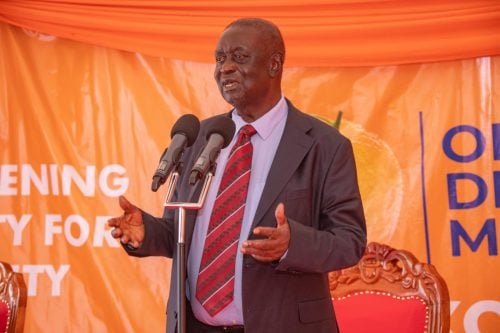
Mbae argued that Kenya’s democratic gains were hard-won and should never be portrayed as obstacles to development or policy implementation.
According to the DCP official, leaders should focus on building public consensus around reforms rather than suggesting that democratic processes slow down government programmes.
“Kenyans fought for constitutional freedoms, accountability and democratic governance. The solution to policy challenges cannot be to imply that democracy itself is the problem,” Mbae said.
His remarks come amid growing national conversations about governance, public participation and accountability as the government rolls out a series of ambitious economic and social reforms.
Statements touching on democracy and executive power often generate strong reactions in Kenya, given the country’s history of political reform movements and constitutional change.
Oburu defends Ruto’s reform agenda
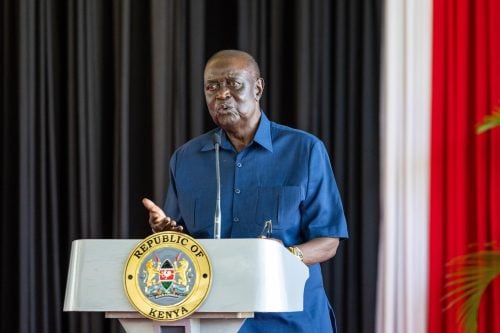
The controversy stems from remarks Oburu made during the signing of the Sovereign Wealth Fund Bill, 2026, at State House, Nairobi, on Wednesday, July 8, 2026.
Speaking at the event, Oburu urged President Ruto to remain firm in implementing transformative government programmes despite criticism from opponents and vested interests.
Drawing from his experience as a former Assistant Minister for Finance, Oburu argued that major reforms often encounter resistance from groups that benefit from the status quo.

“We have been in government, and I was an Assistant Minister of Finance. We tried to move, but the private interests around who want to benefit from small infrastructure, which does not take the country anywhere, always come in to put pressure on the government, making it not to progress,” he said.
The veteran politician then made the remarks that have since ignited political debate.
“Sometimes there is too much democracy; there should be a little benevolent dictatorship so that some things can move. Mr President, I don’t want to say that you should be a dictator; I am not saying that,” Oburu said.
Oburu specifically defended the government’s Social Health Authority (SHA) programme, describing it as one of the most significant reforms undertaken in recent years.
Political blunder?
He argued that critics have failed to appreciate the progress the programme has made toward achieving Universal Health Coverage (UHC), a goal that successive governments have pursued for years.
“But some of these things, like SHA, I think critics don’t go into the details of what is happening. It is a very big transformation towards what we have been calling universal health care. Many governments have tried to introduce UHC, but there is no other move which is nearer to UHC than the SHA,” Oburu said.
According to Oburu, the registration of millions of Kenyans under SHA demonstrates the programme’s potential to transform healthcare access across the country.
Mbae’s criticism is likely to amplify an already heated debate over how far governments should go in pursuing reforms and whether efficiency can ever justify limiting democratic processes.
The clash also highlights emerging political divisions over President Ruto’s leadership style and reform agenda, with supporters arguing that bold decisions are necessary to transform the country, while critics insist that all reforms must remain firmly anchored in constitutional principles, public participation and democratic accountability.