Advertisement
Paul Muite criticises centralisation of public funds through NIF
Wednesday 11th March, 2026 06:08 PM|

Senior counsel Paul Muite has criticised President William Ruto’s move to set up the National Infrastructure Fund, warning that it centralises public money under one person’s control.
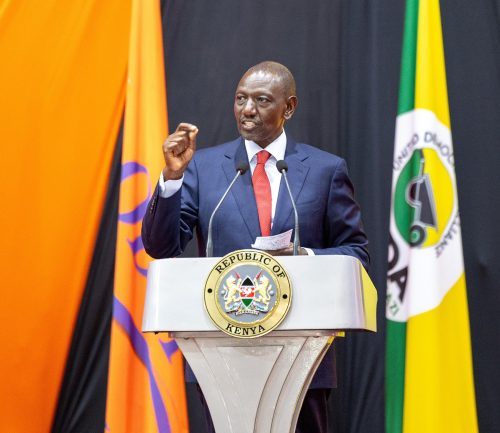
Ruto announced on March 10, 2026 that he would appoint the governing council for the fund the following day. The announcement came during a joint meeting of ODM and UDA parliamentarians at the Kenyatta International Convention Centre in Nairobi. The fund aims to raise nearly Ksh5 trillion over the next decade to finance national infrastructure projects.
“I will be appointing the governing council tomorrow, then they will be the ones to competitively recruit the board because we want to inject transparency into that space,” Ruto said during his speech.
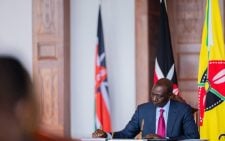
He signed the law establishing the fund on March 9, 2026, at the State House. The legislation shifts Kenya from debt-based financing to an investment-driven model. Ruto promised that the fund would be accountable.
You Might Also Like

“Many people were asking whether the Infrastructure Fund will be accountable, and I want to tell you yes, it will be; it is going to be accounted by the parliament, it is going to be audited by auditor general, and it is going to engage with the cabinet,” he said.
Critics question fund oversight
The fund’s board will include a chairperson (independent), four independent directors, two with development banking experience, plus the CEO as ex-officio member. Ruto said the council will provide strategic oversight without interfering in daily operations.
The fund will draw on privatisation proceeds and private investments. Its first major project is the expansion of Jomo Kenyatta International Airport, supported by Ksh20 billion from the Kenya Pipeline IPO.
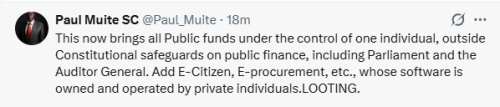
Despite these safeguards, critics argue that the structure risks concentrating too much power in the presidency. Muite said on X, formerly Twitter:
“This now brings all public funds under the control of one individual, outside Constitutional safeguards on public finance, including Parliament and the Auditor General. Add E-Citizen, E-procurement, etc., whose software is owned and operated by private individuals,” Muite said.
Other voices shared similar concerns. Kiharu MP Ndindi Nyoro has opposed the National Infrastructure Fund, warning it could fuel more borrowing instead of delivering real development. Speaking at the opening of Mwai Kibaki Senior School in Gaturi ward, he said Kenya is already borrowing about Ksh1.5 trillion annually, and the new fund risks adding more debt outside the normal budget.
“That fund is meant to borrow more money outside the budget. It is not good to continue burdening Kenyans now and still burden them tomorrow,” Nyoro said.
Author
Kenneth Mwenda
Kenneth Mwenda is a business, sports, and politics digital writer with over seven years of experience in journalism, covering breaking news, feature stories, and in-depth analysis across a range of beats.
For inquiries, he can be reached at [email protected]
View all posts by Kenneth MwendaLatest News




Advertisement
More on Inside Politics