Advertisement
MPs pressed to endorse only untainted Cabinet nominees
Friday 02nd August, 2024 05:30 AM|
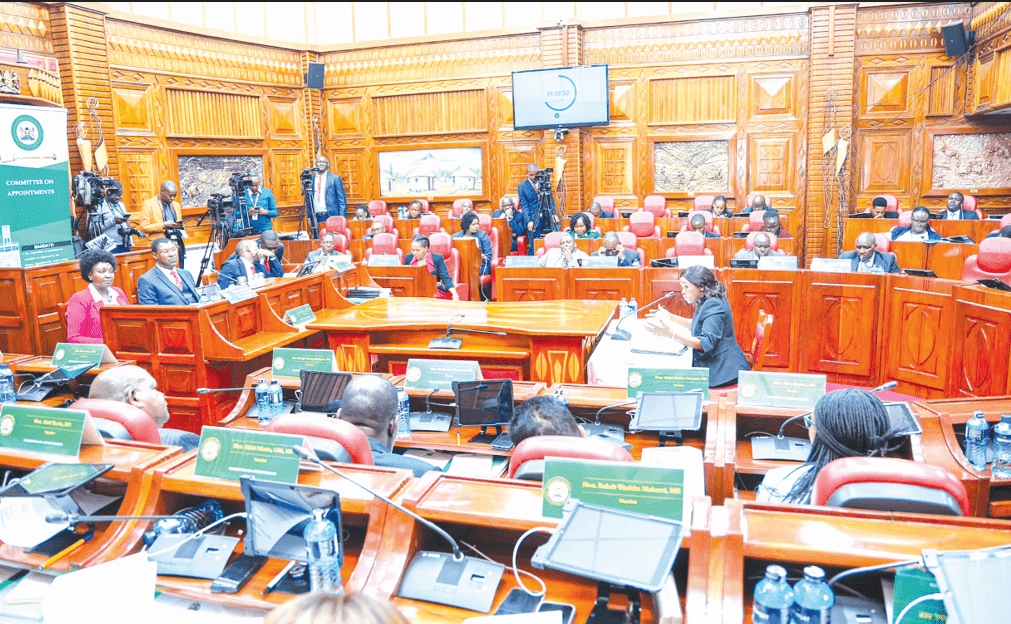
Pressure piled on MPs to reject nominated Cabinet Secretaries with integrity issues as the vetting got underway yesterday.
The US government joined two watchdog groups in warning MPs not to pander to the whims of the Executive by approving nominees with integrity issues and questionable qualifications.
In a statement, Washington, through its embassy in Nairobi, urged Parliament to rise to the occasion and ensure that individuals nominated to the Cabinet hold the required qualifications and integrity.
On its X page, the embassy told MPs to endorse credible individuals. The embassy reiterated its support for Kenya’s commitment to democratic morals and good governance.
“As Kenyans look ahead to the vetting of Cabinet nominees beginning Thursday, we recognize the importance of integrity in public service and the National Assembly’s vital role in upholding Chapter Six of Kenya’s Constitution,” the embassy said.
Moral standing
The National Assembly is tasked to pick individuals with good moral standing and ethical standards for public office.
Kenyans have already raised questions about some of the nominees through petitions to the Committee on Appointments, citing their past record as public officers.
They want a vetting process devoid of interference from the Executive or any other external body, as had been the case previously.
The US Embassy emphasised that upholding these constitutional standards is crucial for nurturing a transparent and effective government.
The Ethics and Anti-Corruption Commission had earlier warned MPs not to approve the nomination of former Kakamega governor Wycliffe Oparanya owing to corruption issues.
The agency declined to clear him for vetting owing to corruption-related charges he is facing.
Chapter Six of the Constitution decrees that all State officers adhere to the highest standards of integrity, competence, and diligence.
In the Oparanya matter, the EACC noted that it had filed for preservation orders against his assets, alleged to be proceeds of corruption arising from a conflict of interest, and that the matter is still pending in court.
Oparanya is scheduled to appear before the vetting panel on Sunday.
Last week, the High Court declined to unfreeze his assets in the ongoing graft probe in relation to the alleged embezzlement of Sh1.3 billion during his two-term tenure as governor.
Gender rule
The anti-graft body is seeking to recover the billions from Oparanya and several companies associated with officials of the Kakamega County government amounting to Sh1,387,310,025.
The former governor, who also served in the Cabinet under the national coalition government in 2007, said he was well versed in the running of government, adding that having participated in the development of the Vision 2030 plan, he is aware of what is expected of him by the President and the country.
The National Gender and Integrity Commission (NGEC) had also warned that President William Ruto’s initial list of 20 nominees did not meet the two-thirds gender rule and lacked inclusivity.
The NGEC had pointed out that the initial list had only six women, falling short of the constitutional rule.
It later commended the President for nominating Dorcas Agik Oduor for Attorney General and Beatrice Askul Moe for the Ministry of East African Community Affairs and Regional Development.
Positive step
In its statement, the NGEC described the nominations as a positive step in fulfilling the constitutional mandate of gender representation.
The agency noted that the new Cabinet now comprises 25 members, including the President, the Deputy President, the Attorney General and 22 Css, including 17 men, representing 68 percent, and eight women, representing 32 percent.
This composition is just one percent short of meeting the requirements of Article 27(8) of the Constitution, which states that no more than two-thirds of members of an appointed body should be of the same gender.
However, the NGEC also pointed out the lack of representation of people with disabilities among the nominees, stating that Article 54(2) of the Constitution requires five percent representation, which has not been met.
The agency called on MPs to be rigorous in vetting the candidates, ensuring strict compliance with Chapter 6 of the Constitution, which focuses on leadership and integrity.
They stressed that only those who meet these strict requirements should be approved to ensure a Cabinet that embodies equality, non-discrimination and ethical leadership.
Taking the cue, members of the National Assembly’s Committee on Appointments, chaired by Speaker Moses Wetang’ula, subjected the first five nominees to rigorous questioning, raising issues of incompetence and unexplained acquisition of wealth.
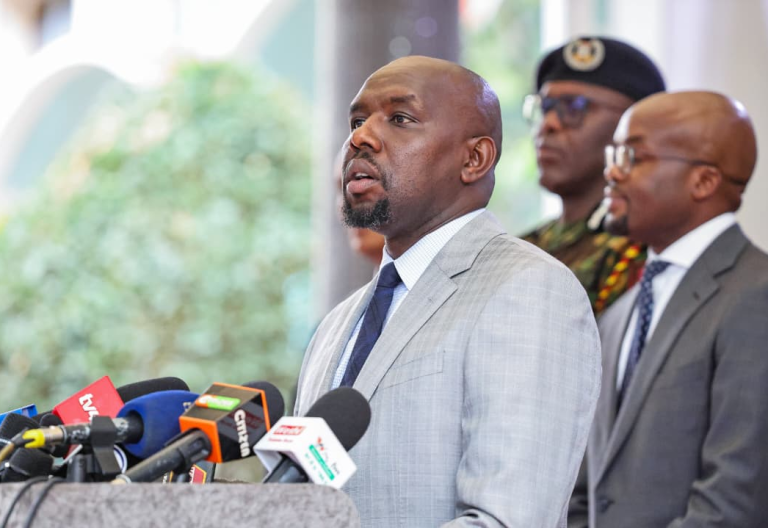
Interior Cabinet Secretary-nominee Kithure Kindiki, the first to face the panel, fought off claims that his tenure was characterised by human rights violations, including killings of protesters and abductions.
Kindiki maintained that he will not resign from his position, arguing that he is not to blame for the incidents as his role is related only to formulating policy.
He said: “It is unfortunate that during recent protests, we witnessed the deaths of 42 Kenyans, [with] 486 civilians and 285 police injured. We had about 1,387 arrests, 54 police cars destroyed and 110 vehicles also destroyed. Therefore I want to say the operational responsibility lies within the National Police Service.”
His defence came after MPs sought to know why he should be cleared to join the Cabinet when questions hung on his conduct during his previous tenure.
Committee member Junet Mohamed sought to know why Kindiki deserves a second chance as Interior CS when he looked like he had lost the grip during his tenure.
Mohamed said: “You are one of the two people reappointed to the same docket they were serving in the last two years. What do you think makes you [suitable to] serve in this docket?
“Again, looking back at what happened in the last two months, in my view you look like someone lost, your presence was not being felt, the minister’s voice was not being heard, plus the abductions taking place.”
He added: “You have also been accused of presiding over human rights abuses. For example, on 25th July 2024 we lost 50 people and [during] Azimio demonstrations we lost more than 74 Kenyans … . What … are you going to do to stop [the killings]?”
The nominee was also pressed to explain the growth of his wealth from Sh544 million to Sh644 million in the 21 months he was in office.
Committee members wanted to know whether the increase is related to the office that he held.
The nominee for the Lands ministry, Alice Wahome, was pressed to explain what she had done to address the issue of land grabbing by ministry officials. “You are aware of very many cases of land grabbing in the country, land grabbing in Loresho, around Windsor, cases where your own ministry officials are involved. How have you been dealing with such cases during your tenure?” posed Majority Leader Kimani Ichung’wah.
Author
Anthony Mwangi
View all posts by Anthony MwangiLatest News




Advertisement
More on Inside Politics