Morara Kebaso dumps his own INJECT Party for Jubilee as he eyes Borabu MP seat
By Mustafa Juma, June 30, 2026Political activist-turned-politician Morara Kebaso has announced that he will contest the Borabu parliamentary seat on a Jubilee Party ticket, effectively shelving the INJECT Party he founded less than two years ago.
The surprise declaration marks a significant shift for Kebaso, who rose to national prominence during the 2024 Gen Z protests and later launched the Injection of National Justice, Economic and Civic Transformation (INJECT) Party as a youth-driven political movement.
Speaking during an interview with media personality-cum-comedian Oga Obinna on the night of Monday, June 29, 2026, Kebaso said political realities in Nyamira County and the larger Gusii region had informed his decision to join the party associated with former Interior Cabinet Secretary Fred Matiang’i, who is the current Jubilee deputy party leader and 2027 presidential flag-bearer.
“INJECT Party itakaa kwa Kabati, kwa saa hizi tunafanya kazi na chama cha Dr Fred Matiang’i, Jubilee Party. Yes, I have joined the Jubilee Party, we have to go with the realities of the politics of the day,” Kebaso said.
“Pale Borabu, ama Nyamira County, ama Gusii region, huwezi kutaja kitu ingine. Lazima ikuwe Jubilee and you know you don’t want to make people emotional because they won’t even listen to the message that you have. They won’t even give you an opportunity to serve them.”
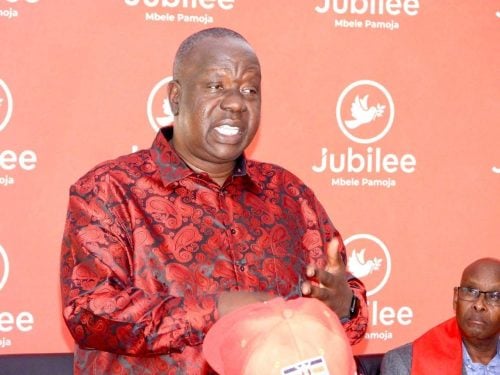
Kebaso also confirmed that he will be seeking the Borabu Constituency parliamentary seat in the 2027 General Election under the Jubilee Party banner.
A dramatic turnaround
The announcement represents a sharp departure from Kebaso’s earlier political messaging.
Following the anti-government protests in 2024, he unveiled the INJECT Party as a platform intended to give young Kenyans an alternative to the country’s traditional political formations. The movement championed integrity, youth leadership and governance reforms, with Kebaso promising to field candidates across the country.
In April 2025, he announced that all young aspirants seeking elective office through INJECT would receive free party tickets, saying the initiative was designed to lower barriers to political participation for the youth.
A month earlier, Kebaso had declared that INJECT had joined the opposition coalition, arguing that the party’s mission was to offer solutions rather than merely criticise the government.
“Our job is not to complain about this or that & him or her. Our mission is to offer solutions,” he said at the time.
Questions over INJECT’s future
Kebaso’s latest remarks have now cast uncertainty over the future of the political outfit, with his statement suggesting the party will take a back seat as he pursues elective politics through Jubilee.
His decision also follows months of questions surrounding the party’s organisational status. While Kebaso had presented INJECT as a national political vehicle, reports earlier this year indicated that the party had not completed registration with the Office of the Registrar of Political Parties, limiting its ability to field candidates independently.
The activist had previously defended the movement as a long-term project aimed at transforming Kenya’s political culture and reducing the influence of ethnic politics.
Betting on Jubilee’s influence
Kebaso acknowledged that local political dynamics played a decisive role in his decision.
His endorsement of Jubilee reflects the party’s enduring influence in parts of the Gusii region, particularly following the emergence of former Interior Cabinet Secretary Fred Matiang’i as one of the country’s leading opposition figures ahead of the 2027 elections.
By aligning himself with Jubilee, Kebaso appears to be prioritising electoral viability over maintaining his own political vehicle, arguing that voters are more likely to embrace a familiar party brand than a relatively new movement.
The move is likely to spark debate among his supporters, many of whom rallied behind his earlier call for young leaders to build new political parties instead of joining established outfits.
It also marks one of the clearest indications yet that Kenya’s emerging generation of politicians is increasingly willing to adapt to regional political realities as the race toward the 2027 General Election gathers momentum.