Morara: Gen Z missed chance to seize parliament after turning on each other
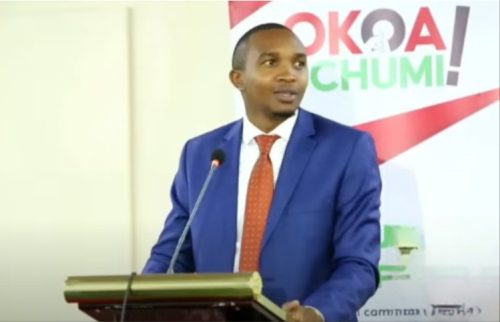
By Mustafa Juma, January 4, 2026Political activist Morara Kebaso has sparked fresh debate on youth participation in politics after lamenting what he described as a historic missed opportunity for Kenya’s Gen Z to decisively shape Parliament and national governance.
Taking to his official X account on Sunday, January 4, 2026, Morara argued that if Gen Z had formed a coherent political party, they could have won at least 150 seats in Parliament, which he says are enough to significantly influence legislation, control the budget, and rein in what he termed wastage, corruption, and reckless borrowing.
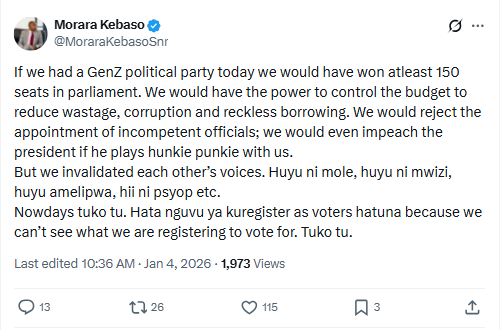
“If we had a Gen Z political party today, we would have won at least 150 seats in parliament. We would have the power to control the budget to reduce wastage, corruption, and reckless borrowing. We would reject the appointment of incompetent officials; we would even impeach the president if he plays hunkie punkie with us,” Morara stated.
Gen Z mistrust
According to Morara, such numbers would have given young leaders unprecedented leverage over national decision-making, including the ability to block unpopular policies and demand accountability from the Executive.
However, he blamed internal mistrust and constant infighting among young activists for derailing that potential.
Voter apathy
Morara further said the culture of mutual suspicion weakened collective action and ultimately drained the momentum that had built up among young Kenyans in recent years. He added that the disillusionment has now spilled over into voter apathy.
“But we invalidated each other’s voices. Huyu ni mole, huyu ni mwizi, huyu amelipwa, hii ni psyop, etc. Nowdays tuko tu. Hata nguvu ya kuregister as voters hatuna because we can’t see what we are registering to vote for. Tuko tu,” he wrote on X.
His remarks come at a time when Kenya’s political class is increasingly courting the youth vote ahead of the 2027 General Election, amid growing frustration over unemployment, high taxes, cost of living, and governance concerns.