Advertisement
Matiang’i says economic data shows gap between govt statements and reality
Monday 04th May, 2026 03:23 PM|
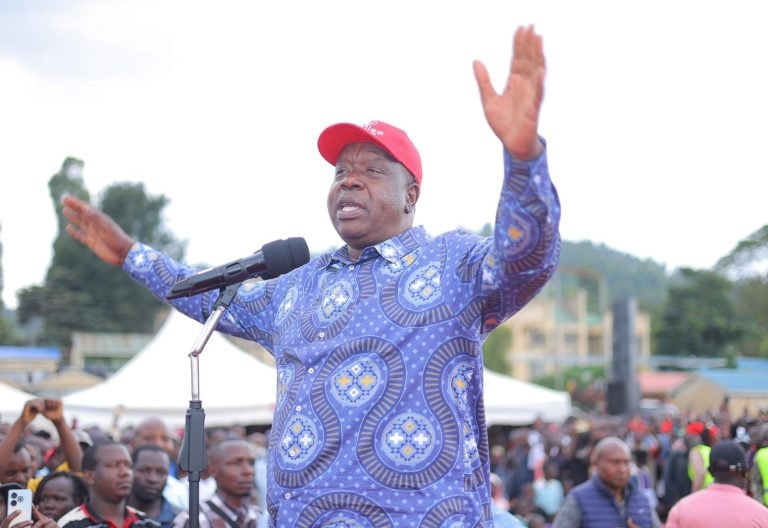
Jubilee Deputy party leader Fred Matiang’i has launched a political broadside against President William Ruto’s administration, accusing it of misleading Kenyans on the state of the economy following revelations contained in the latest Kenya National Bureau of Statistics (KNBS) Economic Survey report.
The intervention, delivered during a fiery Monday, May 4, 2026, press briefing, comes at a time when the 2026 KNBS Economic Survey is already stirring political debate over discrepancies between official government messaging and statistical evidence on growth, agriculture, and job creation.
Matiang’i questioned the government’s handling of economic communication and accused senior officials of distorting facts while citizens grapple with economic hardship.
“The retired president makes one phone call, and the government screams the whole weekend. What kind of people are these?” Matiang’i said, citing what he described as misplaced political priorities.
You Might Also Like
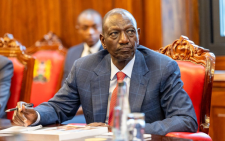
He further cited the KNBS report as evidence that official narratives on economic recovery do not align with verified data.
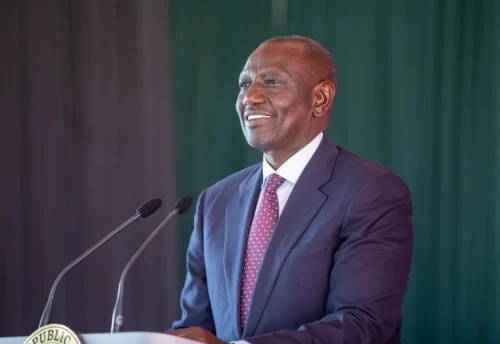
“We are reading now the Kenya National Bureau of Statistics, a public sector government agency, has told us clearly with data and statistics, that two-thirds of the stories they have been telling us are just blatant lies,” he added.
The former Interior Cabinet Secretary has also urged the Kenya Kwanza administration to shift focus from political exchanges to governance and service delivery, warning that public trust was being eroded.
“There is work to be done. A lot of work to be done. Let us focus on that work and build our country,” he said.
The KNBS economic survey
The remarks come days after the release of the 2026 KNBS report exposed gaps in the government’s scorecard.
While the government has repeatedly highlighted strong recovery in agriculture, housing, and employment, the survey presents a more restrained outlook.
For example, maize production was reported to have risen modestly by 2.4 per cent to 45.8 million bags, far below earlier presidential claims of a sharp surge toward 70 million bags.

Similarly, sugar production figures indicate a contraction rather than the recovery previously announced by government officials, raising questions about the accuracy of sectoral performance statements.
The housing sector also reflects inconsistencies, with KNBS reporting 205,311 units under construction, below earlier government estimates of 230,000 affordable homes.
Matiang’i’s remarks also carried strong political undertones, referencing internal tensions within the ruling coalition and suggesting that the administration is struggling to maintain cohesion.
He criticised what he termed as weekend politics, arguing that leaders were more focused on attacking former President Uhuru Kenyatta than addressing pressing national issues.
“President Kenyatta is retired. He is a member of Jubilee. Leave him alone. If you have a country to run, then run it,” he stated.
The comments come as Kenya’s economic debate intensifies ahead of the 2027 general election cycle, with rising living costs, taxation concerns, and employment challenges dominating public discourse.
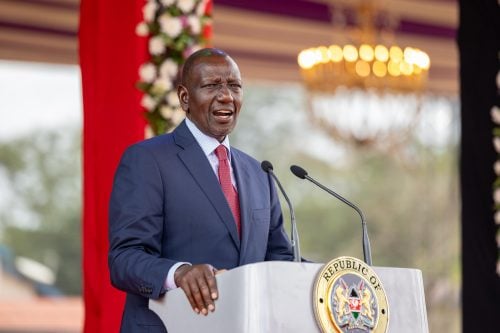
Ruto defends economic record
President Ruto’s administration has consistently defended its economic strategy, citing improvements in agricultural output, infrastructure expansion, and job creation under flagship programs such as affordable housing and value-chain reforms.
Speaking during Labour Day celebrations in Vihiga on Friday, May 1, 2026, Ruto pushed back against what he described as alarmist headlines that followed the release of the 2026 Economic Survey.
The report showed that Kenya’s economy expanded by 4.6 per cent in 2025, marking a second consecutive year of deceleration, from 4.7 per cent in 2024 and 5.7 per cent in 2023.
Despite the slowdown, the President insisted the broader trajectory remains positive. In nominal terms, Kenya’s GDP rose to Ksh17.6 trillion in 2025, up from Ksh16.2 trillion the previous year, with all sectors recording growth.
“Tunaweza kuwa na ripoti nyingi… lakini bei ya mbolea ilikuwa elfu sita sasa ni elfu mbili na mia mbili,” Ruto said, pointing to falling fertiliser prices and increased teacher recruitment as tangible indicators of progress.
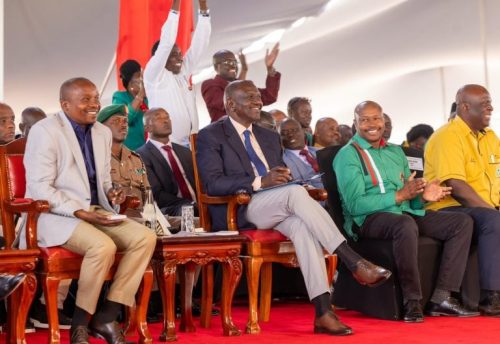
He noted that over 120,000 teachers have been hired and framed such interventions as evidence that government policies are delivering real benefits beyond headline figures.
Ruto also said what he described as strong macroeconomic fundamentals. Foreign exchange reserves, he said, have risen to Ksh1.73 trillion, equivalent to nearly six months of import cover, while the Kenyan shilling has remained relatively stable at around Ksh129 to the US dollar for over two years. According to the President, this stability reflects improved investor confidence and sound policy management.
However, the KNBS report has complicated that narrative by highlighting gaps between projected and actual figures in several sectors, fueling opposition criticism that the government is overstating progress.
While the economy is indeed growing, the data confirms a clear loss of momentum. More critically, job creation remains heavily skewed toward the informal sector. Of the 822,100 jobs created in 2025, nearly 87 per cent were informal, highlighting the persistence of low-income and vulnerable employment.
This imbalance shows a deeper structural issue: although approximately 800,000 Kenyans enter the labour market each year, only about 100,000 secure formal employment. The rest are absorbed into informal activities, often characterised by low wages, limited protections, and minimal job security.
Author
Latest News




Advertisement
More on Inside Politics