Inside Ruto’s SHA gamble as Affordable Housing funding worries grow
By Aloys Michael, March 22, 2026The twin pillars of President William Ruto’s social transformation agenda, healthcare and housing, are facing mounting financial strain, raising fresh concerns about sustainability and delivery.
A parliamentary probe has revealed that the Social Health Authority (SHA), one of the administration’s flagship reforms, is operating on a razor-thin margin that could threaten its survival.
At the same time, the Affordable Housing Programme is grappling with funding cuts and delayed disbursements, casting doubt on its pace and completion timelines.
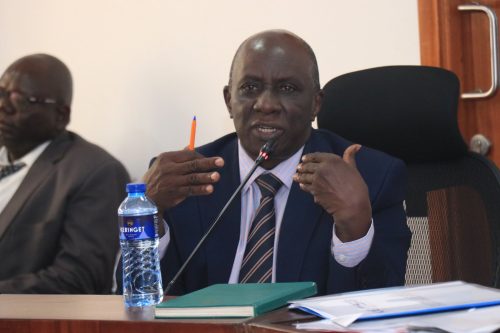
The National Assembly Health Committee has painted a worrying picture of SHA’s finances. Committee chair and Seme Member of Parliament James Nyikal said the scheme’s current model is unsustainable.
“While SHA collects about Ksh7.4 billion every month, it also spends about Ksh7.2 billion monthly, which is not sustainable,” Nyikal said.
The narrow margin leaves little room for shocks, exposing the scheme to collapse if reforms are not implemented urgently.
Nyikal noted that although 29 million Kenyans are registered under SHA, only about five million actively remit contributions. This imbalance has largely been attributed to low compliance in the informal sector, where earnings are irregular, and enforcement is weak.
Currently, formally employed workers contribute 2.75 per cent of their salaries automatically, ensuring consistent inflows. However, the majority in the informal sector often default, undermining the scheme’s revenue base.
“I think the problem is with the management of SHA itself and the providers,” the Seme MP stated.
Ruto’s blow?
Despite describing SHA’s design as sound, lawmakers argue that operational weaknesses are undermining its impact. Public health facilities, in particular, have been flagged for lacking efficient claims systems, leading to disproportionate payouts to private hospitals.
This imbalance risks widening inequality in access to healthcare, as low-income Kenyans, who rely heavily on public facilities- continue to receive lower-quality services.
To address contribution gaps, SHA is exploring partnerships with savings and credit cooperatives (SACCOs) and microfinance institutions to allow informal workers to pay premiums gradually.
However, concerns remain that without immediate fixes, patients may be forced to dig deeper into their pockets for treatment, potentially derailing progress toward Universal Health Coverage (UHC).
The financial strain comes amid legal setbacks. The High Court in Nairobi recently ruled that the rollout of SHA in 2024 was unconstitutional.
Justice Bahati Mwamuye found that the government implemented the programme prematurely, before critical systems were in place.
“The evidence shows that during the early phase of implementation, many Kenyans were unable to access essential and life-saving medical services,” Justice Mwamuye’s ruling read in part.
“In constitutional terms, this was not a mere administrative inconvenience. It was a failure that implicated the state’s obligations to respect, promote, protect and fulfil the right to health.”
While the court declined to nullify the programme due to its current operational status, the judgment shows structural weaknesses that continue to haunt its execution.
Housing programme hit by funding cuts
Parallel challenges are emerging in the Affordable Housing Programme, another key component of Ruto’s economic plan.
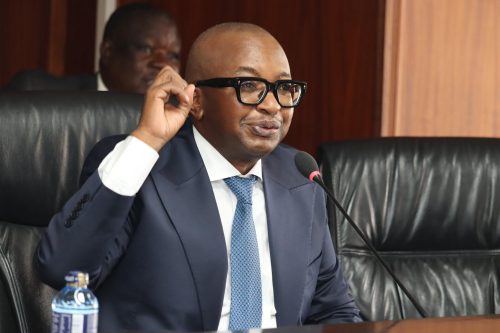
Housing Principal Secretary Charles Hinga told Parliament that donor funding has been reduced by Ksh800 million in the 2025/2026 Supplementary Budget, dropping from Ksh13.3 billion to Ksh12.5 billion.
“Currently, we have 1,700 ongoing housing projects. We also have a personnel shortage; some officers are working up to three shifts due to understaffing,” he told the House.
“Under the proposed FY 2025/2026 Supplementary Budget, a reduction of Ksh800 million has been made to the programme’s donor funding allocation, lowering the total budget from Ksh 13.341 billion to Ksh12.541 billion.”
The funding gap comes at a critical time, with about 80 per cent of the allocated budget already utilised.
Further complicating matters is a standoff with the National Treasury over access to Ksh25 billion earmarked for housing projects. The funds, invested in 90-day Treasury Bills, remain inaccessible.
“The department had anticipated the funding inadequacy, having already utilised 80 per cent of the allocated budget. Although the Department had saved some funds in Treasury Bills, the National Treasury has declined to allow access to the funds,” Hinga stated.
The National Assembly Housing Committee, chaired by Mugambi Rindikiri, has summoned Treasury officials, including Cabinet Secretary John Mbadi, to explain the delay.
Lawmakers warn that continued inaccessibility of the funds could disrupt ongoing construction and delay delivery targets.
With both the SHA and the housing programme under strain, pressure is mounting on President Ruto to recalibrate its approach.
The convergence of funding gaps, implementation challenges, and legal scrutiny suggests that without decisive intervention, the administration’s ambitious social programmes could face significant setbacks.