Advertisement
Inside Ruto’s 2027 polls strategy driving security and IEBC budget surge
Thursday 04th June, 2026 09:53 AM|

President William Ruto’s government has unveiled a spending plan that offers the clearest indication yet of its priorities as the country gradually shifts attention toward the 2027 General Election.
Even as the government marshals resources amid pressure for budget cuts, questions about election preparedness and fairness are being voiced by the opposition, who have vowed to make Ruto a one-term president.
Among the issues raised by actors are the audit of the KIEMS kits, the voter register and Smartmatic contracts that expired in May 2026. The leaders claim that the government has a plan to manipulate to cement the United Democratic Alliance (UDA) chief’s re-election bid.
While the proposed budget allocates significant resources across education, healthcare, infrastructure and agriculture, the biggest winners are security agencies and the electoral commission, signalling a deliberate strategy aimed at ensuring stability and preparedness ahead of the next polls.
You Might Also Like

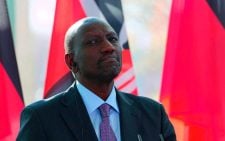
“This administration has made education not just a priority, but the foundation of our future. No nation can rise above the knowledge, the capabilities, and the skills of its citizens,” Ruto said in his Madaraka Day speech on Monday, May 1, 2026.
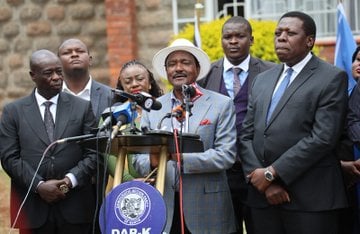
A closer look at the allocations reveals a strong focus on security institutions, electoral preparations and education, areas that could play a crucial role in shaping the political environment leading to 2027.
“There is a need for timely funding of the commission to avoid the last-minute financing challenges that have characterised previous election cycles and to ensure adequate preparation for the 2027 polls,” the committee observed.
The Ministry of Defence emerged as the single largest beneficiary among government ministries after receiving Ksh252.1 billion.
The allocation will support personnel costs, equipment modernisation and ongoing defence industrialisation programmes. The ministry also secured an additional Ksh2.1 billion for Kenya Shipyards and other defence operations to accommodate increasing personnel numbers.
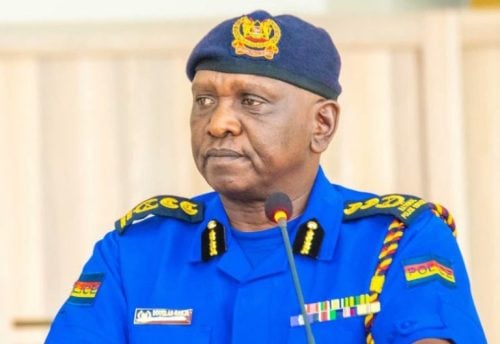
Security allocations
The National Intelligence Service (NIS) was among the biggest winners in the budget review process. Parliament increased its allocation to Ksh64.1 billion from the Ksh58 billion proposed by the National Treasury.
Compared to the current financial year, the intelligence agency’s budget has grown by Ksh13 billion since July 2025.
The additional funds are expected to strengthen field operations, training institutions and liaison offices. The sharp increase reflects growing emphasis on intelligence-led security operations as the country moves closer to a politically sensitive election period.
The National Police Service (NPS) also secured a substantial boost amid a quagmire over the 2027 polls’ safety, with its allocation rising to Ksh147.4 billion from Ksh135 billion in the current financial year.
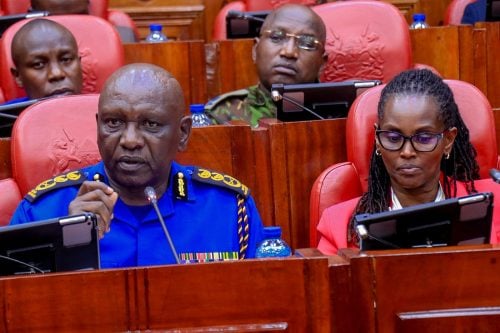
Meanwhile, the State Department for Internal Security and National Administration received Ksh63.9 billion, up from Ksh56 billion.
The committee has linked some of these increases to preparations for the 2027 elections. Security agencies are expected to play a critical role in maintaining order during voter registration, campaigns and the election period itself.
Among the notable allocations is Ksh800 million for the purchase of police helicopters and Ksh200 million for the repair of grounded aircraft.
Internal security agencies also received a net increase of Ksh8.4 billion to strengthen operations involving the Kenya Coast Guard, the Private Security Regulatory Service Board and the National Disaster Operations Centre (NDOC).
IEBC allocations
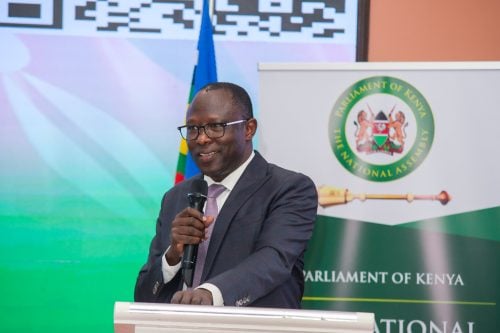
Beyond security, the Independent Electoral and Boundaries Commission (IEBC) has emerged as another major beneficiary. The commission was allocated Ksh24.9 billion to facilitate electoral preparations, including voter registration, boundary-related activities and election technology upgrades.
The committee emphasised the importance of timely financing to avoid the funding delays that have disrupted previous election cycles.
MPs noted that additional election-related resources would be provided in future budgets, with significant funding expected during the 2027-28 financial year when election activities intensify.
The budget therefore provides a glimpse into the government’s long-term election strategy: strengthen security agencies early, ensure electoral systems are adequately funded and avoid the logistical challenges that have historically affected poll preparations.

However, the budget also reflects the difficult choices facing the government amid fiscal pressures.
Despite these cuts, the government is investing heavily in security institutions and electoral preparedness while maintaining strong support for education.
The allocations suggest that ensuring stability, strengthening state capacity and preparing for a smooth election process are becoming central pillars of Ruto’s strategy for the road to 2027, even as the opposition warns against vote rigging and the electoral body’s integrity.
Author
Latest News



Advertisement
More on Inside Politics