Inside race for 6.3M votes as IEBC steps up registration drive
By Aloys Michael, March 30, 2026A high-stakes political contest is quietly unfolding as the Independent Electoral and Boundaries Commission (IEBC) voter registration drive begins ahead of the General Elections.
Both the ruling coalition and the opposition are racing to secure millions of new voters in what could shape the outcome of the 2027 polls.
“On voter registration, the Chairperson stated that Continuous Voter Registration (CVR) commenced in September 2025 and will be complemented by enhanced Mass Voter Registration (MVR), which is planned to be escalated to the ward level in March 2026. To support this process, the IEBC is implementing pre-registration reforms and system upgrades aimed at improving efficiency, reducing congestion at registration centres, and enhancing the overall voter experience, particularly for young voters and first-time registrants,” IEBC stated.
Across the country, young Kenyans are already energised, pushing a strong civic message through the rallying calls Niko Kadi and Tuko Kadi to encourage voter registration. The slogans reflect a growing awareness among first-time voters and those who have yet to join the register.
The contest is a numbers game that could determine political power. The current administration is aiming to take advantage of the IEBC’s Enhanced Continuous Voter Registration programme, targeting at least 2.5 million new voters in the first phase. The broader goal is to influence up to 6.3 million additional voters expected to be captured in the mass registration phase ahead of 2027.
Estimates show that about 12 million Kenyans who already have national identity cards are still not registered as voters. This group represents the largest untapped voting bloc in the country and has become the main focus for both political camps.
On the other side, the opposition coalition bringing together key leaders has identified the same group, especially young people, as critical to its strategy. Many of these potential voters have recently turned 18 or have remained outside the voters’ roll despite holding identification documents.
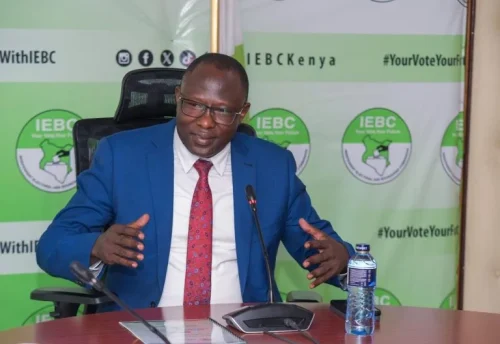
The IEBC has put in place extensive preparations for what is expected to be one of the most significant voter registration drives in recent years. Speaking in Nairobi, chairperson Erastus Ethekon said the commission has deployed 12,000 clerks who will operate in more than 30,000 registration centres nationwide.

The commission is applying lessons from previous exercises, with a strong focus on decentralisation and accessibility. Registration centres have been moved closer to the people, including ward levels and institutions of higher learning, in a deliberate effort to remove barriers that have historically prevented eligible voters from registering.
Data from the State Department for Immigration and Citizenship Services highlights the scale of the opportunity.
According to figures shared by Principal Secretary Belio Kipsang, a total of 34.9 million national identity cards had been issued between 1995 and February 2026.
However, as of March 10, only 22.3 million Kenyans are registered voters.
This leaves around 12 million eligible citizens with IDs but not registered, forming a decisive voting bloc ahead of the next election.
Government efforts over the past three years have focused on expanding access to identification documents. Between August 2022 and February 2026, more than 7.3 million new IDs were issued, with projections showing that at least 3 million more Kenyans could receive IDs before the next election cycle.

ID reforms
The government has also partnered with schools to register students who have turned 18, with more than 33,000 young people already receiving IDs through school-based programmes.
“These documents enable students to apply for HELB loans and enrol in government programmes,” Kipsang said.
Another key opportunity lies in the more than 460,000 national IDs that remain uncollected at Huduma Centres. Without these documents, many citizens are unable to register as voters.
“Currently, about 462,000 IDs remain uncollected. We are working with chiefs and national government administrative officers to distribute the documents,” he stated.
To address delays, applicants will soon receive SMS updates at every stage of the ID process, from printing to delivery, similar to passport tracking systems.

For political players, these uncollected IDs represent an easy target in the race to expand voter numbers.
The opposition has already intensified grassroots campaigns, presenting voter registration as the most direct way to influence leadership.
“The only easier way to make Ruto a Wantam (one term) President is to register as voters,” Wiper leader Kalonzo said during an interview on Sunday, March 29, 2026.
This message is spreading across key regions where voter turnout could prove decisive. The opposition is counting on the youth vote, which has grown more active in recent years through protests and civic engagement.
With both sides now focused on the same pool of potential voters, the race for 6.3 million votes is no longer just about politics, it is about who can turn numbers into power before Kenyans head to the ballot in 2027.