Advertisement
Inside IEBC’s new election policy proposals to tighten 2027 polls
Wednesday 22nd April, 2026 06:56 AM|

With roughly 15 months to Kenya’s 2027 General Election, the Independent Electoral and Boundaries Commission (IEBC) has unveiled sweeping reform proposals that could significantly reshape how candidates are nominated, how votes are processed, and how electoral offences are prosecuted.
The proposals, currently before Parliament’s Justice and Legal Affairs Committee, signal the commission’s attempt to tighten electoral integrity while addressing long-standing gaps exposed in previous polls.
Important in the reforms is a controversial requirement targeting party nominations at the county level. The commission proposes that any individual nominated to a county assembly must be a registered voter within that specific county.
“A person shall not be nominated by a political party under subsection (4) unless the person is, on the date of submission of the party list, a registered voter in any of the wards in the county in which the person is nominated,” reads the proposal.
You Might Also Like



If adopted, the rule would lock out individuals seeking nomination outside their counties of voter registration. For instance, a voter registered in Nairobi would be ineligible for nomination as an MCA in Kwale.

The proposals
The IEBC further recommends extending this residency-linked voter registration requirement to nominees for the National Assembly and Senate, tightening geographic accountability in party lists.
In a parallel push to address gender imbalance in elective and nominative positions, the commission is proposing a structural shift in how party lists are arranged. Political parties would now be required to prioritise women at the top of nomination lists.
“A party list submitted under Section 1(a), (c), (d), (e) and (f) shall commence with the name of a female candidate and alternate between male and female candidates in the order in which they are listed,” the IEBC states.
This marks a departure from the current system, where gender alternation is required but without specifying which gender takes precedence. The practical implication is immediate: parties with limited nomination slots would almost certainly allocate the first opportunity to women, a move the commission argues is necessary to finally realise the constitutional two-thirds gender rule.
Beyond nominations, the IEBC is also seeking enhanced legal authority in enforcing electoral discipline. The commission wants Parliament to repeal Section 20 of the Electoral Code of Conduct to grant it prosecutorial powers over election-related offences.
“The Independent Electoral and Boundaries Commission (IEBC) requests restoring powers to prosecute election offences (under Article 252(1)(a)) due to low ODPP prosecution rates of electoral offences,” reads the proposal.
The move could shift significant power from the Office of the Director of Public Prosecutions (ODPP) to the electoral body, potentially speeding up the resolution of electoral disputes and offences that have historically dragged through the courts.
Operational efficiency is another pillar of the reform package. The IEBC proposes increasing the number of voters per polling station from 700 to 800. While the commission had initially suggested raising the cap to 1,000, lawmakers pushed back, settling on a more moderate increase.
“For the purposes of efficient and effective conduct of elections, the number of voters per polling station shall not exceed eight hundred,” the proposal states.
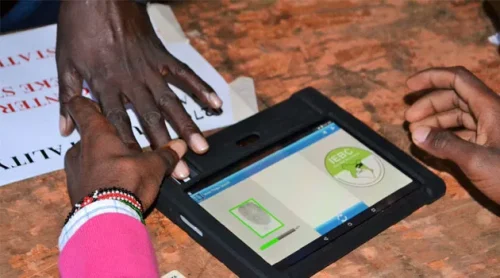
The commission argues that advancements in voter identification technology, coupled with the deployment of additional clerks, will reduce congestion and speed up the voting process. According to its projections, most polling stations could conclude voting by 4 pm, easing the pressure that typically builds toward the 6 pm deadline.

IEBC push back
However, not all proposals have been expansionary. The IEBC has rejected a recommendation, emerging from bipartisan talks, to mandate electronic transmission of results within two hours of polling station closure.
“The proposed timeline of ‘two hours’ to electronically transmit results is not practical for any election official,” the commission said, warning that such rigid timelines could undermine accuracy and logistical feasibility.
On voter access, especially for Kenyans abroad, the IEBC is advocating for more inclusive reforms. It seeks to amend or scrap Regulation 34(2) of the Elections (Registration of Voters) Regulations, 2012, which currently restricts diaspora registration and voting to embassies, high commissions, and consulates.
The commission argues that this limitation disenfranchises eligible voters in regions without diplomatic representation and conflicts with constitutional guarantees under Articles 38 and 82.
Additionally, the IEBC has backed provisions allowing it to reject symbols submitted by independent candidates if they are offensive, duplicative, or confusingly similar to those of political parties or other candidates. This is intended to reduce voter confusion and safeguard the clarity of the ballot.
The timeline for implementing these reforms is tight. The commission has urged Parliament to pass the proposals by August 31, 2026, at least one year before the scheduled August 10, 2027, General Election.
“All other electoral laws need to be considered and passed on or before September 2026 to enable the commission to prepare training and sensitisation materials and strategic materials (statutory forms, manuals),” reads the IEBC document presented to the committee.
To operationalise the changes, lawmakers would need to amend multiple regulations, including those governing voter registration, party primaries, election technology, and voter education.
Whether Parliament adopts the recommendations in full or in part will shape not only the conduct of the 2027 polls but also public confidence in Kenya’s electoral system.
Author
Latest News








Advertisement
More on Inside Politics