Advertisement
IEBC considers scrapping voter cards for 2027
Tuesday 29th July, 2025 01:00 AM|

The Independent Electoral and Boundaries Commission (IEBC) said yesterday that it is considering eliminating voter cards as a mandatory requirement for voting in the 2027 General Election.
The proposal stems from concerns that some foreigners, particularly those from border areas in the Northeastern and Coast regions – where the government has previously wavered on vetting requirements before issuing voter cards – could potentially vote in the next elections.
Under the proposed changes, individuals would only need to present a national ID card or passport to register as voters.
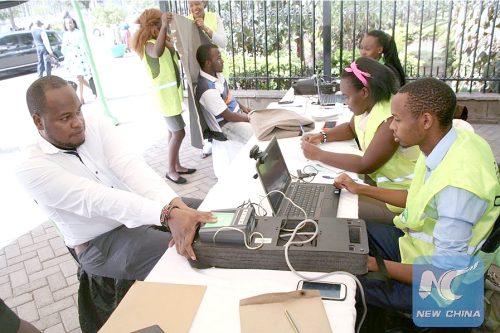
Their details would then be captured in the biometric system and the Kenya Integrated Elections Management Systems (KIEMS).
‘Not essential’
You Might Also Like



“If you paid close attention during the last election, the voter’s card wasn’t essential for casting a vote. In fact, voter cards mainly serve politicians who use them to gauge voter demographics in their constituencies when allocating National Government Constituency Development Fund,” a highly placed IEBC source told People Daily.
The official noted that issuing and maintaining voter cards for millions of people is an expensive process: “By relying on biometrics, the IEBC can reduce operational costs tied to physical voter card production, replacement, and distribution. The integration of biometric data with the KIEMS system would be more cost-efficient in the long run.”
According to IEBC sources, the shift to biometric systems would make the voter registration and verification process more transparent, as it would be harder to manipulate or forge voter credentials.
The technology used in KIEMS kits also allows for real-time monitoring, reducing the risk of human error or fraud during voting.
Iris scans
The electoral body is also contemplating incorporating iris scans into the biometric process alongside fingerprint recognition to address challenges faced by individuals, such as farmers and quarry workers, whose fingerprints are difficult to capture.
According to highly placed IEBC officials, biometric data such as fingerprints and facial recognition enable KIEMS kits to verify voters more securely and accurately.
Therefore, the official said, the need for a physical voter card has become less essential because biometric data can serve as a more reliable and tamper-proof method for voter identification.
“The KIEMS kits have made the voter verification process more efficient and secure. They not only scan biometric information but also cross-check against the voter register to ensure that only eligible voters are allowed to vote,” the official said.
“This reduces the chances of voter impersonation, a challenge in past elections where physical voter cards could be duplicated or manipulated.”
The official revealed that, unbeknownst to many Kenyans, voter cards have not been a required document for voting since 2013, following the introduction of biometrics.
Last week, IEBC chairman Erastus Ethekon announced that the agency would reveal timelines for resuming continuous voter registration next month through a gazette notice.
He said the agency was in the final stages of completing internal processes ahead of the voter registration rollout.
Raila push
The move regarding voter cards and IDs comes following proposals by Orange Democratic Movement (ODM) party leader Raila Odinga advocating for the use of only ID cards during elections.
As the country prepares for the 2027 polls, billed as the most contested elections in Kenya, political players are being tactical in every move.
Currently, to cast a ballot, a person must be registered with the IEBC using either a valid passport or identification card.
At polling stations, clerks verify the holder of the ID or passport using the Electronic Voter Identification Device (EVID) before issuing a ballot paper.
Raila, President William Ruto’s political antagonist turned ally, is now proposing the use of only an ID for voting eligibility.
However, some pundits argue that this proposal, if implemented, could open floodgates for election rigging, especially in the 2027 polls, which are shaping up to be a do-or-die battle for political protagonists.
Sweeping reforms
During a recent TV interview, Raila called for sweeping reforms to Kenya’s electoral system, accusing the electoral agency of fuelling a culture of corruption and inequality.
He further argued that requiring separate voter cards disenfranchises many, especially in underserved or marginalised regions.
Raila’s comments come as the country prepares for potential political realignments ahead of the next general election, with reform advocates rallying around calls to demystify Kenya’s political establishment.
Central to election rigging fears is President Ruto’s removal of a 60-year-old vetting requirement for Northern Kenya ID applicants.
Vetting had been required for issuing ID cards and birth certificates in that region following the Shifta insurgency of the 1960s – a secessionist conflict in which ethnic Somalis and Muslim Borana, among others, attempted to join Somalia.
The decision has been widely viewed as a political strategy by President Ruto to create a voting bloc ahead of the 2027 polls after severing ties with his former Deputy Rigathi Gachagua, now the Democratic Citizens Party (DCP) leader.
Interior Cabinet Secretary Kipchumba Murkomen announced that the government has rolled out new mobile identity card registration units to ease the issuing of national IDs, noting that the new technology will help over 400,000 people in the county who lack IDs despite reaching the requisite age.
According to the CS, applicants can now receive their cards within three to seven days of application: “The devices will be taken to the far-flung areas to ensure every person who qualifies for the cards receives them so that they can participate in the development of the country.”
Refugee cards
The government has also proclaimed that refugees living in Kenya will be able to obtain official refugee ID cards, recognised as valid documents for various purposes, including registering SIM cards, accessing mobile money services, and participating in elections.
This is part of a broader effort to integrate refugees into national systems and promote their inclusion in various services.
Growing fears suggest the 2027 polls could be rigged through the issuing of ID cards.
Former National Assembly Speaker Justin Muturi, who has distanced himself from the Kenya Kwanza administration, argues that the electoral agency has a constitutional mandate to continuously register new voters.
“The IEBC is mandated under Article 88(4)(a) of the Constitution to do continuous registration of citizens as voters. This means that mere IDs cannot replace the voters’ registration without amending the Constitution itself,” Muturi said.
However, IEBC insiders cite Section 10 of the 2011 Elections Act, which describes an individual eligible to vote as a person whose name and biometric data are entered in a register of voters in a particular polling station, and who produces an identification document.
“The identification document produced in subsection (1) shall be the identification document used at the time of registration as a voter,” subsection two of the clause states.
Marcus Agenga, Election Observers Group (ELOG) programmes officer, argues for a harmonised civil and voter registration regime in Kenya, aligning with Raila’s proposal.
He contends that allowing electorate identification using IDs will enhance the accuracy, simplicity, and integrity of the voter register by addressing duplicate record issues.
“ELOG has, over the years, equally proposed the need for a harmonised civil and voter registration regime in Kenya. There will be value for money as it reduces the need for repeated or enhanced voter registration exercises, argued Agenga.
Automatic enrolment
He added that there would be enhanced enfranchisement of citizens through automatic enrolment, especially among marginalised groups.
However, he acknowledges that using IDs in elections would raise data privacy concerns, lack legal and policy instruments to guide harmonisation, and face resource and capacity constraints.
Machakos Deputy Governor Francis Mwangangi, an ally of Wiper leader Kalonzo Musyoka, called for more transparency in the proposed changes.
The government, he said, must present a detailed, comprehensive plan ensuring the National ID system is secure, transparent, and resistant to fraud.
Mwangangi suggested considering a hybrid approach using both the national ID and IEBC voter card, providing an extra layer of security: “The government has not sufficiently demonstrated how it would ensure that the National ID system could be trusted for such an important task.
“There are possibilities that political operatives can find ways to exploit the new system, using the ID cards as a way to tip the balance in their favour.”
Vulnerable populations
Opposition politicians, particularly from marginalised communities, warned that the change could disenfranchise entire regions.
They argued that any proposal to change voting procedures must be thoroughly vetted to avoid further alienating already vulnerable populations.
Trans Nzoia Governor George Natembeya criticised President Ruto for removing vetting requirements for ID applicants in the Northeastern region, noting that the move was reckless and exposed the country to security threats.
“I’m humbly requesting with total humility that instead of removing vetting, we can revisit and streamline it so that those sitting on committees are remunerated well to discourage them from acts of corruption,” Natembeya said.
He continued: “If you remove vetting, they will get IDs and will enter the country and will infiltrate the country with terrorism. I therefore ask you to check on that. We are not against those in Northeastern getting IDs.”
Residents of Northern Kenya have historically faced additional vetting and ethnic profiling, making it difficult to obtain IDs.
National IDs are crucial for citizens to prove their identity, access government services, and participate in elections.
Author
Rawlings Otieno
View all posts by Rawlings OtienoLatest News






Advertisement
More on Inside Politics