Advertisement
How Ruto could win re-election minus Mt Kenya
Tuesday 12th August, 2025 02:00 AM|
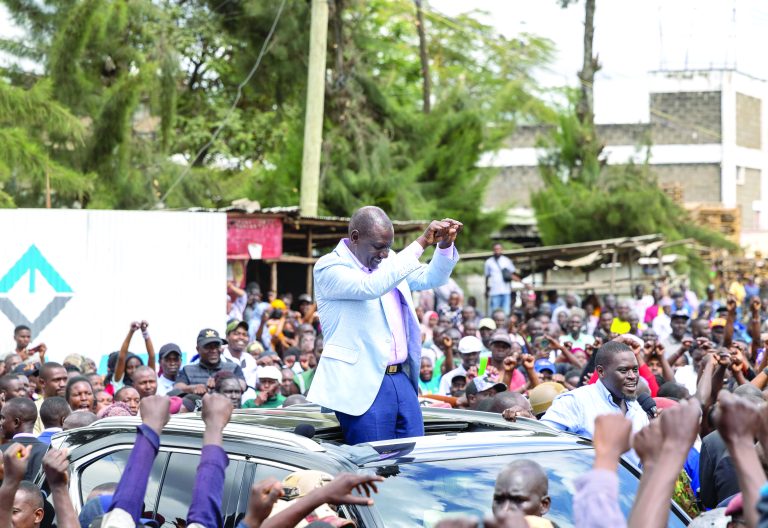
Since the bitter falling-out between President William Ruto and his former deputy, Rigathi Gachagua, the latter has steadily escalated the political pressure.
The temperature has risen so sharply that despite Mt Kenya’s overwhelming support for Ruto in 2022, the President now appears to be deliberately distancing himself from the region.
The “Wantam” chants—shorthand for “one term”—are growing louder across the country, echoing through political rallies and increasingly dominating the national conversation. What began as a dismissible jibe has transformed into a coordinated opposition movement that openly threatens to make Ruto a one-term president.
Shifting political arithmetic
Initially, Ruto sought to brush off the criticism surrounding his presidency. But each fresh chorus of “one term” now seems to strike closer to home. Those who wrote him off politically after his impeachment scare may have forgotten an old Kiswahili proverb: Ukiona kobe ameinama, jua anatunga sheria (when you see a tortoise lower its head, it is not retreating but strategising). Like an enraged bull, Gachagua has begun applying pressure both at home and abroad—from his village in Wamunyoro, Nyeri, to the Kenyan diaspora in Seattle, Washington.
You Might Also Like
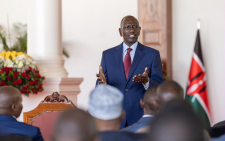
Some political observers believe Ruto is gradually drifting from the Mountain, guided by Kenya’s long-standing political arithmetic: three major power centres—the Mountain (Mt Kenya), the Valley (Rift Valley), and the Lake (Lake Victoria region). Any alliance between two almost always leaves the third marginalised.
In 2013, Uhuru Kenyatta and Ruto united the Mountain and the Valley under the Jubilee coalition, shutting out the Lake and handing Raila Odinga his third presidential defeat. They repeated this strategy in 2017, until the Supreme Court annulled the election, prompting Raila to boycott the repeat poll. The ODM leader subsequently swore himself in as the “people’s President” on January 30, 2018.
Unstoppable alliance
Then came the dramatic “Handshake” of March 9, 2018, when Uhuru and Raila reconciled, uniting the Mountain and the Lake while isolating Ruto. Together, they championed the Building Bridges Initiative (BBI), which was later declared unconstitutional.
In 2022, Uhuru backed Raila’s fifth presidential bid, but the Mountain-Valley alliance of Ruto and Gachagua proved unstoppable, dealing Raila yet another defeat.
Now, with 2027 on the horizon, the political chessboard is shifting again. In a twist of irony, Ruto and Raila find themselves in an uneasy alliance—one born of necessity as much as survival. With murmurs of rebellion in Mt Kenya, the question becomes whether Ruto needs new allies.
Associate Professor Halimu Suleiman Shauri of Pwani University dismisses the notion that Ruto’s political base has eroded. He argues that Gachagua is relying too heavily on ethnic politics.
“What Rigathi is playing with is only one variable—ethnicity. But politics has many variables. One of the most critical is gender, especially women,” he explains.
“Ruto has been strategic about women’s empowerment, and now he’s targeting the youth. You can see it in events like the International Youth Week, where thousands of young people have been mobilised. If he repeats this across all 47 counties, he will have built a strong youth constituency—the same Gen Z who were once against him.”
By focusing on Mt Kenya and its “cousin” regions, Shauri warns, Gachagua risks narrowing his political options.
“The ethnic card is easily dissolved,” he says. “It frightens people. Look at the Holocaust in Germany or the genocide in Rwanda. You cannot sell an ethnic narrative and expect to win in the 21st century. It scares investors and alienates voters.”
Shauri believes Ruto’s data-driven approach could help him navigate political challenges. “Women comprise more than 52 percent of Kenya’s population. Add a share of the youth vote, and he remains competitive. Without an alternative national narrative—which Raila usually provides but is now absent—Ruto remains the shrewdest politician on the stage,” he observes.
Strategic repositioning
In recent months, Ruto’s team has doubled down on rural and urban grassroots networks. State-backed women’s funds and youth grants have been aggressively rolled out, while the President’s allies work the church circuit, especially in areas that previously voted against him.
He has also made visible inroads into Western Kenya and the Coast—regions long considered Raila’s strongholds. This shift is strategic; his political advisers are betting that even modest gains in opposition territory could offset potential losses in Mt Kenya.
Political analyst Shaban Mwalimu views Kenyan politics as driven less by parties than by ethnic alliances masquerading as political parties.
“In my view, Ruto doesn’t need Central Kenya as much as people think. He has already made inroads into what used to be opposition zones,” he says.
Minimal support
Before becoming President, Ruto had minimal support in Western Kenya or on the Coast. “That has changed,” Mwalimu notes. “He’s working with Musalia Mudavadi, Wycliffe Oparanya, and Moses Wetang’ula in Western Kenya; Raila Odinga, John Mbadi, and Gladys Wanga in Luo Nyanza; and Hassan Joho on the Coast. These alliances give him strong vote-hunting grounds even without Mt Kenya.”
Mwalimu believes the so-called opposition voices in these regions are more about securing bargaining power than mounting genuine rivalry.
“These voices represent negotiating positions. Ultimately, Ruto, as a national power broker, can harmonise them. They lack the political muscle to topple him. In my view, he remains in a formidable position and can present himself as a leader with a truly national agenda,” he argues.
If current political winds persist, 2027 could witness a presidential contest defined less by the traditional Mountain-Valley-Lake divide and more by new demographic battlegrounds: women, youth, the urban poor, and diaspora voters.
Author
Reuben Mwambingu
View all posts by Reuben MwambinguLatest News





Advertisement
More on Inside Politics