How Gachagua and Sifuna camps fuel Ruto’s 2027 re-election dilemma
By Aloys Michael, April 7, 2026With roughly 16 months to the 2027 General Election, President William Ruto is confronting a political battlefield that is no longer defined by a single opposition front.
Instead, a mix of external pressure and internal fractures, particularly from camps allied to former Deputy President Rigathi Gachagua and embattled Orange Democratic Movement (ODM) Secretary General Edwin Sifuna, is steadily complicating his re-election calculus.
At first, the President’s biggest hurdle appeared to be the formation of the United Alternative Government, a coalition bringing together seasoned political heavyweights. Figures such as Kalonzo Musyoka, Martha Karua, Eugene Wamalwa and Justin Muturi have rallied alongside Gachagua in a bid to mount a formidable challenge against Ruto.
Gachagua, once Ruto’s deputy and now one of his fiercest critics, has taken an aggressive tone, especially in the Mt Kenya region, a key voting bloc. Speaking in Kirinyaga County, the Democracy for the Citizens (DCP) chief said that Ruto will not garner even 5 per cent from the votes-rich region.
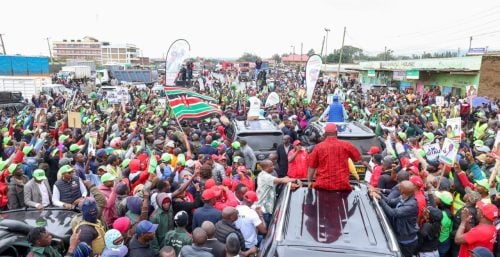
“Nataka nikwaambie William Ruto, mimi Riggy G nikiwa nyumbani hapa Kirinyaga, nikiwa mtoto ya Mau Mau, nakwambia leo mchana, ukipata five per cent ya kura hapa mlimani, Riggy G hapana mwanaume,” he declared, projecting confidence in his grip over the region.
Beyond political bravado, Gachagua has accused the President of misleading Kenyans on the state of the coffee sector, arguing that failures in the industry are being unfairly shifted onto him.
His messaging is crafted to erode Ruto’s credibility in Central Kenya, an area that was instrumental in the President’s 2022 victory.
Yet, even as Ruto fends off this united opposition front, a more complex challenge is emerging from within traditional opposition ranks. ODM, long seen as a pillar of anti-government politics, is now split into two contrasting factions.

Ruto’s headache
On one side is a pro-government wing linked to Oburu Odinga under the Linda Ground banner, which has shown willingness to cooperate with Ruto’s development agenda.
On the other hand is the increasingly vocal Linda Mwananchi faction led by Sifuna, which has positioned itself as a sharp critic of the administration.
It is this Sifuna-led camp that is rapidly gaining political traction.
At a rally in Mombasa’s Tononoka grounds, Sifuna struck a chord with residents by focusing on land injustices.

“Land occupied by wealthy people is what locals are looking for. The fragmented title deeds will not help. We want titles for absentee landlords to be distributed to youth,” he said.
This targeted messaging, tailored to regional grievances, has become a defining feature of the movement. From Kitengela to Kakamega, Narok to the Coast, the group is building a national footprint, one rally at a time.
Backed by leaders such as Siaya Governor James Orengo and Vihiga Senator Godfrey Osotsi, the faction is also investing in organisational strength. They are planning a central coordination hub to sharpen our messaging and boost outreach.
Osotsi is optimistic about the movement’s trajectory.
“We are improving with every meeting, and the messaging will become even better due to the overwhelming technical support from resourceful Kenyans,” he said.
“The public goodwill from all cadres of Kenyans is very encouraging. I have not seen this kind of goodwill since 2002, which brought in the Narc government.”
The Gen Z factor
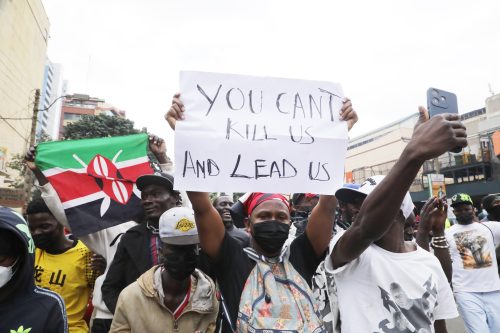
This momentum comes at a critical time when an estimated 6.3 million Gen Z voters are expected to play a decisive role in 2027.
Many within this demographic remain disillusioned, accusing the current administration of broken promises and failure to respond effectively to their concerns.
Issues such as unemployment, governance gaps, and allegations of state excesses have further dented trust, making the youth vote a highly contested terrain.
For Ruto, the challenge is now twofold. On one hand, he must neutralise the growing influence of Gachagua and the broader opposition alliance. On the other hand, he must counter the grassroots-driven appeal of the Sifuna camp, which is increasingly resonating with ordinary citizens.
Despite the mounting pressure, the President has maintained a defiant stance, dismissing his critics as peddlers of propaganda and insisting that his record will ultimately speak for itself. Ruto has repeatedly said he will not be pushed out by political noise, framing his re-election bid as a referendum on performance rather than rhetoric.
However, the evolving political dynamics suggest that performance alone may not be enough. With opposition forces reorganising and internal dissent reshaping alliances, the road to 2027 is becoming more unpredictable.
In this unfolding contest, the convergence of Gachagua’s regional influence and Sifuna’s grassroots mobilisation could prove to be the twin forces that define, and potentially derail, Ruto’s re-election ambitions.