Advertisement
Explainer: What to know about election campaign timelines
Wednesday 26th November, 2025 11:34 AM|

The official campaign period for the 2025 by-elections ended on Monday, November 24, 2025, closing weeks of rallies and voter outreach in affected areas.
According to the Independent Electoral and Boundaries Commission (IEBC), the campaigns were permitted daily between 7 am and 6 pm.
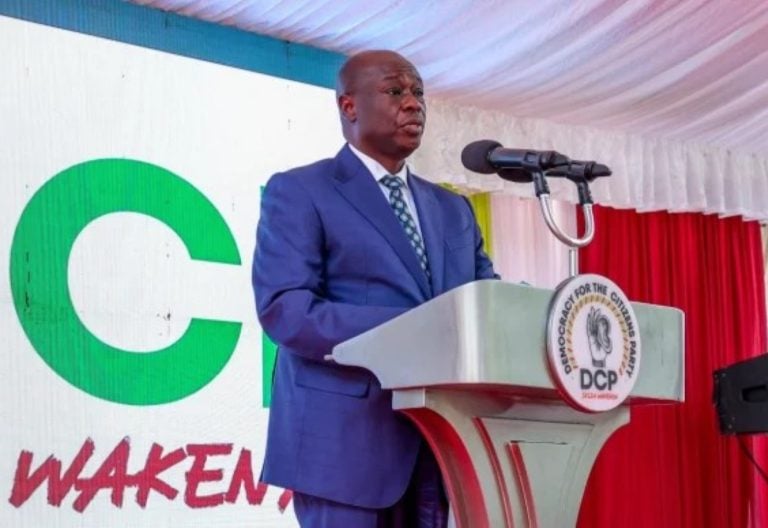
The official campaign time is over, but the real political games are just continuing as usual. In Kenya, politicians are always campaigning, every single day of the year. Barely has one electoral cycle concluded before politicians hit the road again.
Cabinet Secretaries, Members of Parliament (MPs), governors, and aspirants frequently move across the country attending fundraisers, holding rallies, and positioning themselves for the next contest.
You Might Also Like



The mini-polls campaign mentality is driven by several factors: intense competition for political relevance, limited opportunities for national visibility, and the constant pressure to maintain mobilisation among supporters in a hyper-competitive political arena.

This continuous campaign mode often blurs the line between governance and politics.
Critically, national functions are sometimes overshadowed by political rhetoric, as leaders prioritise succession politics and regional power dynamics over issues affecting citizens.
Public events that were once meant for development updates increasingly take on the tone of political rallies, complete with sound systems, choreographed entourages, branded merchandise, and pointed attacks on rivals.

Even when no election is in sight, politicians hold gatherings that mirror full-blown campaigns, rallies drawing thousands, roadshows, media appearances, and elaborate voter mobilisation.
Critics argue that constant politicking drains public resources, fuels tribal and political polarisation, and distracts leaders from service delivery.
They say it undermines stability and development by turning every local project into a political bargaining chip.
Supporters, however, contend that sustained engagement keeps leaders accountable and connected to the electorate year-round.
The court’s verdict
But a recent High Court ruling may be poised to fundamentally reshape the country’s political culture.
In a historic ruling delivered in June 2025, the High Court declared political campaigns conducted outside the officially gazetted period unconstitutional and illegal.
The ruling has been hailed as a significant turning point in curbing premature politicking and restoring fairness in the electoral process.
The case was filed by a non-governmental organisation advocating for the rights of vulnerable and marginalised groups.

The petitioners argued that early campaigns, long conducted informally and with impunity, distort the democratic playing field.
They said wealthy politicians and incumbents gain an unfair advantage by campaigning for years while less-resourced candidates struggle to compete.
The petitioners also claimed that early campaigns inflame political tensions, disrupt government operations, and draw public attention away from critical national issues.
Justice Hedwig Ong’udi, delivering the ruling, agreed. She declared that early campaigns violate multiple constitutional principles, including fairness, equality, and the need for orderly electoral processes.
The Kenyan Constitution, she emphasized, mandates structured elections, with campaigns limited to a clearly defined period.
“Allowing campaigns outside these periods contravenes the spirit and letter of the law,” she ruled.
Author
Latest News







Advertisement
More on Inside Politics