Advertisement
Class gulf that crippled Ruto education plan
Monday 28th July, 2025 01:00 AM|

When President William Ruto unveiled his Kenya Kwanza manifesto—The Plan—he pledged to make education equitable, affordable, and accessible to all Kenyans.
On page 52 of the manifesto, a photograph of the President seated casually with school children as they share a meal captured what many Kenyans saw as a powerful symbol of his commitment to the school feeding programme.
It was a vision that ignited hope across the education sector.
The manifesto declared education as the ultimate tool for building an equitable society, warning that a system skewed in favour of the wealthy would only serve to deepen class divisions.
You Might Also Like
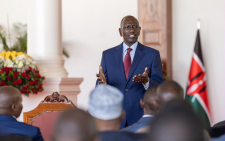
Ruto lamented the reality that, despite achievements in Free Primary Education (FPE) and increased enrolment in secondary schools, learning outcomes remained deeply inequitable.
He described the tiered school system as unaffordable for many, noting that prestigious national schools remain out of reach for the poor.
Ruto cited the story of a girl in Tharaka Nithi who walked 50 kilometres to report to her new school, and another of a boy in Embu who tried to pay his school fees with a cockerel—vivid reminders of the enormous sacrifices Kenyan families make to access education.
“The cost of joining a boarding secondary school has risen to Ksh80,000. Even for average working Kenyans, this is a significant burden. Bursaries are helpful but grossly inadequate,” the manifesto stated.
Serious intent
Ruto promised to address these inequities and level the playing field.
His administration pledged to fund in-service teacher training, fill the 116,000-teacher gap within two financial years, and introduce special utility tariffs for learning institutions to ease basic operational costs.
Seventeen days into his presidency, Ruto established the Presidential Working Party on Education Reform on September 30, 2022—a move widely interpreted as a show of serious intent.
The committee proposed sweeping changes, including reducing the number of subjects across all education levels, increasing capitation for early learning, primary, junior and senior schools, and boosting funding for special needs institutions.
They also recommended reviewing capitation every three years to keep pace with inflation and evolving institutional needs.
Despite these promising proposals, developments in the education sector have taken a troubling turn.
The introduction of a new funding model for higher education removed access to low-interest student loans through the Higher Education Loans Board (HELB).
Stories about needy Kenyan students facing exclusion from university due to a new funding model have become the order of the day.
The model, which categorises students into different funding bands based on a means-testing instrument, has been criticised for inaccurately placing students and leading to financial hardship, forcing some to either drop out or struggle to continue their education.
The unfortunate case of 19-year-old Suheil Mkala Mumba, an ‘A’ student from Kwale County whose dream of studying for a Bachelor of Medicine and Surgery degree nearly collapsed before the media came to his rescue, is a classic case of how dreams are suffocated under the new system.
Mkala, a resident of Kombani in Matuga constituency, scored an A- at Kwale High School in 2023 and struggled to access his university education at Egerton University, as his family could not raise the Ksh490,000 required for the course.
More than 100,000 university students and over 60,000 TVET trainees have been left without government financial support for the 2024/2025 academic year, as HELB grapples with a staggering Ksh49.8 billion funding shortfall.
The crisis, which emerged during a tour by the National Assembly Education Committee chaired by Tinderet MP Julius Melly, now puts Kenya’s higher education sector on the edge.
HELB warned that failure to address the deficit could lead to massive student dropouts, disruption of academic operations, and potential insolvency in public universities and colleges.
According to HELB, total loan demand stood at Ksh48.18 billion, against an approved budget of Ksh34.65 billion.
As a result, 103,214 eligible university students and 60,274 TVET trainees were left unfunded, even after being placed under government-sponsored programmes.
The funding pressure has been exacerbated by increased enrolment under the new Student-Centred Funding Model (SCFM), which, while enhancing inclusivity, has dramatically strained available resources.
Sustainable funding
HELB is now urging Parliament to introduce a dedicated funding mechanism, such as an employer-based levy or a fixed percentage of VAT, similar to Ghana’s 2.5 per cent VAT allocation to its education fund.
Despite the constraints, HELB disbursed Ksh26.1 billion to 322,338 university students and Ksh7.9 billion to 225,048 TVET trainees.
It also issued Ksh237 million in bursaries to 37,125 needy students, and awarded postgraduate scholarships worth Ksh31.3 million to 104 learners.
On recovery, HELB reported improved collections of Sh5.21 billion —up from Ksh4.71 billion the previous year— thanks to enhanced partnerships with KRA and the Public Service Human Resource Information System, which helped trace 11,600 loanees and recover Ksh42 million.
Still, the long-term sustainability of HELB remains in question. As of June 2025, 1.03 million loan accounts had matured, with 293,122 classified as non-performing and valued at Sh33.2 billion.
HELB now recommends long-term reforms, including tighter employer compliance, better access to socio-economic data for targeting, and the rollout of an Income-Contingent Repayment (ICR) model that ties repayment to graduate earnings.
“The current crisis threatens the national transition rate to tertiary education, weakens youth empowerment, and risks reversing the gains made in building a skilled and competitive workforce,” the report concluded.
The government also suspended exam fee subsidies for all learners, a shocking blow to many struggling families.
The rollout of Junior Secondary School (JSS) under the Competency-Based Curriculum (CBC) has revealed significant infrastructure and planning gaps.
In 2023, Khadija Primary School in Mombasa became a stark example. Housed in a modern Ksh325 million facility, over 400 JSS learners sat on the floor due to a lack of desks and chairs.
Former Education Principal Secretary Dr Belio Kipsang, now serving in the Immigration docket, attempted to reassure the public by announcing the construction of 1,600 new laboratories and the deployment of 2,000 virtual labs to enhance science and technology education.
Kipsang reiterated that every senior school would be required to offer at least two academic pathways, with STEM being mandatory. He also emphasised the government’s continued investment in Technical and Vocational Education and Training (TVET) institutions.
However, teachers and stakeholders on the ground remain sceptical. Mombasa Kuppet (Kenya Union of Post Primary Education Teachers) Executive Secretary Lynette Khamadi questioned the practicality of mandating STEM subjects, arguing that many schools lack even basic infrastructure.
In many JSS classrooms, she noted, students still sit on the floor—hardly the envisioned 21st Century learning environment.
Khamadi dismissed the plan for virtual labs as unrealistic, citing poor internet connectivity, limited capitation, and a persistent funding shortfall. Schools, she said, are already struggling to provide essentials—how could they sustain high-tech learning solutions?
A visit to some schools in Mombasa revealed the extent of the crisis. The institutions, all located within the island and CBD, are overwhelmed by overpopulation.
Some classrooms now host between 50 and 60 students, making individualised instruction virtually impossible.
Faced with government teacher shortages, school managements are increasingly turning to parents to raise funds for hiring additional staff under the Boards of Management.
Essential facilities such as toilets are overstretched and often unhygienic. School feeding programmes, once a source of pride, are now chaotic, with long queues and limited supplies slowing learning.
A joint report by Usawa Agenda and Zizi Afrique Foundation warns that Kenya’s public education system is approaching a breaking point.
The report highlights severe disparities in teacher deployment. Some schools have only one teacher, others as many as twelve.
The median stands at just three teachers per JSS—far below what is needed to cover the wide range of CBC subjects.
Only 21 per cent of teachers are trained in STEM, and 35 per cent of schools lack even a single STEM teacher.
In half of the schools surveyed, learners had no access to laboratories—making meaningful science education virtually impossible.
The report also found that only 33.9 per cent of secondary schools offer computer lessons. While 92.1 per cent of top-tier national schools teach computing, the number plummets to just 17.3 per cent in lower-tier sub-county schools.
The type of school a child attends, the study concluded, has a greater impact on their KCSE performance than their KCPE score.
Special needs
Children with disabilities face even greater barriers. Special needs schools continue to suffer from underfunding and poor resources, resulting in consistent underperformance. Early Childhood Development Education (ECDE) has not been spared either.
Many ECDE teachers are poorly trained, and in counties like Mandera and Marsabit, enrolment remains alarmingly low.
In Mandera, over half of all children enter Grade 1 without any preschool experience.
In the Arid and Semi-Arid Lands (ASAL), learning outcomes are particularly poor.
In North Eastern Kenya, only two in ten Grade 4 pupils can read and understand a Grade 3 English passage—well below the national average of four in ten.
Even among children with disabilities, the learning gap persists. Though slightly narrower, 7.2 per cent of children with disabilities miss out on preschool, compared to 7.4 per cent of the general population.
The report concluded that the government alone cannot solve the education crisis. Without a clear framework to engage communities, families, and the private sector, sustainable reform will remain elusive.
With the rollout of Senior Secondary just a year away in 2026, the stakes could not be higher.
“This is not just about readiness,” warned Dr John Mugo, CEO of Zizi Afrique Foundation, “It’s about justice. We are creating a two-tier system where a child’s future is determined by where they are born or the school they attend. That is unacceptable.”
In an elaborate Facebook post, Communication scholar and lecturer Ayub Mwangi warned: “Defunding education will only hurt the poor, the marginalised, and especially girls.”
“Defunding education is not just bad policy—it is a betrayal of the Constitution and of the children who rely on public education to change their future,” he wrote in a widely shared Facebook post.
Referring to Treasury Cabinet Secretary John Mbadi’s recent announcement that the government is defunding free public education due to financial constraints, Mwangi noted the irony.
“It is deeply ironic that the government claims it cannot fund education at a time when revenue collection has hit KshSh2.56 trillion—compared to Ksh192.4 billion when free primary education was introduced. This isn’t about resources—it’s about priorities.”
Drawing inspiration from the late President Mwai Kibaki’s unwavering support for free primary education despite heavy criticism, Mwangi noted: “We’ve seen what free education can do. The literacy gains Kenya made after 2003 are proof that access works. To roll that back now is to undo decades of progress.”
Author
Reuben Mwambingu
View all posts by Reuben MwambinguLatest News

Advertisement
More on Inside Politics