Advertisement
Accept accountability, youths tell Ruto
Monday 14th July, 2025 02:00 AM|

As waves of youth-led protests sweep across major towns in Kenya, a group of young people from the Mt Kenya region has stepped into the national spotlight, demanding accountability from President William Ruto and rejecting the tribal framing of their grievances.
The youths, united under the banner of the Mt Kenya Youth Caucus, want the President to stop what they term as a campaign of excuses and blame-shifting and instead prioritise delivering the ambitious promises he made during the 2022 campaigns—pledges that now feel distant to millions of struggling citizens.
Led by youthful lawyer Maina Kamunya and Dr Joseph Gichui, the caucus has joined the growing chorus of young Kenyans questioning the current administration’s direction.
They say that the government’s response to growing dissent, painting it as an attack by a particular ethnic group, misses the point and undermines the legitimacy of their demands.
Economic empowerment
You Might Also Like
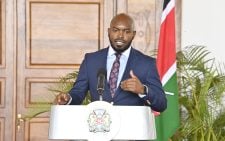
“Calls for good governance, an end to police brutality, economic empowerment, and access to quality healthcare and education are not tribal. These are national issues,” Kamunya asserted during a recent press briefing.
The caucus’ emergence comes at a critical moment. Over the past few weeks, Kenya has witnessed unprecedented nationwide protests led by Gen Z— young people mobilised largely through social media platforms, without the backing of traditional political machinery.
Initially sparked by opposition to the controversial Finance Bill 2024 last year, it has since evolved into a wider protest against poor governance, runaway corruption, youth unemployment and police brutality.
Protesters, many of them in their early twenties, have been teargassed, arrested, abducted, and in some cases, fatally shot, all in a bid to quell the growing rebellion.
It’s within this context that the youths from what was hitherto seen as a political bedrock of the ruling coalition are pushing back against the ethnic narrative that has been floated by some.
“We are in the streets not because we are being used by any political forces but because we are tired of being ignored. Our presence is a cry for solutions, not a tribal statement,” said Dr Gichui.
Governance system
The youth leaders accuse the administration of presiding over a deteriorating governance system. They argue that instead of ushering in the “bottom-up economic transformation” that was widely marketed before the election, the government has overseen the collapse of key public services.
Education, they claim, has become inaccessible to many due to spiralling school fees and delayed government subsidies.
Public hospitals are facing chronic shortages of medicines and staff, while the highly publicised Social Health Authority (SHA) system has not worked for many.
Promised job creation programmes have either stalled or failed to materialise, while infrastructure development, once a hallmark of past administrations, has taken a back seat.
“What we are witnessing is not just failure to deliver. It’s a collapse of the social contract. The same youth who were promised jobs are now being abducted and killed for asking questions,” John Njoroge, a youth leader in Juja, said.
Their sentiments mirror the mood in many Kenyan towns, where young people continue to bear the brunt of economic hardships, compounded by punitive taxes and limited opportunities.
While some political leaders have begun calling for dialogue as a way to cool tensions, the youths have rejected what they term “elite-driven negotiations” that have historically excluded the voices of young people and the broader public.
“If there must be a conversation, it should be all-inclusive and centred on solving the pressing social and economic challenges hurting millions of Kenyans,” added Njoroge.
The group insists that any talks that do not directly address youth concerns, such as job creation, education access, healthcare, and justice, are likely to be meaningless and may only serve to shield the political elite from accountability.
Their statements reflect growing scepticism among young Kenyans who have seen previous rounds of national dialogue result in political alliances rather than meaningful reform.
Youths from the region have since vowed to sustain their advocacy, both on the streets and in civic spaces, until real reforms are implemented.
They see themselves as representatives of a disillusioned generation that wants a stake in the country’s future.
“We are not waiting for politicians to rescue us. We are taking leadership of our destiny. Our commitment to putting the government of the day in check is people-driven, and we will not stop until change is felt at the grassroots,” Damaris Wamaitha, another youth leader, stated.
Meanwhile, a section of Kiambu County MPs have strongly defended the Kikuyu community against accusations that it is leading a rebellion against the Kenya Kwanza government.
Unfair narrative
Speaking during the commissioning of two newly-constructed classrooms at Gitare Primary School in Gatundu South, the MPs voiced concern over what they termed as an unfair narrative targeting the community.
Led by Gatundu South MP Gabriel Kagombe, they distanced the community from recent political dissent, particularly that associated with former Deputy President Rigathi Gachagua.
They emphasised that Gachagua’s differences with the government should not be viewed as representative of the entire Kikuyu population.
“We are urging our counterparts and Kenyans at large to avoid generalisations that could deepen ethnic rifts. We also call on members of the Kikuyu community to remain steadfast in supporting President William Ruto’s administration,” said Kagombe.
The MPs warned that politicising ethnicity could destabilise the country and urged leaders from all communities to focus on promoting national unity and development.
Kagombe was joined by his counterparts Alice Ng’ang’a (Thika), Githua Wamacukuru (Kabete), Mburu Kahangara (Lari), Njuguna Kawanjiku (Kiambaa) and Elijah Njoroge Kururia (Gatundu North).
Author
Mathew Ndungu
View all posts by Mathew NdunguLatest News


Advertisement
More on Inside Politics