Why public trust could make or break Dangote’s Kenya refinery
By Aloys Michael, July 15, 2026Aliko Dangote has built a reputation for executing projects many considered impossible. His refinery in Lagos has already begun reshaping fuel markets in West Africa, proving that Africa can develop industrial infrastructure at a scale once thought out of reach.
Now, his proposed refinery in Lamu County, estimated to cost between Ksh1.94 trillion and Ksh2.20 trillion, aims to do something similar for East Africa.
On paper, the project makes economic sense. With a planned processing capacity of 700,000 barrels of crude oil per day, the refinery could significantly reduce East Africa’s dependence on imported petroleum products, strengthen regional energy security, create thousands of jobs and position Kenya as a major refining hub.
Yet the debate unfolding in Lamu suggests that engineering and financing may not be the hardest parts of the project. The real test will be whether Dangote Industries can convince local communities that this development will deliver benefits they can actually see and share.

That is where the conversation deserves to shift. Much of the public discussion has focused on environmental concerns. Greenpeace Africa and other campaigners have warned about the potential risks to Lamu’s mangrove forests, coral reefs, fisheries and marine ecosystems. They have also questioned whether investing in another major fossil fuel project aligns with long-term climate goals.
These concerns should not be dismissed. Any project of this magnitude must undergo rigorous environmental assessments, transparent public participation and strict regulatory oversight. However, reducing the debate to a contest between economic development and environmental protection misses a deeper issue.
Many residents are not simply asking whether the refinery could affect the environment. They are asking whether they have heard these promises before.
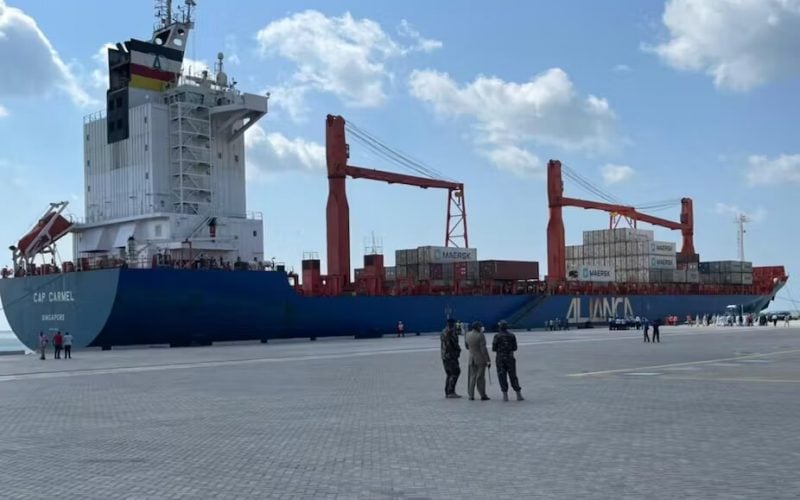
Lamu is no stranger to ambitious development plans. The Lamu Port-South Sudan-Ethiopia Transport (LAPSSET) Corridor and the expansion of Lamu Port were promoted as transformative investments that would generate employment, stimulate local businesses and unlock regional growth.
Public perception
While those projects delivered strategic national infrastructure, many residents argue that the benefits at the community level fell short of expectations. Complaints over land acquisition, compensation, local employment and environmental impacts have shaped public perception of large-scale developments in the county.
Whether every criticism is justified is almost secondary. Perception matters because it influences whether communities are willing to support the next major investment. That history explains why scepticism surrounding the proposed Dangote refinery extends beyond environmental activism.
For many residents, trust has become the project’s most valuable missing resource.
Across Africa, governments increasingly compete to attract billions of dollars in foreign and domestic investment. Investors evaluate tax incentives, infrastructure, market size and political stability before committing capital.
Communities, however, evaluate something different. They ask whether previous projects improved schools, hospitals, roads, incomes and livelihoods, or whether the benefits largely bypassed the people living closest to the developments.
These questions are becoming just as important as environmental approvals or financial close.
Modern infrastructure projects are no longer judged solely by how quickly they are built.
This challenge is not unique to Kenya
They are judged by how fairly their benefits are shared. For Dangote Industries, this presents both a challenge and an opportunity.
Unlike many investors who engage communities only after opposition emerges, the company has an opportunity to make transparency a central pillar of the project from the beginning.
That means openly communicating environmental safeguards, publishing realistic employment expectations instead of inflated projections, prioritising local procurement where possible and ensuring compensation processes are transparent and credible.
Most importantly, communities should become participants in development rather than spectators waiting to see whether promises materialise. Doing so would not only reduce opposition but also strengthen the project’s long-term social licence to operate.
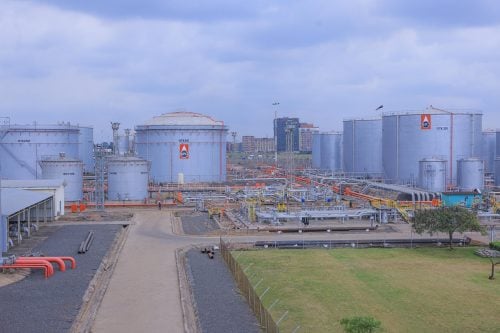
The economic case for the refinery remains compelling. East Africa continues to spend billions importing refined petroleum products despite growing regional energy demand. A large refinery in Kenya could reduce import dependence, improve fuel supply resilience and support industrialisation across neighbouring countries. It could also enhance Kenya’s strategic position within the regional energy market.
But those economic benefits will remain theoretical if the project becomes trapped in prolonged legal disputes, public protests or community resistance.
Around the world, major infrastructure investments increasingly succeed or fail not because of technical limitations but because they struggle to secure lasting public support.
That lesson is becoming increasingly relevant across Africa. The continent does not suffer from a shortage of ambitious investment proposals. It suffers from a shortage of projects that consistently earn public confidence from planning to completion.
For Dangote, the refinery represents another opportunity to demonstrate African industrial ambition on a global scale. But its ultimate legacy in Kenya will depend on more than construction milestones or production capacity.
It will depend on whether local communities can eventually point to the refinery and say it delivered not only profits and petroleum, but also opportunity, accountability and shared prosperity.
If that happens, the Lamu refinery could become more than East Africa’s largest refining project. It could become a model for how Africa delivers large-scale infrastructure without leaving public trust behind.