Why Mombasa Port faces congestion challenges
By Kenneth Mwenda, September 29, 2025Mombasa Port, Kenya’s largest seaport, continues to face congestion challenges despite several expansion efforts.
The port is vital to the country’s economy, handling most of Kenya’s imports and exports, as well as serving regional landlocked countries. However, operational inefficiencies have limited its capacity, causing delays and impacting trade.
According to the latest Container Port Performance Index (CPPI) 2020-24 report by the World Bank, Mombasa ranks 375 globally with a CPPI score of -89 in 2024. Over the past five years, the port recorded scores of -31 in 2020, -11 in 2021, -81 in 2022, -32 in 2023, and -89 in 2024.
The CPPI reflects the time efficiency at container ports, enabling ships to achieve fuel and emissions savings. Persistent negative scores highlight inefficiencies in vessel turnaround and congestion.
The report attributes the challenges to structural issues common across ports in Sub-Saharan Africa.
Compared to Mombasa, Dar es Salaam Port in Tanzania has shown slightly better performance, though it still faces congestion.
In response to rising congestion, the Kenya Ports Authority (KPA) has taken several steps to improve efficiency. KPA Managing Director Captain William Ruto revealed that the government has allocated Ksh41 billion for port expansion. Terminal 19 is set for redevelopment after the old Kipevu oil terminal is demolished.
KPA has also initiated clean-up exercises to manage yard space. In a notice dated July 31, 2025, Captain Ruto directed the removal of long-stay containers and condemned cargo.
Shipping lines were given a 14-day ultimatum to evacuate or arrange the destruction of containers, failing which KPA would remove them at the owners’ cost. The clean-up aims to improve safety, efficiency, and overall service delivery at the port.
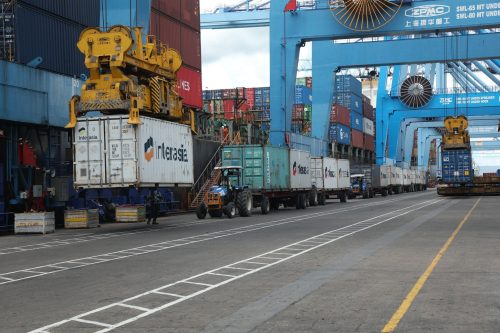
The congestion at Mombasa has been further highlighted by regional developments. When the Tanzanian Ports Authority suspended the bagging of loose cargo at Dar es Salaam Port due to congestion, importers redirected cargo to Mombasa.
“We have seen an increase in traffic of ships since some regional ports experienced inefficiency,” said Captain Ruto. Mombasa has managed to maintain a ship turn-around time of one day, making it more attractive for shipping lines.
Mombasa remains regional hub
Despite challenges, Mombasa remains a critical hub for East African trade. The World Bank noted that low-income countries often experience lower port performance due to limited technological, human, and institutional capacities.
West African ports, such as Dakar in Senegal, have shown stronger gains, demonstrating that improvements are possible with adequate investment and management.
In addition to physical expansion, KPA continues to adopt technological solutions. Investments at Terminal 2 and other strategic points aim to prioritise efficiency and reduce waiting times.
This ensures that Kenya can maintain its position as a preferred route for regional and international shipping, especially as other regional ports struggle with delays.
As Kenya focuses on improving infrastructure and port operations, congestion at Mombasa is expected to reduce over time. Strategic expansions, stakeholder collaboration, and strict port management are essential to achieving efficient cargo handling.
For importers and exporters, staying updated on port notices and regulatory requirements, such as the mandatory Certificate of Origin (COO), will help avoid delays.
The Kenya Revenue Authority (KRA) announced that all imported goods must have a Certificate of Origin (COO) starting from October 1, 2025. This follows a public notice issued on Tuesday, September 23, 2025, reminding importers and customs agents of the new requirements.
The move is part of KRA’s efforts to ensure full compliance with Section 44A of the Tax Procedures Act, CAP 469B, which was amended by the Finance Act, 2025.