Why Kenyan traders lose money paying Africans in dollars – study
By Aloys Michael, May 17, 2026A Kenyan trader buying textiles from Ghana, machinery from Nigeria, or food products from Tanzania often faces the same costly financial obstacle before goods even leave the warehouse: converting African money through the US dollar.
For millions of businesses across the continent, trading within Africa still means paying America first.
A new continental mobility report estimates Africa loses approximately Ksh645 billion annually to currency conversion costs as businesses repeatedly exchange local currencies into intermediary currencies like the US dollar or euro before completing transactions.
The hidden cost is quietly undermining Africa’s ambitions to build a seamless continental trading bloc under the African Continental Free Trade Area (AfCFTA).
“Africans pay a premium, especially citizens from countries whose currencies are not easily convertible into major international currencies such as the US dollar or the euro,” the report states.
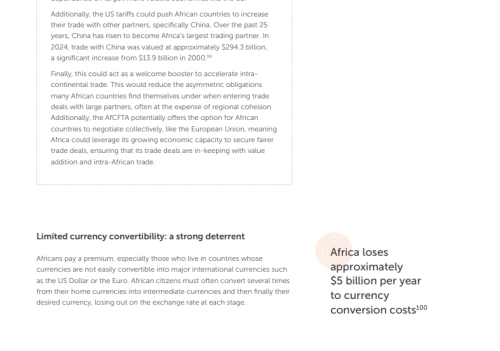
“African businesses must often convert several times from their home currencies into intermediate currencies and then finally their desired currency, losing money at every stage through exchange-rate spreads and banking charges.”
For Kenyan businesses, the implications are significant.
Nairobi has emerged as East Africa’s financial technology hub, powered by mobile money innovation, digital banking infrastructure and cross-border payment platforms.
Yet despite Kenya’s fintech leadership, many regional traders still rely on dollar-clearing systems controlled outside Africa when conducting business with neighbouring African countries.
The contradiction depicts one of the continent’s deepest economic paradoxes: Africa is trying to create the world’s largest free trade area while its own financial systems remain fragmented.
Trade reforms
The report points to the Pan-African Payment and Settlement System (PAPSS) as a potential solution. Launched by the African Union and Afreximbank, PAPSS is designed to allow African businesses to pay in local currencies without routing transactions through foreign banks.
“PAPSS is a centralised payment and settlement platform that allows businesses to pay and for recipients to receive funds in their own local currencies through an African institution, rather than a foreign bank,” the report says.
Supporters argue the system could dramatically reduce transaction costs, accelerate regional trade and weaken Africa’s dependence on the dollar over time.

In June 2025, Afreximbank announced another major step with the launch of PASSCARD, described in the report as the continent’s first pan-African card scheme aimed at enabling fast, secure, and affordable retail payments across African borders.
For Kenya, which already dominates mobile money adoption in Africa, the rise of continental payment systems could strengthen Nairobi’s position as a gateway for African digital commerce.
But the stakes go beyond banking.
As global trade wars intensify and competition for influence in Africa deepens, control over payment systems is increasingly becoming a question of sovereignty, economic independence, and geopolitical power.
Until Africans can trade directly with each other using African currencies, experts warn, the dream of true continental integration may remain unfinished.