Advertisement
Why ex-planning minister wants public debt audited
Thursday 15th February, 2024 04:32 AM|
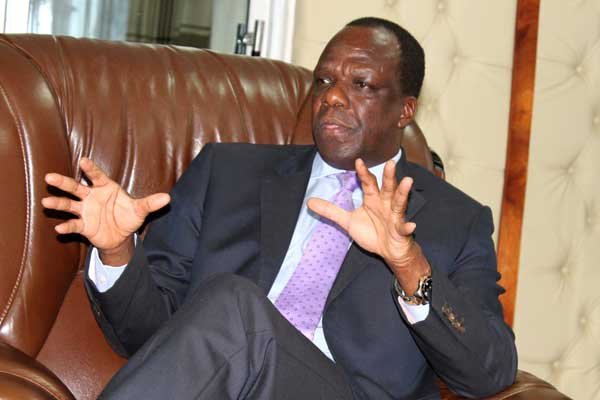
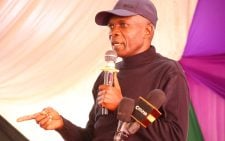
Kenya should carry out a thorough systematic audit of national public debts accrued since 1964, former Kakamega Governor Wycliffe Oparanya has said.
He expressed worries on the rising public debt which has since sparked concerns about its sustainability and the cost implications for fiscal and macroeconomic stability in the country.
Oparanya, a former Minister for Planning under President Kibaki told the government to tame its appetite for more debts and ensure the borrowed money is spent wisely.
“We want to know how debts have accrued over the years since independence. Because we can’t keep on repaying debts some of which we don’t what they were used for,’’ he told the Business Hub in an interview in Kisumu.
Public participation
Kenyans, Oparanya suggested should in the near future be consulted either through the delegated representatives in Parliament or through public participation, why Kenya must borrow the trillions from overseas.
He claimed it would be difficult for successive regimes in future to account for the multilateral and bilateral debts accrued over the years. “Let us do a systematic audit of all these historical debts.’’
With the maturity of the $2 billion Eurobond in June 2024, Oparanya wondered if the State will meet the debt repayment in good time amid the current economic uncertainty.
The government has reduced its chances of defaulting payment on $2 billion debt due mid this year after successfully issuing $1.5 billion new Eurobond at a new interest rate of 9.75 per cent due in 2031.
The public debt comprises both external and domestic debt, where the ratio of the external debt to domestic debt remains high at about 54 per cent to 45 per cent as of September 2023.
Although the government has been working on pruning the domestic borrowing so as to ease the pressure on domestic and global interest rates, the dollar has remained stronger than the shilling making costs of repayment of the debts costly.
The main sources of external debt are multilateral and bilateral creditors that are the International Monetary Fund (IMF) and World Bank, Euro bonds issued offshore by governments or corporates and Treasury Bonds.
“We are buying a lot of oil in dollar rates from overseas, and this has pushed Kenya’s external debt dominated by US dollars high thus putting more pressure on debt servicing,’’ Oparanya said.
He said this has been exacerbated by the witnessed conflict in Eastern Europe, which has raised the expenditure on imports, on fuel, edible oil, and wheat.
Debt vulnerability
In addition, the adverse effects of climate change have also worsened the fiscal position and debt vulnerability in the country, echoing the need to rethink debt restructuring plans.
He said the government should in future list capital projects done by the borrowed money for public scrutiny. President William Ruto, he claimed had borrowed more than his predecessors which is worrying.
The former minister also reiterated calls on the Parliament to cap the debt ceiling to avoid Kenya plunging into a sovereign debt crisis like Ghana.
Ghana has reached a deal to restructure $5.4 billion of loans with its official creditors, a milestone in the country’s quest for debt relief as it charts its way out of the worst current economic crisis.
IMF financing
The agreement with bilateral lenders including China and France was key to unlocking new IMF financing and will allow Ghana to access another $600 million under its $3 billion bailout programme.
Few days ago, Kenya turned to Japan to support its infrastructure drives, opening up for Tokyo to tap into public-private partnerships (PPPs) as a way of reducing the external debt load.
Ruto made an official visit to Japan, where sealed financial deals worth Sh350 billion ($2.19 billion).
Most of these were on green energy, manufacturing, transport, roads and agriculture, with the largest projects to benefit are the Dongo Kundu infrastructure ecosystem and the Mombasa Gate Bridge at the cost of $1.63 billion.
Oparanya said though debts are not bad, the limits ought to be capped to avoid excessive borrowing pushing Kenya into a cash crunch each fiscal year of review.
Author
Kepher Otieno
View all posts by Kepher OtienoLatest News





Advertisement
More on Business