Advertisement
Why Africa’s push for local manufacturing could backfire by shutting out global supply chains
Saturday 20th June, 2026 11:19 PM|

Africa’s drive to build stronger domestic industries through local content policies and government procurement rules could unintentionally undermine trade, competitiveness and supply chain resilience, according to a new report by the Organisation for Economic Co-operation and Development (OECD).
The warning comes as countries across the continent, including Kenya, Nigeria, South Africa and Ghana, increasingly use public procurement and local sourcing requirements to support industrialisation, create jobs and reduce dependence on imports.
However, the OECD argues that while such policies can strengthen domestic industries, governments must avoid excessive localisation that risks isolating economies from global supply chains and international markets.
“Public procurement is increasingly used to pursue strategic policy goals, including industrial policy goals,” the OECD said in its report, Public Procurement, Trade and Industrial Policies: Supporting National Priorities.
You Might Also Like



The findings arrive at a critical moment for Africa as governments seek to leverage the African Continental Free Trade Area (AfCFTA) to accelerate industrial development and expand intra-African trade.
Across the continent, policymakers view public procurement as a powerful tool for stimulating local manufacturing. Governments are increasingly requiring contractors to source materials locally, partner with domestic firms or meet minimum local content thresholds when bidding for public projects.
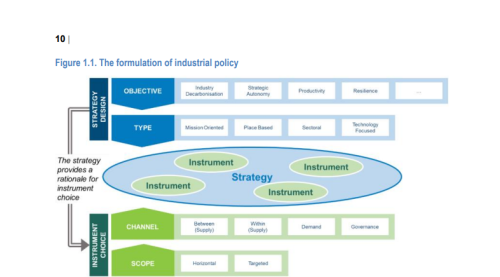
The strategy is designed to ensure that public spending supports domestic industries rather than flowing to foreign suppliers.
Yet the OECD cautions that industrial ambitions must be balanced against economic realities.
“No national economy can efficiently produce all the goods and services it consumes,” the report notes, pointing to factors such as limited natural resources, technological constraints, skills shortages and high production costs.
For many African economies, this challenge is particularly relevant. From pharmaceuticals and semiconductors to energy equipment and construction materials, many industries still rely heavily on imported inputs. Restricting access to international suppliers could therefore increase costs and slow industrial growth rather than accelerate it.
The OECD warns that public procurement measures designed to favour domestic production can create trade barriers and reduce competition.
“Discriminatory procurement practices could result in excessive costs for public buyers and value chain inefficiencies that outweigh any potential gains,” the report says.

The issue has gained prominence globally as countries increasingly adopt economic nationalism and industrial policies aimed at strengthening domestic manufacturing.
Governments in the United States, China, India and parts of Europe have introduced domestic content requirements, procurement preferences and industrial subsidies to support local industries.
African governments are pursuing similar goals, often motivated by the desire to create jobs, reduce import bills and build strategic industries.
Kenya has expanded local content requirements in sectors such as energy and infrastructure, while Nigeria’s Local Content Act prioritises indigenous participation in the oil and gas industry. South Africa has long used procurement rules to support local manufacturing and black-owned enterprises.
But the OECD argues that the benefits of international trade remain critical to economic development.
“International public procurement can present several benefits,” the report states, noting that access to global suppliers allows governments to secure goods and services that may not be available domestically while improving competition, quality and value for money.
The report also highlights the importance of global value chains, which underpin the production of most modern goods and services.

“Public procurement is deeply embedded in global value chains, with most procured goods and services relying on internationally sourced inputs,” the OECD says.
This presents a major dilemma for African policymakers.
On the one hand, governments want to build local industries capable of competing globally. On the other hand, overly restrictive localisation policies may discourage foreign investment, reduce access to technology and limit opportunities for domestic firms to integrate into regional and global supply chains.
The OECD further warns that efforts to reshore production or reduce reliance on foreign suppliers do not automatically improve resilience.
“Highly restrictive approaches can reduce trade and GDP without necessarily improving resilience,” the report says.
For Africa, where the success of AfCFTA depends on deeper regional integration and stronger cross-border supply chains, the findings offer an important policy lesson.
Rather than viewing local manufacturing and international trade as competing objectives, the report suggests that both should work together.
The continent’s industrial future, the OECD suggests, may depend not on choosing between local production and global trade, but on finding the right balance between the two.
Author
Latest News








Advertisement
More on Business