Advertisement
Treasury announces crackdown against rogue digital lenders
Wednesday 25th February, 2026 05:43 PM|

The government has intensified efforts to ensure fair and responsible digital lending, with the National Treasury introducing new regulatory and policy measures to protect Kenyans from exploitation in the growing credit market.
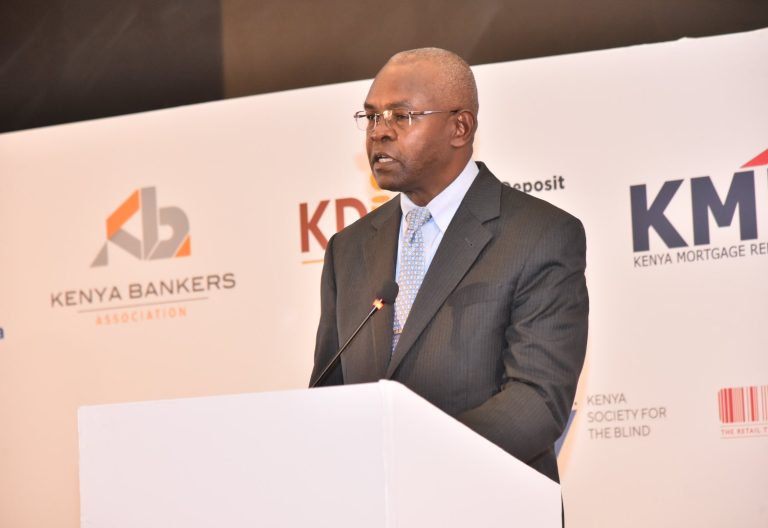
Speaking to the Senate, Cabinet Secretary for the National Treasury and Economic Planning, John Mbadi, outlined interventions in response to questions from Tom Ojienda (Kisumu Senator), raised through Sen. Wafula Wakoli (Bungoma Senator).
The CS said the Central Bank of Kenya (CBK) now requires all Non-Deposit Taking Credit Providers (NDTCPs) to be licensed under a Digital Credit Providers regulatory framework. The framework defines eligibility criteria, governance standards, operational rules, and consumer protection duties.
“These measures ensure compliance with the law and, most importantly, protect customers’ interests and prevent rogue lenders from violating consumer rights,” Mbadi told Senators.
You Might Also Like



He added that the CBK is working with the Office of the Data Protection Commissioner to enforce data privacy standards consistently.
“CBK requires all licensed NDTCPs to fully comply with the Data Protection Act. As part of licensing, providers must get a certificate from the ODPC and develop a robust data protection policy,” he said.
The policy must detail how personal data is collected, processed, stored and protected, following fair and transparent practices. The licensing system has helped curb predatory practices, including high interest rates and unethical debt recovery.
Digital lending market snapshot
CS Mbadi noted that CBK currently licences three types of lenders: 38 commercial banks, 14 microfinance banks, and 195 NDTCPs (formerly Digital Credit Providers). Licensing and supervision follow the Banking Act, Microfinance Act, and CBK Act.
He reported that as of December 2025, commercial banks, microfinance banks, and digital credit providers had advanced Ksh4,369.6 billion, Ksh32.7 billion, and Ksh110.5 billion in credit, representing 96.8 per cent, 0.8 per cent, and 2.4 per cent of total credit, respectively.
The CS also updated Senators on government programmes aimed at reducing poverty and easing household hardship. He said Medium-Term Plans have prioritised direct interventions, such as social transfers, and indirect measures, including lower interest rates to stimulate economic activity.
“In December 2024, CBK reduced its benchmark rate from 13 per cent to 11.25 per cent. This led to a 1.4 per cent increase in credit to Ksh7,140.3 billion by commercial banks and non-bank financial institutions,” he said.
Gains in education and social services
CS Mbadi highlighted growth in sectors including social protection, agriculture, health, and education. Secondary school enrolment, for example, rose from 3.260 million in 2019 to 4.321 million in 2024. He credited government policies, capitation grants, and infrastructure development for this steady increase.
On regional disparities, CS Mbadi said the 2022 Kenya Continuous Household Survey put national poverty at 39.8 per cent. Twenty-two counties have poverty above the national average. Turkana, Mandera, Samburu, Garissa, Tana River, Marsabit, Wajir, West Pokot, Kitui, Isiolo, Elgeyo Marakwet, Busia, and Kwale report poverty over 50 per cent.
The Government has introduced targeted programmes, including conditional grants and social protection initiatives, to assist the most vulnerable counties.
CS Mbadi explained that revenue allocation considers poverty levels, population, land area, fiscal effort, and equality. Poorer counties receive higher allocations. Targeted grants support sectors such as health, urban development, and road maintenance.
“We are improving beneficiary identification using national databases, including the Single Registry, to reduce duplication and ensure support reaches the most vulnerable,” Mbadi stated.
The Government is expanding digital payments, strengthening monitoring and audits, and improving coordination across ministries and county governments. Citizens can report misuse or exclusion of funds and receive timely redress.
Author
Kenneth Mwenda
Kenneth Mwenda is a business, sports, and politics digital writer with over seven years of experience in journalism, covering breaking news, feature stories, and in-depth analysis across a range of beats.
For inquiries, he can be reached at [email protected]
View all posts by Kenneth MwendaLatest News








Advertisement
More on Business