Revealed: Why Ruto’s construction boom is fueling foreign steel factories instead of Kenyan jobs
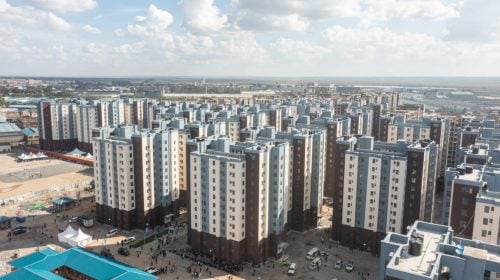
By Aloys Michael, June 5, 2026Across Kenya, cranes dominate skylines, roads are being expanded, transmission lines are stretching into rural areas, and thousands of affordable housing units are under construction.
President William Ruto’s government is overseeing one of the country’s most ambitious infrastructure drives in decades, anchored on affordable housing, industrial parks, water projects, Special Economic Zones and transport networks.
All of them have one thing in common: steel. But as Kenya’s demand for steel rises, a new OECD report suggests a significant share of the economic benefits generated by that demand may be flowing beyond the country’s borders.
The OECD Steel Outlook 2026, released on Thursday, June 4, 2026, says that despite weakening demand in major economies, steelmaking capacity continues to expand rapidly, creating a growing surplus that producers are increasingly trying to offload into overseas markets.
The report projects that global excess steelmaking capacity will rise to 745 million tonnes by 2028, up sharply from current levels.
“Global steelmaking capacity continues to expand despite dim prospects for steel demand,” the OECD says, warning that excess capacity is approaching levels seen during previous steel market crises.
For Kenya, the timing could hardly be more significant as the country is pouring hundreds of billions of shillings into construction and infrastructure projects that require vast quantities of steel, from reinforcement bars and roofing materials to transmission towers, industrial sheds and transport infrastructure.
Yet much of the world’s steel industry is currently searching for exactly the kind of demand Kenya is creating.
The OECD notes that Chinese steel exports surged to a record 131 million tonnes in 2025, representing a 153 per cent increase compared with 2020. The increase followed a prolonged slowdown in China’s property sector and weaker domestic demand, forcing producers to seek buyers overseas.
As a result, developing economies are becoming increasingly important destinations for surplus steel production.

Africa is among the few regions where steel demand is expected to continue growing strongly over the remainder of the decade, driven by urbanisation, infrastructure spending and industrialisation.
That places Kenya at the centre of an emerging global competition as every housing project funded through the Affordable Housing Programme, every industrial park, and every kilometre of road creates demand that steel producers around the world are eager to capture.
“Steel is required in nearly all industrial activities, construction and infrastructure, all forms of energy generation, and is a critical input for numerous strategic sectors of the economy,” the OECD report says.
The issue is not simply about imports. It is about where industrial value is created.
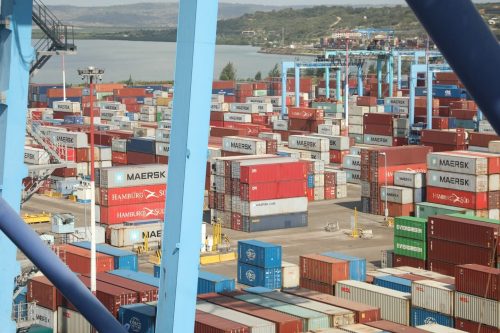
Steel production supports entire economic ecosystems, including mining, scrap collection, transport, engineering services, logistics and manufacturing jobs. Countries that produce more of their own steel often retain a larger share of those economic benefits.
By contrast, countries that primarily consume imported steel risk exporting part of the value generated by domestic construction spending.
That dilemma is becoming more pronounced as foreign producers aggressively compete for market share.
The OECD notes that steelmakers are increasingly investing abroad as trade tensions rise and markets become more fragmented. Cross-border investments now account for about 21 per cent of future global steelmaking capacity additions, with Chinese companies involved in more than half of those projects.
“China has been particularly active in investing abroad,” the report notes.
For Kenya, this presents both a challenge and an opportunity.
The country possesses many of the ingredients needed to become a regional steel manufacturing hub. The Port of Mombasa serves as East Africa’s primary trade gateway. Industrial parks are expanding.
Demand from housing and infrastructure projects continues to grow, while neighbouring markets in Uganda, Tanzania, Rwanda and South Sudan offer additional opportunities.

At the same time, the OECD warns that competition for strategic industrial inputs is intensifying globally. Scrap metal, a key raw material used in steel production, is increasingly being treated as a strategic resource, with dozens of countries introducing export restrictions to secure domestic supply.
“No steel-producing country is fully self-sufficient in the raw materials and minerals its industry requires,” the report says.
The broader question for policymakers is whether Kenya’s infrastructure boom can do more than build roads and houses. Can it also strengthen domestic manufacturing? And can it create industrial jobs alongside construction jobs?
Can more of the value generated by Kenya’s development spending remain within the country?
As Ruto’s administration accelerates its infrastructure agenda, those questions are becoming increasingly important.
Because the real measure of success may not only be how much Kenya builds, but also who ultimately profits from the steel needed to build it.