Ndindi Nyoro: Why Kenya should emulate South Korea instead of Singapore
By Mustafa Juma, January 14, 2026Kiharu Member of Parliament Ndindi Nyoro has weighed into the ongoing debate on Kenya’s economic model, arguing that South Korea, not Singapore, offers a more realistic and relevant blueprint for the country’s development ambitions.
Speaking on the night of Wednesday, January 14, 2025, during an interview with one of the local TV stations, Nyoro said Kenya’s size, population, and private-sector-driven ideals align more closely with South Korea than with the city-state of Singapore, which President William Ruto has repeatedly cited as a model economy.
“The economy that is actually close to what Kenya’s should be is South Korea. If we actually mean to emulate a country, it is South Korea,” Nyoro stated.
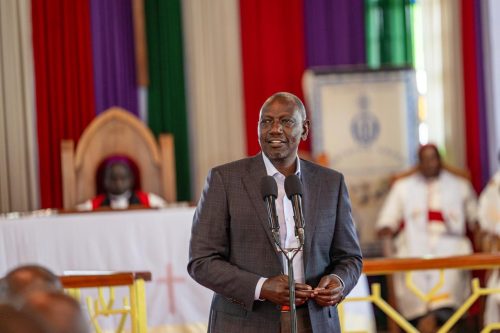
The influential lawmaker noted that Singapore’s small geographical size and population make it an imperfect comparison for Kenya, which has a population of over 50 million and a vastly larger landmass.
“If you look at the size of Singapore vis-à-vis Kenya, it is totally off; Kenya is bigger in terms of geographical size and population,” he said.
Population size
Nyoro pointed out that South Korea presents a far more comparable case, citing similarities in population size and economic aspirations.
“If you compare the same with a country like South Korea, more or less, our ideals economically blend more. Our population is in the 50 millions; South Korea is in the 50 millions,” he explained.

Private sector-led growth
At the core of Nyoro’s argument is Kenya’s stated commitment to private sector-led growth. He observed that Kenya has increasingly divested from direct government ownership in enterprises, signalling a shift toward capitalism driven by private investment, an approach South Korea deliberately adopted during its rapid industrialisation.
“Our country aspires to promote private sector-driven capitalism, and that is why we keep on divesting from government stakes,” Nyoro said.
He highlighted South Korea’s economic transformation under the leadership of General Park Chung-hee, where the government played a strategic role in nurturing large private corporations to anchor industrial growth.
“If you look at South Korea, that is what it advanced, especially from the rule of General Park, where the economy was so involved in growing the private enterprise that they had to create a cadre of companies called Chaebols,” Nyoro noted.
He cited global brands such as Samsung, LG, and Hyundai as examples of companies that were deliberately cultivated through state policy to drive industrialisation, innovation, and job creation.
“For example, Samsung, LG, and Hyundai are brands from South Korea, and they were deliberately created by a government policy because they wanted these companies to be the pinnacle of the supply chain of supporting SMEs in South Korea,” he explained.
According to Nyoro, this model, where large, competitive national champions support networks of small and medium enterprises, offers valuable lessons for Kenya as it seeks to industrialise, expand exports, and grow local manufacturing.
His remarks come amid renewed debate on Kenya’s long-term economic direction, with President Ruto frequently pointing to Singapore as an example of efficient governance, ease of doing business, and rapid development.