Mbadi warns inflation surge will hurt economic outlook
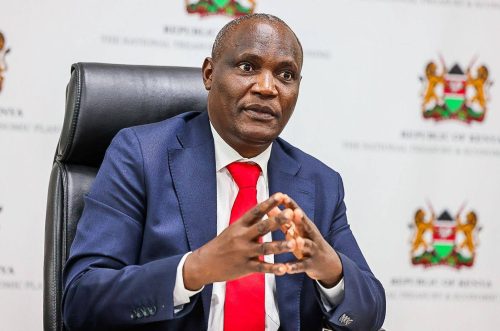
By Kenneth Mwenda, May 18, 2026Treasury Cabinet Secretary John Mbadi has warned that Kenya’s economy is heading into a tougher period, saying rising fuel prices will weaken key economic indicators and push inflation higher than earlier expected.
Speaking during a morning television interview on Monday, May 18, 2026, Mbadi said the current price pressure is already affecting growth projections and could spill over into inflation, interest rates, and currency stability.
“The general economic indicators will not be performing as earlier projected because with high prices, there will be high inflation,” Mbadi said. “We will have a problem in interest rates, and there may even be pressure on forex reserves, which could affect exchange rates.”
His remarks came as major transport operators suspended services in response to a nationwide matatu strike linked to rising fuel costs and operating pressures.
Global shock
Mbadi said the situation reflects a wider global shock that Kenya cannot fully control at the domestic level.
“We are trying to solve a global problem using domestic means,” he said. “That is why the pressure on our economy is significant.”
He said the rise in fuel prices has already hit households and businesses, adding that the impact goes beyond transport into food prices, production costs, and general inflation.
“What we are seeing is unfortunate,” Mbadi said. “Prices have gone up, and that is a fact. It has hit the economy.”
He warned that the effects will be felt across multiple sectors if global fuel prices remain high.
“If fuel remains high, inflation will rise, borrowing will become more expensive, and we will feel pressure on exchange rates,” he said. “These are connected outcomes.”
Mbadi said government interventions have helped reduce the severity of the shock, but they cannot fully eliminate it.
He said Kenya has already absorbed part of the global increase through tax changes and subsidies on petroleum products.
“If we had not intervened, the situation would be worse,” he said. “Diesel and petrol would be significantly higher than what we see today.”
He explained that global oil price increases since early 2026 have been sharp, driven by geopolitical tensions affecting supply chains. He said Kenya has no control over such external shocks.
“This is a war we did not start,” he said. “But because we are part of the global economy, we feel the impact.”
Fuel prices drive inflation
Mbadi said government data shows that international diesel prices have risen sharply since February 2026, leading to a 55 per cent increase in local pricing pressure over the same period. He said without intervention, consumers would be paying far more at the pump.
“Diesel would be at least 35 shillings higher per litre without intervention,” he said. “Petrol would be even higher.”
He added that the government has reduced VAT on petroleum products from 16 per cent to 8 per cent and has also used the fuel subsidy programme to cushion consumers.
“These measures cost the government billions every month,” he said. “But they have slowed down the increase in prices.”
Mbadi said the government has already spent about 35 billion shillings in two months on fuel-related interventions.
He warned that while the government may continue to support consumers, it must also protect the broader economy.
“There is a limit to what we can do,” he said. “We must balance relief for citizens with the stability of the national budget.”
He said rising inflation will remain a key concern for policymakers in the coming months. Higher inflation, he said, reduces purchasing power and affects economic growth.
“When inflation rises, people feel it immediately,” he said. “Food becomes expensive, transport becomes costly, and businesses slow down.”
Mbadi said the government is closely monitoring macroeconomic indicators and will adjust policy based on evidence, not public pressure.
“This is not the time for emotional decisions,” he said. “We must act based on facts and long-term stability.”
He added that Kenya’s fiscal space is already limited due to debt repayments, salaries, and statutory obligations that consume most of government revenue.
Mbadi said the current economic strain reflects both global conditions and structural domestic pressures.
“We are in a difficult environment,” he said. “But we must manage it carefully so that we do not worsen the situation.”