KRA highlights alternative dispute resolution for taxpayers
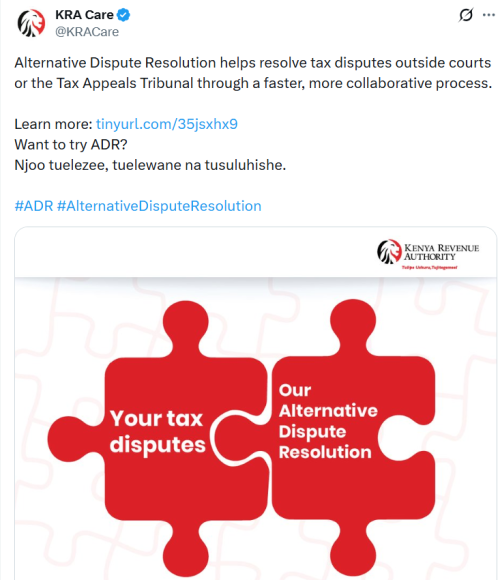
By Faith Lagat, July 22, 2026The Kenya Revenue Authority (KRA) is encouraging taxpayers to embrace Alternative Dispute Resolution (ADR) as a faster and more collaborative way of resolving tax disputes without going through the courts or the Tax Appeals Tribunal (TAT).
According to the tax authority, ADR provides an alternative to the conventional judicial process and quasi-judicial proceedings by creating a platform for dialogue between taxpayers and KRA officials.
The process is aimed at resolving disputes efficiently while reducing the time and costs associated with litigation.
“ADR is an alternative method of resolving tax disputes outside the conventional judicial process (Courts of law). Quasi-judicial process, including the Tax Appeals Tribunal (TAT). It provides a facilitative mechanism that expedites the resolution and management of tax disputes,” KRA noted in an X post dated July 22, 2026.
How the process works
KRA says ADR brings together three key parties: the taxpayer, the Commissioner and an independent facilitator.
Participants are expected to maintain confidentiality throughout the process, engage in discussions fairly and openly, disclose all material facts relating to the dispute, attend scheduled meetings and comply with agreed timelines.
The facilitator’s role is to guide discussions between the parties but does not have the authority to impose a decision. Instead, the process relies on dialogue to help both sides reach a mutually acceptable settlement.
Taxpayers seeking to use ADR are required to complete an application form and submit it together with supporting documents to the Tax Dispute Resolution Office at Ushuru Pension Towers, Block B, Seventh Floor, Nairobi.
Why is KRA promoting ADR
KRA says the mechanism offers several advantages over traditional litigation by focusing on collaboration rather than confrontation.
The authority notes that ADR can significantly reduce delays experienced in court cases and tribunal proceedings while lowering the costs associated with resolving tax disputes.
It also provides a confidential environment that protects taxpayer information and allows discussions to take place on a “without prejudice” basis, enabling parties to negotiate freely without affecting future legal proceedings if no agreement is reached.
According to KRA, the process also helps strengthen relationships between taxpayers and the revenue authority by encouraging mutually agreed solutions that support voluntary tax compliance.
The authority adds that ADR provides certainty for taxpayers who may otherwise face lengthy legal battles with uncertain outcomes.
Who qualifies for ADR?
KRA notes that not every tax dispute can be resolved through ADR.
The mechanism does not apply where a proposed settlement would conflict with the Constitution, tax laws or other legislation. It is also unavailable for matters requiring technical legal interpretation or where a court decision is necessary to clarify issues of public interest.
Cases involving existing court judgments or situations where either party declines to participate are also excluded from the process.
Under Section 55 of the Tax Procedures Act, ADR proceedings should be concluded within 120 days. The mechanism forms part of the Internal Dispute Resolution Mechanism established under the Tax Procedures Act, No. 29 of 2015.
KRA says the approach complements Kenya’s tax dispute resolution framework by providing taxpayers with an efficient option for settling disputes while supporting timely revenue collection and improving compliance.