KRA eTIMS outage: How downtime affects businesses and tax compliance
By David Nthua, July 28, 2026Two eTIMS disruptions within one week have exposed how heavily Kenyan businesses now depend on the Kenya Revenue Authority’s electronic invoicing system.
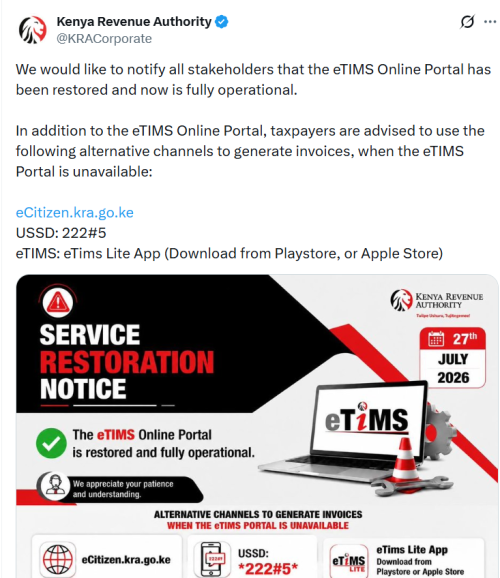
KRA restored the eTIMS Online Portal on Monday night, July 27, 2026, after a temporary service disruption earlier in the day.
The authority did not disclose the cause. It advised taxpayers to use eCitizen, the 2225# USSD service and the eTIMS Lite application whenever the main portal is unavailable.
The disruption followed an earlier outage that began with scheduled maintenance on Wednesday, July 22. KRA had said eTIMS and the older TIMS platform would be unavailable for 20 hours, ending at 2:00 pm on Thursday.
However, the online portal remained inaccessible beyond the announced period, affecting businesses into Friday.
KRA later restored the system, but another interruption was reported on Monday.
The two incidents have raised questions about business continuity and the consequences of relying on a government platform for legally required invoices.
How KRA eTIMS works
eTIMS stands for electronic Tax Invoice Management System. It allows businesses to create, transmit and store electronic tax invoices.
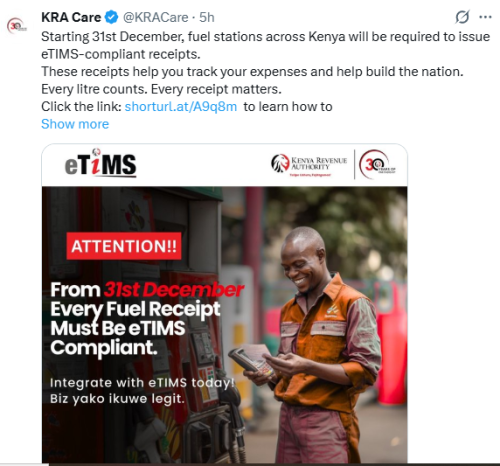
All persons carrying on business are required to join eTIMS and issue electronic invoices unless they fall under specified exemptions.
The requirement covers companies, partnerships, sole proprietors and other persons with business income.
A business records the buyer’s details, goods or services supplied, quantities, prices and applicable taxes. The invoice is then transmitted to KRA in real time or near real time.
The information allows KRA to compare what a seller declares as income with what a buyer records as expenditure.
It also helps populate VAT returns and identify missing, duplicated or inconsistent invoices.
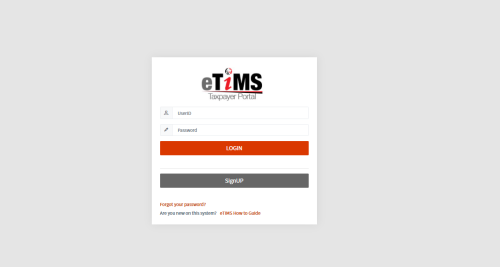
Businesses can access eTIMS through several channels. These include the online portal, Windows and Android applications, eCitizen, USSD and direct integration between a company’s accounting system and KRA.
For VAT-registered buyers, the supplier must capture the correct buyer PIN and transmit the invoice to KRA. Only valid invoices transmitted through eTIMS or TIMS can support an input VAT claim.
How an eTIMS outage affects businesses
The immediate impact is delayed invoicing.
A business that relies only on the online portal may be unable to issue a compliant invoice during downtime. This can delay delivery, customer approval and payment.
The problem is particularly serious for suppliers paid only after presenting a valid electronic invoice.
A completed transaction may remain unpaid because the supporting invoice cannot be generated or verified.
Buyers are also affected. Without a valid eTIMS invoice, a business may be unable to claim input VAT or support an expense in its income tax return.
KRA says business expenditure must generally be supported by a valid electronic invoice.
From January 2026, the authority began validating declared income and expenses against eTIMS, withholding tax and customs records.
The greater risk may emerge later. An invoice issued late, transmitted twice or recorded under an incorrect date can create differences between the seller’s records, the buyer’s accounts and KRA’s data.
Such mismatches can complicate VAT return preparation, expense verification and future tax audits.
Business Daily reported that the prolonged July outage left thousands of users unable to generate invoices and raised concerns about differences between transactions completed during the downtime and records eventually captured by eTIMS.
A backlog can also develop after restoration. Businesses may rush to transmit pending invoices, increasing the risk of errors or duplicate entries.
What businesses should do during downtime?
An eTIMS outage does not automatically suspend tax obligations. Businesses should first check whether alternative KRA channels are working.
KRA has advised taxpayers to use eCitizen, USSD and the eTIMS Lite application when the online portal is inaccessible.
Businesses with integrated accounting systems may also have different transmission arrangements.
Taxpayers should retain evidence of the outage, including KRA notices, error messages and the dates of affected transactions.
They should also keep delivery notes, contracts, payment records and manually prepared transaction details.
Once the system returns, businesses should reconcile invoices that were accepted, rejected or left pending. They should avoid issuing replacement invoices before confirming whether the original transactions were transmitted.
KRA says late-transmitted purchase invoices can be claimed in later VAT periods, provided they meet the legal requirements and are claimed within six months of the invoice date.
The two outages show that eTIMS is no longer only a tax portal. It is part of Kenya’s daily commercial infrastructure.