Advertisement
Kisumu receives Sh40m from EIB for waste management
Friday 29th September, 2023 06:50 AM|
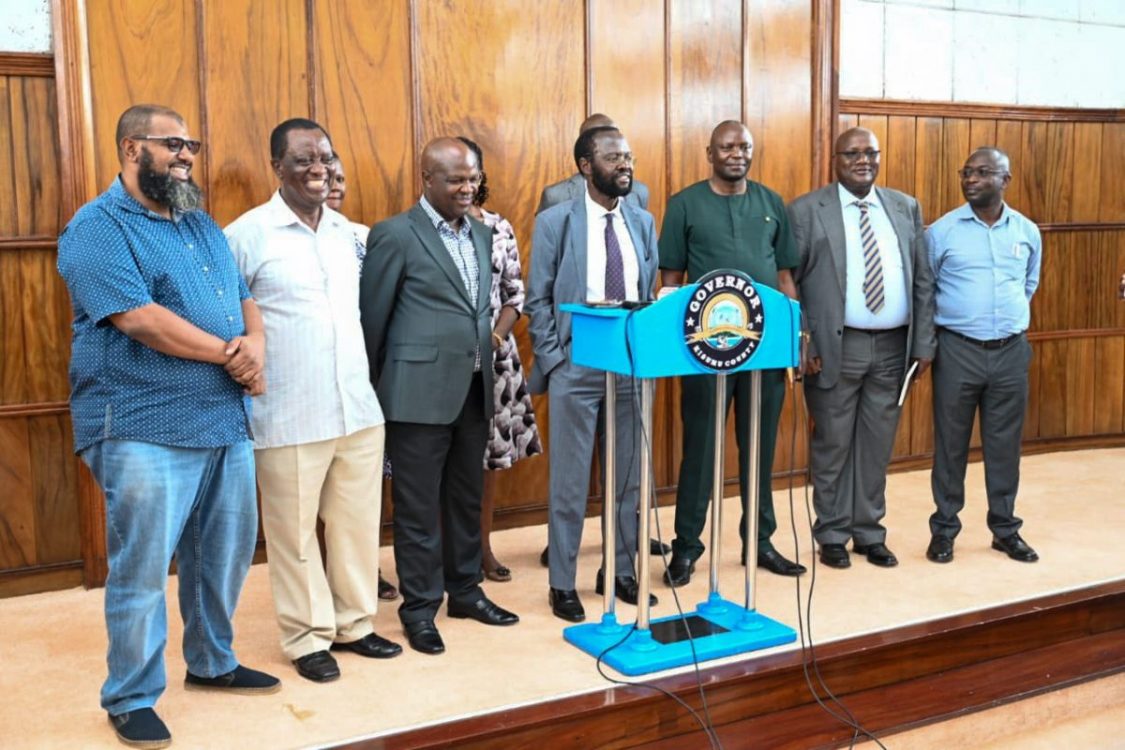
The European Investment Bank (EIB) is supporting Kisumu City, through the County Directorate of Climate Change, to address its solid waste management which remains a major environmental and public health challenge.
In partnership with German Corporation for International Cooperation (GIZ) under the City Climate Finance Gap Fund, EIB has given Kisumu Sh40 million to help explore among others the potential for generating biogas from organic waste in four farmers’ markets.
The Gap Fund will help conduct pre-feasibility studies with concrete recommendations on how to optimise waste collection. Currently, waste collection stands at 35 per cent and the donors want them to collaborate with small and medium private waste collectors.
The decay of the organic proportion of solid waste is contributing about 5 per cent of global greenhouse gas emissions, hence the importance of the EIB project.
Head of EIB Regional Hub for East Africa Edward Claessen, said the City Climate Finance Gap Fund besides financing, will also provide technical assistance to partners. “Through the fund, we aim to help county governments of all sizes to ensure climate resilience is built-in and mainstreamed in their urban growth, he added.
The technical assistance will help ensure that about16, 000 tonnes of organic waste which is expected to be diverted from landfills is dumped appropriately.
The project will run for a four-year period and will see the reduction of greenhouse gas emissions in the city and its environs.
“About 30,000 people are expected to gain access to biogas for energy purposes thus reducing households and businesses’ dependence on fossil fuels and biomass,” Claessen said, adding that this will have a positive spill-over effect of reducing deforestation. About 20 per cent of Kisumu County’s farmers are also expected to use the organic compost produced as manure to improve their crop yield.
Executive Committee Member for Water, Environment and Climate Change Maryline Agwa, welcomed the project as good, saying it will enable the city and county government to manage and divert over 70 per cent of organic waste.
Author
Kepher Otieno
View all posts by Kepher OtienoLatest News







Advertisement
More on Business