Kenya’s economic growth slows to 4.6% as trade deficit widens – KNBS
By Aloys Michael, April 30, 2026Kenya’s economic growth eased slightly in 2025, reflecting mounting external pressures and structural challenges even as key sectors showed resilience.
This is according to the latest Economic Survey by the Kenya National Bureau of Statistics (KNBS), which shows that real Gross Domestic Product (GDP) expanded by 4.6 per cent in 2025, down marginally from a revised 4.7 per cent growth recorded in 2024.
While the slowdown appears modest, it indicates a broader trend of cooling momentum in East Africa’s largest economy.
“In 2025, Kenya’s real Gross Domestic Product (GDP) grew by 4.6% compared to a revised growth of 4.7% in 2024, largely supported by positive growth in all sectors of the economy,” the KNBS notes.
KNBS says that despite the slight deceleration, the economy remained broadly stable, supported by services, agriculture, and industry. The services sector continued to dominate, accounting for 55 per cent of GDP, followed by agriculture at 23.2 per cent and industry at 16.3 per cent.
However, the report notes that growth is increasingly being tested by both domestic and external headwinds. Agriculture, a key pillar of the economy, posted slower growth of 2.8 per cent in 2025, weighed down by erratic weather patterns and structural inefficiencies.
Manufacturing also showed signs of strain, with sector growth easing compared to the previous year, partly due to contraction in agro-based industries.
Widening trade deficits
A key concern highlighted in the report is the widening trade and current account deficits, reflecting Kenya’s heavy reliance on imports.
The current account deficit widened significantly to Ksh373.3 billion in 2025, up from Ksh285.5 billion in 2024.
According to the KNBS, this deterioration was driven by increased import spending and reduced inflows.
“The current account deficit worsened from Ksh285.5 billion in 2024 to Ksh373.3 billion in 2025 on account of a decline in secondary income receipts and growth in import expenditure,” the report states.
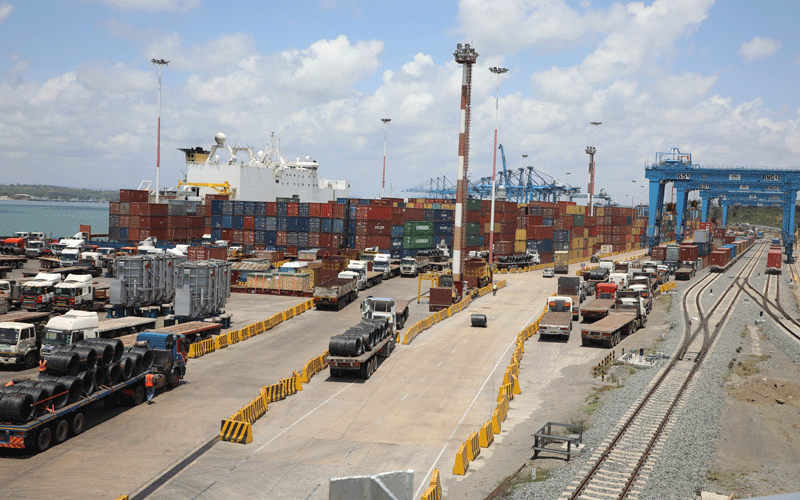
Imports surged to Ksh2.77 trillion in 2025, outpacing export growth, which stood at Ksh967.9 billion. This pushed the merchandise trade deficit further into negative territory, reaching Ksh 1.65 trillion.
The rise in imports was largely driven by demand for industrial machinery, petroleum products, motor vehicles, and iron and steel, key inputs for infrastructure and industrial expansion.
External vulnerability and inflation
The widening trade gap highlights Kenya’s continued vulnerability to external shocks, particularly fluctuations in global commodity prices and exchange rates.
While exports such as tea, cut flowers, and horticultural products remained strong, they were insufficient to offset the import bill. The export-to-import ratio stood at 40.4 per cent in 2025, indicating a persistent imbalance.
At the same time, diaspora remittances remained a critical buffer, reaching Ksh661.2 billion, helping to cushion the external position.
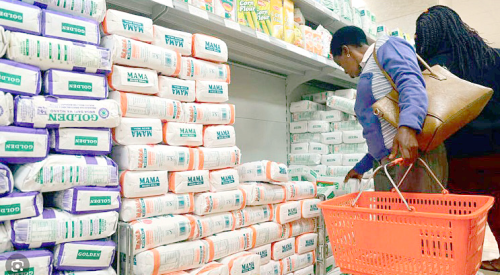
On a positive note, macroeconomic stability improved during the year. Inflation eased to 4.1 per cent in 2025 from 4.5 per cent in 2024, supported by lower energy prices and tighter monetary policy.
The Kenyan shilling also showed relative stability, appreciating to an average of Ksh129.3 against the US dollar from Ksh134.8 in 2024.
Lower interest rates further supported credit growth, with lending rates declining in line with a reduction in the Central Bank Rate.
While broad-based sectoral growth continues to underpin expansion, the widening external deficit raises concerns about sustainability, especially in the face of global uncertainty.