Kenya secures Ksh97.12B World Bank funding
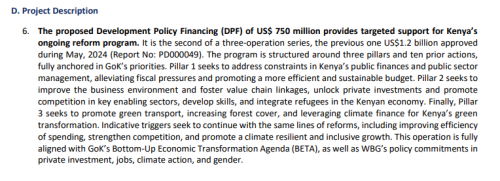
By Kenneth Mwenda, June 30, 2026Kenya has secured fresh financing support from the World Bank, with the approval of a $750 million (Ksh97.12 billion) Development Policy Operation (DPO) aimed at supporting governance reforms, public finance management, and social protection programmes.
The facility, officially known as the Second Kenya Fiscal Sustainability and Resilient Growth DPO, was approved on Tuesday, June 29, 2026.
“Kenya’s reform to strengthen governance, improve public financial management, and expand social protection for its most vulnerable citizens received World Bank Group support today through a US$750 million Development Policy Operation (DPO), contributing to the country’s efforts to establish the regulatory certainty required to create jobs, attract private investment, and lift people out of poverty,” the press release reads.
When combined with a separate $500 million (Ksh64.74 billion) Sustainability Linked Loan secured around the same period, Kenya’s recent World Bank-linked financing arrangements rise to about $1.25 billion (Ksh161.86 billion).
According to the World Bank’s Program Information Document and official press release, the $750 million (Ksh97.12 billion) package consists of a $340 million IBRD loan and a $410 million concessional IDA credit. The operation forms part of a three-phase programme, with the first operation worth $1.2 billion approved in May 2024.
Funds to help Kenya strengthen governance
The World Bank said the DPO supports Kenya’s efforts to strengthen governance, improve public financial management, reduce corruption, and expand social protection systems. The reforms are also intended to improve the business environment, attract private investment, and support job creation.
A major component of the programme focuses on governance reforms. Kenya has already enacted a Conflict-of-Interest law and gazetted the Conflict-of-Interest Regulations 2026, which introduce stricter disclosure requirements and tougher penalties for public officials found abusing office for private gain.
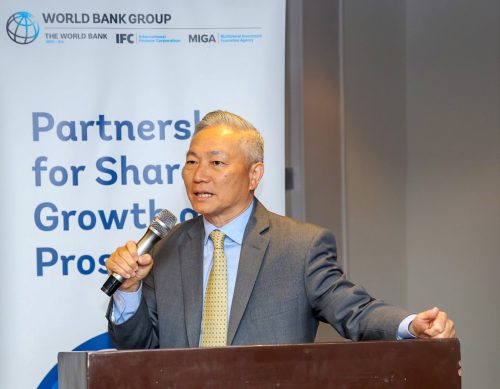
“By supporting reforms to address conflicts of interest, strengthen procurement systems, improve public financial management, and expand social protection, this operation will help Kenya reduce leakage, generate fiscal savings, and ensure that public resources deliver better results and reach the people who need them most,” said Qimiao Fan, World Bank Division Director for Kenya.
He added that the reforms would help establish a more business-friendly environment capable of supporting inclusive economic growth and job creation.
This package will directly help the government finance the 2026/27 fiscal deficit, which is projected at around Ksh 1.1 trillion. Because DPOs provide general budget support, the $750 million will go straight into the national budget to cover spending priorities while reducing pressure on expensive domestic borrowing.
The additional US$500 million (Ksh64.74 billion) Sustainability Linked Loan will also provide budget support and help retire costly existing debt. Together, the two facilities ease Kenya’s financing gap and support the government’s fiscal consolidation plans for the new financial year.
Fiscal reforms and oversight
The programme also requires all Ministries, Departments, and Agencies to adopt the Treasury Single Account system. The move is expected to reduce idle cash balances across government accounts, improve oversight of public funds, and minimise the risk of misuse.
In addition, the operation supports expanded use of electronic government procurement systems to improve transparency, increase supplier competition, lower procurement costs, and strengthen audit processes.
On social protection, the DPO backs implementation of the Social Protection (General) Regulations 2026 and supports the Enhanced Single Registry system used to identify beneficiaries. The reforms aim to ensure assistance reaches vulnerable households more efficiently while reducing duplication. The programme also supports refugee inclusion and services for host communities under Kenya’s Shirika Plan.
Separately, the $500 million (Ksh64.74 billion) Sustainability Linked Loan falls outside the DPO arrangement. The government plans to use the facility to refinance expensive debt and provide additional budget support. The loan links borrowing costs to sustainability targets, including reducing deforestation and expanding access to rural energy.
The financing comes shortly after Kenya secured a JP¥25 billion (about Ksh22 billion) Samurai Loan, adding to efforts to strengthen the country’s foreign exchange reserves, currently estimated at $13.24 billion.
The World Bank also identified several key fiscal reforms Kenya must pursue, including narrowing the VAT gap, improving tax collection from non-PAYE earners, and enhancing transparency in the collection and allocation of non-tax revenues such as e-Citizen fees.
The latest package provides Kenya with both immediate budget support and backing for long-term governance and fiscal reforms. The government will now be expected to fully implement the agreed measures to realise the intended economic and institutional benefits.