Kenya Bankers Association: Kenya could create 36K jobs annually with 5% PAYE cut
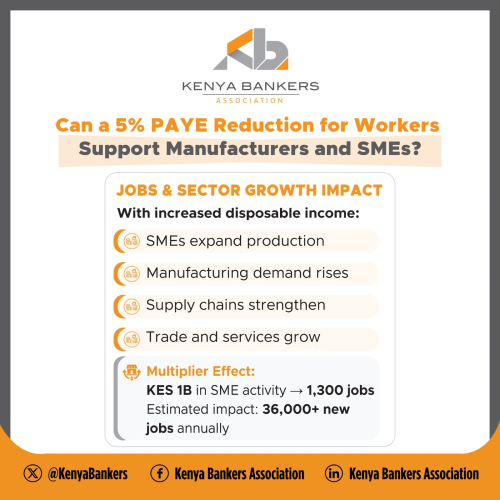
By Ndiritu Wanjiru, June 1, 2026The Kenya Bankers Association (KBA) has observed that the country’s economy has the capacity to create at least 36,000 jobs annually if the government reduces the Pay As You Earn (PAYE) by 5 per cent on all income tax bands.
The proposal is pitched as a fiscal stimulus for increasing disposable income and demand, and encouraging private sector growth.
In a statement on their X handle on Monday, June 1, 2026, the banking sector association says the PAYE cut would have an economic multiplier effect, resulting in more people having more money to spend, businesses having more money to spend, and more credit being available.
“The government will create at least 36,000 new jobs every year in the economy if it implements a 5% reduction in Pay As You Earn (PAYE) for all workers across all income tax bands,” KBA’s statement noted in part.
Boost to household income and consumption
The Kenya Bankers Association (KBA) estimates the reduced withholding tax of 5% on PENs would inject around Ksh28.1 billion into the economy each year. This extra disposable income will be reallocated directly to household consumption, boosting demand for products and services in several industries.
“The 5% PAYE reduction will also release about Ksh28.1 billion into the economy each year, generate nearly Ksh42 billion in additional economic output, and strengthen demand for goods and services from MSMEs across the country,” the statement added.
The uptick in consumer spending is expected to have a significant impact on small and medium businesses (MSMEs) that make up the backbone of Kenya’s economy. The additional demand is likely to lead to greater production, better business turnover, and growth among local businesses.
Projected rise in economic output
In addition to household spending, the association projects that the PAYE cut will create an additional economic output of almost Ksh42 billion. The upward trend will be supported by higher consumption, rising revenues in businesses and enhanced economic circulation of money in both the formal and informal sectors.
Economic growth and private sector-led growth are being sought, and the proposal fits the economist’s perception of tax relief as a mechanism for stimulating demand in the short term.
Accessing loan revenue
The banking sector also estimates that the PAYE cut will create an opportunity to access between Ksh140 billion and Ksh170 billion more loan capacity from the banking sector and other formal financial institutions.

Increased liquidity and increased disposable income for households and businesses will likely lead to a growth in financial institutions’ credit lending. This would help attract investment in new businesses, expansion of businesses, and job creation in key industries like agriculture, manufacturing, trade, and services.
Policy implications for Kenya’s economic growth
The PAYE reduction would be a major policy shift to promote demand-led growth if adopted. The Kenya Bankers Association says the step would boost the nation’s economic resilience through employment creation and access to credit.