Inside govt’s plan to add value to tea amid legislative setbacks on Tea Bill
By Lavender Kusimba, June 10, 2026Kenya is accelerating efforts to transform its tea industry from exporting raw bulk produce to shipping higher-value processed and branded products, even as legislative setbacks on the Tea (Amendment) Bill, 2023, expose tensions within the sector’s reform agenda.
The strategy is aimed at addressing a long-standing imbalance in the global tea trade, where Kenya dominates in production but captures only a small fraction of the final retail value.
Speaking on Tuesday, June 9, 2026, during theChina-Africa Forum on Agritech and Industrial Cooperation in Nairobi, Tea Board of Kenya Chief Executive Officer Willy Mutai said most tea is still exported in raw form through the Mombasa auction, where international traders package, brand, and sell it at significantly higher prices abroad.
“We are encouraging more investors to apply for export licences and invest in Kenya. Kenya is open for any investor to buy, process and export tea,” he said.
Mutai said the government is now focused on attracting investment into local processing, packaging, branding, and manufacturing as part of a broader plan to retain more value within the country rather than exporting unprocessed tea.
He noted that while Kenya remains a global leader in black tea exports, the country has historically missed out on the most profitable segments of the value chain.

For decades, Kenya’s tea sector has relied heavily on bulk exports. Large volumes are sold through auction systems before being taken abroad for blending and retail branding.
While this model has sustained export volumes, it has limited Kenya’s earnings to primary production, leaving higher-margin activities overseas.
Industry stakeholders now argue that the next phase of growth lies in value addition. Local processing and packaging could expand manufacturing activity, create jobs, and strengthen Kenya’s export earnings by allowing the country to sell finished tea products directly to global markets.
China’s expanding trade relationship with Africa has emerged as a key opportunity in this shift. Beijing’s recent zero-tariff policy on a range of African exports, including tea, is expected to open new markets while encouraging Chinese firms to establish production facilities within Kenya.
Tea reforms
Mutai said the policy environment is already attracting interest from Chinese investors looking to set up tea processing and packaging operations locally, adding that such partnerships could help Kenya upgrade its industrial capacity and better align its exports with consumer preferences in major importing markets.

According to the Tea Board of Kenya, four Chinese companies have already been licensed to package and export tea directly from Kenya.
At least three others are currently using Chinese tea-processing technologies adapted for specific market demands, particularly in Asia, while additional investments are being negotiated.
The government has also introduced fiscal reforms to support the shift toward value addition. One key measure is the removal of import duties on packaging materials used in the tea sector, aimed at reducing production costs and encouraging local manufacturing of export-ready products.
“This is an area that is open for investors. Most packaging materials currently come from China, India and Sri Lanka, and there are opportunities to establish more of this manufacturing locally,” Mutai said.
Officials believe that building a stronger domestic processing and packaging ecosystem will generate spillover benefits across the wider economy. These include increased demand for logistics services, machinery, industrial inputs, and skilled labour, all of which could support broader industrialisation efforts.
Tea law failing industry?
However, the government’s ambitions are unfolding alongside political and legislative friction over the Tea (Amendment) Bill, 2023, which seeks to restructure governance and oversight within the tea sector.
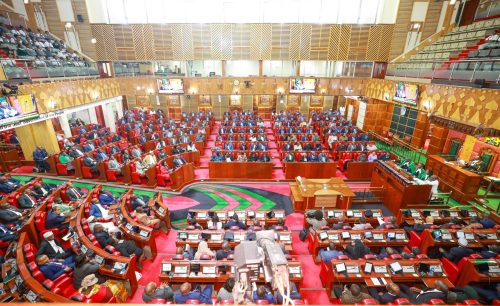
The Bill has faced renewed scrutiny after National Assembly Speaker Moses Wetang’ula ordered parts of the legislative process to be repeated due to a conflict-of-interest issue involving a sitting Member of Parliament.
The Speaker found that Gatundu South MP Gabriel Kagombe participated in a key parliamentary debate on the Bill without fully declaring his interests in companies linked to the tea industry, including firms involved in factory operations and related financial services.
“The contributions were substantive and directly related to the provisions under consideration,” Wetang’ula said, adding that the failure to declare interests “casts doubt on the probity of the deliberations.”
He ruled that the Committee of the Whole House stage of the Bill must be conducted afresh, effectively resetting part of the legislative process and delaying progress on the reforms.
While noting that the MP had previously disclosed similar interests in committee discussions, the Speaker emphasised that the same disclosure was required during plenary proceedings. He stopped short of imposing harsher penalties, citing the need for caution given the circumstances.
Majority Leader Kimani Ichung’wah supported the ruling, saying it was necessary to protect the credibility of Parliament and ensure transparency in lawmaking, especially in sectors with significant commercial interests.