Advertisement
How urban expansion has put farmlands under siege
Monday 07th July, 2025 07:40 AM|

Kenya, like the rest of Africa, is set to witness the fastest rate of urban land conversion globally by 2050, with more than 300,000 square kilometres of farmland expected to be transformed into city space.
For Kenya, already facing food insecurity and fragile agricultural systems, this shift presents an existential threat to the country’s ability to feed itself.
According to a new “Reimagining Global Food System Resilience” report by KPMG, “In Africa, urban land development is expected to outpace all other regions.”
The projected loss, roughly the size of Italy, lays bare a growing conflict between food security and rapid urbanisation.
You Might Also Like
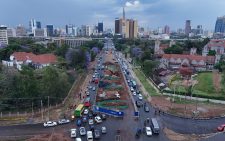


In Kenya, the consequences are already visible. As the middle class expands and urban demand for housing rises, land near infrastructure corridors is increasingly being snapped up by developers, often outbidding smallholder farmers.
“Economically, food production is rarely the highest and best use for a packet of land,” the report notes, a trend playing out in satellite towns like Kiambu, Machakos, and Nakuru, once agricultural strongholds but now engulfed by housing projects.
This conversion is not happening in isolation. Kenya’s agriculture sector remains largely rain-fed, under-mechanised, and overexposed to climate variability.
Irrigation accounts for 70 per cent of global freshwater withdrawals, yet KPMG warns that more than half of this is lost to inefficiencies.
Kenya’s own experience is telling: the high-profile Galana-Kulalu food security project collapsed under the weight of poor planning, high input costs, and water mismanagement.
With global water demand set to overshoot sustainable supply by 40 per cent by 2030, Kenya’s inertia on irrigation reform is no longer tenable.
“This is not just about environmental limits. It is about the resilience of entire supply chains,” the report argues.
For a country that aims to grow its agricultural exports while feeding a rapidly urbanising population, water inefficiency becomes a liability.
At the core of this vulnerability is Kenya’s smallholder economy. Nearly 70 per cent of the country’s agricultural output comes from farmers working on less than a hectare of land.
Supply chain
Globally, more than 500 million such farms exist, many in Africa, yet they “frequently capture only a small fraction of the value created along the supply chain,” the report notes.
In Kenya, these farmers often lack access to affordable credit, storage infrastructure, and climate-smart inputs, leaving them highly exposed to shocks.
While the National Treasury has called for greater private sector participation in climate-smart agriculture, financial institutions have been slow to develop products aligned to regenerative or biodiversity-linked outcomes.
“The system is near, or even past, the breaking point,” the report warns, an observation mirrored in data showing farmer incomes stagnating even as food prices soar.
Indeed, food availability in Kenya masks deep inequities in access. Despite adequate production in some seasons, the poorest households remain locked into poor-quality diets.
In Nairobi’s informal settlements, residents rely on cheap, nutrient-poor staples, even as food inflation continues to outstrip overall inflation.
At the same time, post-harvest losses remain staggering, with up to 40 per cent of Kenya’s fruits and vegetables wasted due to insufficient cold storage, poor logistics, and fragmented value chains.
“Reducing food loss by just 25 per cent could feed an additional 870 million people annually,” the report observes. For Kenya, where nearly one in three children under five is stunted, such efficiency gains are critical.
The report stresses that the overarching takeaway is that food systems can no longer operate in isolation. “Every person and organisation on the planet is inextricably linked to food systems,” it states.
Author
Noel Wandera
View all posts by Noel WanderaLatest News







Advertisement
More on Business