How Raila Odinga built a thriving business venture after selling his German car
By Kiprono Keileb, October 17, 2025Before he became one of Kenya’s most influential political figures, Raila Odinga was an ambitious young engineer with a dream and a German car he was willing to part with to make that dream come true.
In the early 1970s, Raila sold his old Opel car for Ksh12,000 to start a small manufacturing business, East African Spectre, that would later become one of the region’s leading LPG cylinder producers.
At the time, he was working at the University of Nairobi’s Department of Mechanical Engineering when a rare opportunity came his way. An Indian technician at the university informed him about an Indian businessman fleeing Uganda under dictator Idi Amin’s regime, who was selling off his factory equipment. The machines, including welding and metal-cutting tools, were being kept at a yard in Parklands, Nairobi, and were going for Ksh12,000.
“I didn’t have that kind of money. My salary was only Ksh2,000, so I sold my car to raise the cash, and that’s how I started East Africa Spectre Company,” Raila said during a past interview.
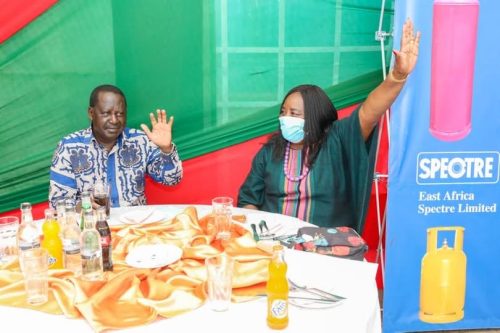
Took the risk
He set up his first workshop in Nairobi’s Industrial Area, on what was then Kingston Road (now Kampala Road). His company initially manufactured steel casements, windows, and doors before identifying a new opportunity in the market: the production of gas cylinders.
At the time, no local firms were making LPG cylinders, and the demand was growing. Spectre quickly established itself as a reliable supplier and began working with major oil companies, including Ajib Oil Company. Over time, the company expanded, and in 1988, it secured funding from the Industrial Development Bank to build a new factory along Mombasa Road.
In 2008, East African Spectre undertook a major upgrade, installing modern manufacturing equipment, including a new heat treatment furnace, hydrostatic testing rig, and spray painting system. Today, it controls about 20 per cent of Kenya’s new LPG cylinder market and over 80 per cent of the revalidation segment.
Other Raila’s businesses
Raila’s business interests, however, go far beyond gas cylinders. Together with his family, he owns stakes in several firms across real estate, finance, and agriculture. Lennox Development Ltd focuses on real estate projects, while Duma Investments operates as a private investment firm. The Odinga family also has a significant stake in Be Energy, one of Kenya’s top petroleum companies, with a market share of 3.7 per cent.
His most recent venture is the LV Marina project in Kisumu, a mixed-use real estate development by Gulf Cap Real Estate, covering 285 acres on the site of the former Molasses Plant.
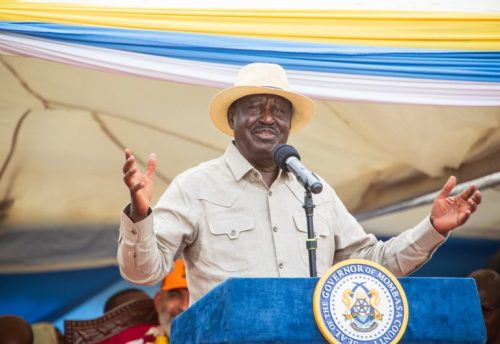
Despite his towering political career, Raila’s role in promoting private enterprise and job creation remains a major part of his legacy. The Kenya Private Sector Alliance (Kepsa) praised him as one of Kenya’s greatest statesmen, highlighting his efforts to empower the private sector.
During his tenure as prime minister between 2008 and 2013, he institutionalised the prime minister’s roundtable with the private sector, a platform that bridged government and industry, tackled policy bottlenecks, and improved Kenya’s business environment.
Raila Odinga’s story is one of resilience and vision, from selling his car to raise capital to building one of East Africa’s most respected manufacturing companies. His journey reflects not only the spirit of entrepreneurship but also the belief that great things often begin with small, bold decisions.