Construction of Naivasha–Malaba SGR raises concerns for motorists
By Aloys Michael, March 26, 2026The construction of the Naivasha–Kisumu–Malaba Standard Gauge Railway (SGR) has raised concerns among road users, with the Motorists Association of Kenya (MAK) warning that the project could disrupt the country’s highway-based economy.
In a statement on Wednesday, March 25, 2026, the association argued that once the railway is operational, it is likely to carry most of the transit cargo currently transported by road along the Northern Corridor.
This shift, MAK says, could undermine the purpose of ongoing road expansion projects and affect towns and communities that rely heavily on highway traffic.
“Once fully operational, this railway will absorb almost all transit cargo that currently depends on road transport. Goods that today flow along the Northern Corridor, which has long been neglected for upgrades, would instead move efficiently by rail,” the association said.
MAK said that towns are historically dependent on long-distance trucking. such as Mai Mahiu, Naivasha, Nakuru, Eldoret, and Webuye, could face severe economic decline if road cargo volumes drop.

“Once all cargo moves by rail, towns along the highways, Mariakani, Mazeras, Samburu, Makinon, Mtito Makindu, Emali, Mai Mahiu, Naivasha, Kikopee, Nakuru, Mau Summit, Eldoret, Webuye to Malaba, will gradually die a natural death. Without road transport for transit and long-distance travel, these towns will become ghost towns,” the group warned.
The association also questioned the logic behind continued investments in road projects such as the Rironi–Mau Summit dual carriageway, which is under construction and expected to be completed by June 2027.
“Investing billions in expanding highways while simultaneously developing a parallel railway corridor raises serious concerns about duplication and value for money,” MAK said.
Beyond economic implications, the motorists’ lobby raised concerns about strategic risks linked to foreign involvement in major infrastructure projects, citing the role of Chinese firms in developing key transport corridors, cautioning that increased reliance on externally financed and executed projects could limit Kenya’s control over its own infrastructure.
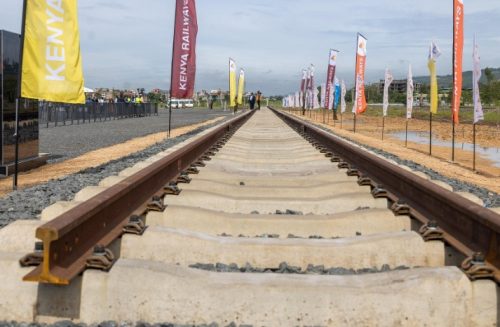
The SGR extension, officially launched by President William Ruto and his counterpart of Uganda, Yoweri Museveni, on March 19, 2026, will be developed in two phases. The Naivasha–Kisumu section will cover 264 kilometres, while the Kisumu–Malaba stretch will add 107 kilometres, bringing the total length to over 370 kilometres at Ksh500 billion.
Once complete, the railway will pass through nine counties and is expected to be operational by June 2027, boosting connectivity between the Great Rift Valley, Nyanza, and Western Kenya regions.