Advertisement
Cherargei raises alarm over KTDA bonus disparities
Friday 07th November, 2025 07:52 AM|

Nandi County senator Samson Cherargei has voiced serious concerns over disparities in the 2025 Kenya Tea Development Agency (KTDA) bonus payouts, particularly highlighting differences between the East and West Rift regions.
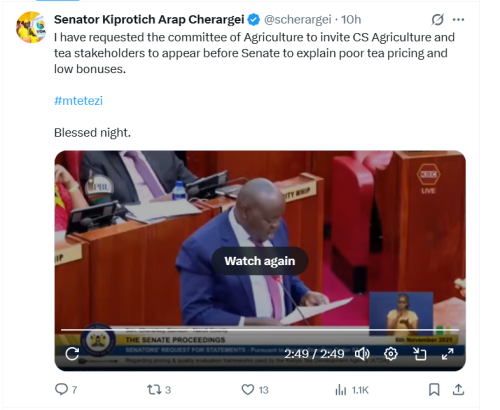
In a Senate statement, which he posted on his X on November 6, 2025, Cherargei criticised the KTDA’s management, urging for transparency and fairness in tea pricing and quality evaluation.
“Mr. Speaker, sir, with your indulgence, let me move on to my second statement. I rise pursuant to Standing Order 53-1 to seek a statement from the Standing Committee on Agriculture, Livestock and Fisheries on a matter of national concern regarding the pricing and quality evaluation programs used by the Kenya Tea Development Agency, KTDA, and their impact on fairness and transparency across tea-growing regions,” he stated.
The 2025 bonus payouts have exposed significant regional inequalities, with Cherargei noting, “The 2025 KTDA bonus payouts have revealed wide disparities between regions, especially in the West Rift.”
You Might Also Like



He questioned the objectivity of KTDA’s evaluation methods, pointing out, “KTDA attributes this variation in tea quality, yet concerns have emerged regarding the objectivity, consistency, and transparency of its evaluation methods, particularly the continued reliance on oenological, in brackets sensory, testing or use of tongue for people who don’t get proper English, and the absence of independent oversight.”
Calls for review of evaluation methods
Cherargei demanded specific actions from the committee, including a review of criteria and testing methods for tea quality, the role of sensory testing, and mechanisms for farmer feedback and appeals. “In the statement, the committee should address the following. One, the criteria and testing methods used to determine tea quality across factories, and the safeguards in place to ensure objectivity and regional fairness,” he specified.
He also called for investment in modern, science-based testing infrastructure and reforms to ensure equity in pricing and bonus structures, particularly for the West Rift. “Number five, Mr. Speaker, reforms being considered to ensure that pricing and bonus structures reflect equity, farmers’ efforts, and regional development goals, including support mechanisms extended to factories and farmers in low-bonus regions, especially West Rift, to improve quality and competitiveness,” he added.
KTDA responds amid regional disparities
In an earlier response, the KTDA attributed the bonus reductions to global market conditions and currency fluctuations, noting that the Kenyan shilling strengthened from Ksh144 to Ksh129 against the US dollar in 2025.
However, regional data reveals a troubling trend: while East Rift factories such as Kiambu and Nyeri saw modest declines, West Rift areas including Kericho and Bomet experienced drastic cuts, with prices dropping by over 100 shillings per kilo.
Author
Latest News








Advertisement
More on Business