Advertisement
CBK, election decisions to stir growth
Tuesday 08th February, 2022 06:02 AM|
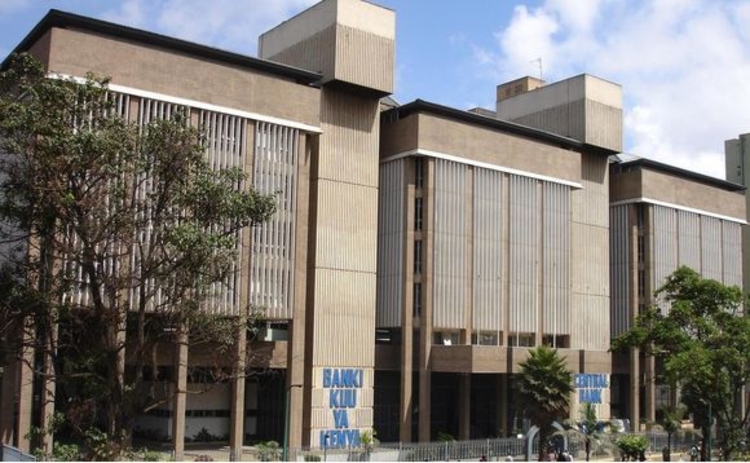
This year’s August 9 General-Election, Central Bank of Kenya (CBK) decision on banks’ risk pricing models and the progress of Safaricom’s rollout in Ethiopia will be key drivers of investor returns in 2022.
Analysts at investment bank EFG Hermes say the increase of global crude oil prices is expected to create some inflationary pressure, while expectations are that the government will borrow aggressively from the domestic market to increase yields on the government’s securities.
Positive growth
“The elections in August 2022 will be a key consideration over the next seven months, however, we remain positive on the market,” the firm said in an investor update yesterday.
The investor briefing says dividend announcements and International Monetary Fund (IMF) reviews and seasonal market strength will also inform markets alignment.
EFG Hermes analysts say investors who bought shares such as Car and General, Equity Bank and Bank of Kigali and Safaricom were the key winners last year. Car & General is up 54 per cent, Equity Group went up 44 per cent and Bank of Kigali Group rose 41 per cent. Notably, Safaricom, which makes up most of the trading volume on the market had a share price change of 10.8 per cent.
During the year 2021, the Kenyan equities market performed relatively well, with NASI, NSE 20 and NSE 25 increasing by 9.43 per cent, 1.83 per cent and 9.62 per cent respectively.
“Banks also performed well, rallying off depressed valuations at the end of 2020,” said EFG Hermes in the investor update.
Government bonds
Additionally, yields on government bonds increased slightly with the 91-day, 182-day and 364-day T-bills increasing to 7 per cet, 7.6 per cent and 8.5 per cent in 2021 compared to 6.2 per cent, 6.6 per cent and 7.5 per cent at the end of 2020.
With regards to the economy, the overall annual inflation rate was 5.73 per cent in December 2021 and the Kenyan shilling depreciated by 3.6 per cent against the US dollar to close at an exchange rate of Sh113.1 in 2021, compared to Sh109.2 in 2020.
The Kenyan shilling is currently trading at Sh113.5 per dollar, but given recent increases in the global oil price, and the possible risk of a drought, the shilling could depreciate further. Increased trade with Tanzania that has a more market-friendly administration could also drive growth in the country.
Author
John Otini
View all posts by John OtiniLatest News








Advertisement
More on Business