Advertisement
Accountants push MPs to lower deemed dividend threshold in Finance Bill 2026
Tuesday 26th May, 2026 01:18 PM|

The Association of Chartered Certified Accountants (ACCA) in Eastern Africa has urged MPs to lower the proposed deemed dividend threshold in the Finance Bill 2026 from 60 per cent to 30 per cent, warning that the current proposal could cripple businesses through cash flow constraints.
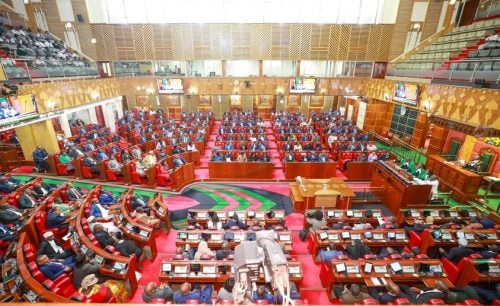
Appearing before the National Assembly Departmental Committee on Finance and National Planning during stakeholder submissions in Kiambu County on Tuesday, May 26, the accountants’ lobby has opposed Clause 16 of the Bill, which seeks to compel private companies to distribute at least 60 per cent of retained earnings or risk the funds being treated as deemed dividends for tax purposes.
The accountants’ body has further argued that many firms retain earnings for legitimate operational needs, expansion plans and working capital requirements, making the proposed threshold too punitive, especially for small and medium-sized enterprises.

“The threshold minimum of 60 per cent of retained earnings at the risk of being deemed a dividend is likely to compromise the cash flow of businesses, which on most occasions have genuine and defensible reasons for retaining earnings, such as operational cash flows, growth and expansion,” ACCA told the committee.
You Might Also Like



The association maintained that forcing businesses to issue dividends could increase dependence on costly bank financing and hurt investment growth. It instead proposed a 30 per cent ceiling.
The accountants also rejected proposals under Clauses 18 and 19(a) seeking to reduce tax filing and compliance timelines to four months. ACCA warned that compressing statutory audits, tax payments and return filings into one month would overstretch businesses and create uncertainty in tax compliance.
“As a country, businesses do not have the capacity to complete these obligations in one month, and this will impose a strain on businesses,” the association noted.
ACCA further argued that Kenya’s informal sector remains too large and that the government should first focus on formalising businesses and strengthening the Kenya Revenue Authority (KRA) systems before introducing stricter compliance timelines.
MPs take
However, MPs challenged the resistance to the proposals, saying companies should embrace technology and automation to improve efficiency.
David Mboni questioned why firms were reluctant to automate their operations, arguing that the shorter timelines could even create more employment opportunities for accountants.
“Why are companies adamant about innovating and embracing automation? This is an opportunity for companies to embrace technology,” he said.
Julius Ruto also defended the reforms, saying Kenya had made major progress in digital transformation and businesses should equally modernise their systems.
The accountants, however, clarified that they were not opposed to reforms but were concerned that KRA’s backend infrastructure was not fully prepared for the transition. They urged lawmakers to delay implementation until the systems are ready.
Committee Chairperson Kuria Kimani assured stakeholders that the committee would engage KRA before finalising its recommendations on the bill.
ACCA also opposed Clause 2(c) of the Finance Bill, which seeks to classify card network fees, digital platform access fees and software distribution fees as royalties subject to withholding tax.
The association argued that the proposal appeared designed to overturn a Supreme Court decision involving ABSA Bank Kenya PLC, where the court ruled that interchange and merchant service fees were operational settlements and not management or professional fees subject to withholding tax.
According to ACCA, repeatedly changing legislation after KRA loses court cases undermines certainty in Kenya’s tax system and weakens confidence in the rule of law.
Accountants opposed VAT proposals
On Value Added Tax proposals, ACCA opposed plans to remove VAT exemptions on construction materials used in affordable housing projects, saying the move would raise housing costs by between 8 and 10 per cent.
ACCA also criticised Clause 45 of the Tax Procedures Act amendments, which would allow KRA to enforce tax recovery measures such as asset seizures and bank account attachments even when a taxpayer’s appeal is still pending before courts or tribunals.
The accountants argued that the proposal would undermine the right to fair administrative action and weaken access to justice by rendering appeals ineffective.
In its final submission, ACCA urged MPs to ensure stability in tax laws, warning that frequent changes in tax policy could hurt business confidence and economic growth.
Author
Latest News






Advertisement
More on Business